Kyiv lags behind Kharkiv in winter preparations — and now the government may take away part of thermal power plants from Kyiv City State Administration
The Recovery Agency is ready to take management of one of Kyiv's heating hub zones. Six cogeneration units delivered to the city a month ago have still not been collected by Kyiv.

By Tetiana Suchkova-Ladik
April 8, 2026 · 2 min read
Sergiy Sukhomlyn, head of the State Agency for Infrastructure Recovery and Development, revealed in an interview with Suspilne a detail that rarely makes it into official reports: Kyiv is one of the cities with the worst readiness indicators for the heating season, while the front-line city of Kharkiv reports 98% readiness.
Cogeneration units are here. The city is in no hurry to take them
The Agency delivered six cogeneration units to the capital — mini-power plants capable of simultaneously producing heat and electricity and not shutting down even during blackouts. According to Sukhomlyn, the equipment has been waiting for over a month — the city authorities still have not processed or taken it.
This passivity has a specific context. Back in autumn 2025, Dmytro Naumenko, director of the KMDA department, assured city council deputies that the units would be installed by December. According to LB.ua, as of early 2026, the cogeneration units were still in the installation phase — work on constructing concrete shelters, connections, and testing had not been completed.
2.7 billion hryvnia: money the Agency has never seen
In parallel, a dispute emerged between KMDA and the Recovery Agency over funding for thermal power plant protection. Mayor Vitaliy Klitschko publicly stated that of the allocated 3.7 billion hryvnia, 2.7 billion has already been directed toward work performed by the Agency. Sukhomlyn disputed this: the funds never reached the Agency's account.
"The most important thing now is to protect the substations that power the boilers, as well as the pump groups. Without them, even minor damage will leave people without heating in the middle of winter."
Sergiy Sukhomlyn, head of the Recovery Agency
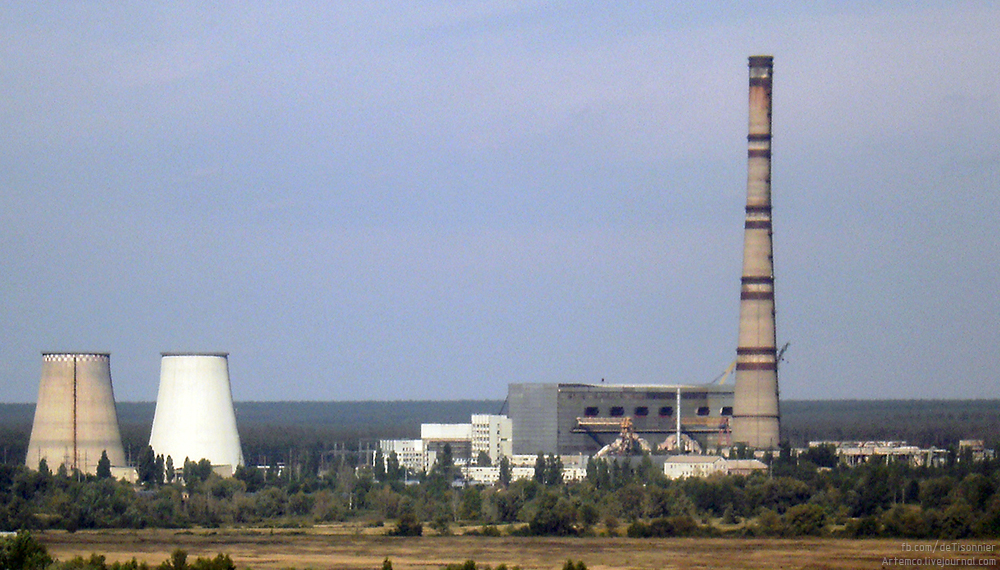
Both Kyiv thermal power plants — No. 5 and No. 6 — are municipal property of the city, not state property. KMDA is responsible for their physical protection. According to Sukhomlyn, the facilities currently only have the first level of protection — Hesco barriers.
Plan B: the state takes control of a district
Against this backdrop, the Recovery Agency, according to Sukhomlyn, is ready to assume heat supply for one of Kyiv's districts — along with the corresponding thermal power plant zone — if the government orders it. This is not a bottom-up initiative: direct government instruction is required for implementation.
There is a precedent: the government has already instructed the Agency to construct protective structures at Ukrenergo substations — and this protection, according to Sukhomlyn, has proved its effectiveness under real attacks. The logic is the same: where municipal management fails to cope, the state steps in itself.
- Kharkiv region — 98% readiness for the heating season (head of Kharkiv Regional State Administration Oleh Synehubov)
- Kyiv — among the outsiders by the same indicator, despite its capital status and greater resources
- Six cogeneration units for Kyiv — delivered but still not accepted by the city
- 2.7 billion hryvnia for thermal power plant protection — declared by Klitschko but, according to Sukhomlyn, never reached the Agency
If the government does issue an order and the Agency assumes control of one of Kyiv's thermal power plant zones — this will be the first case where the state de facto takes over part of KMDA's communal responsibility for heat supply in the capital. The question is whether this will happen before the first serious frost or after.



