Kyiv's warehouse renaissance: record absorptions bring infrastructure back to pre-war levels
217,000 sq. m were leased in 2025, and a further ~216,000 sq. m were commissioned — Kyiv’s warehouse market has become an indicator of the recovery of logistics and economic resilience. We explain why this matters for business and security.

By Tetiana Suchkova-Ladik
March 26, 2026 · 3 min read
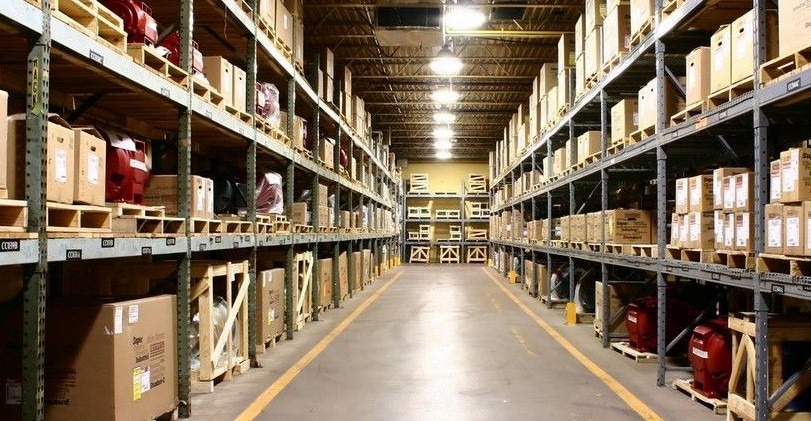
2025 was the most active year in the past decade for Kyiv's warehouse market, despite ongoing war-related risks. According to a study by EXPANDIA (CBRE’s representative in Ukraine and Moldova), annual gross absorption reached approximately 217,000 sq. m — up 30% compared with 2024. This dynamic is not only economically significant but also strategically important for restoring the capital’s logistics capacity.
What’s behind this
Demand growth was driven by two key factors: first, the realization of pent-up demand for large spaces in new projects; second, tenants replacing warehouses damaged by shelling. According to EXPANDIA, since 2022 about 23% of warehouses in Kyiv region — roughly 500,000 sq. m — were destroyed, which provided an additional incentive to look for modern solutions in safer locations.
Who is driving demand
Retailers accounted for 51% of gross absorption, logistics operators — 44%, and the pharmaceutical and medical sector — about 5% in 2025. At the same time, over the 2022–2025 period the pharmaceutical sector on average provided 10–15% of annual absorption, underlining its role as a stable source of demand for specialized space.
"This jump in transaction volume occurred after a long lull due to the lack of new supply and was mostly opportunistic in nature"
— EXPANDIA (analytics and the warehouse real estate market)
Development and supply
In 2025 annual completions amounted to about 216,000 sq. m — the highest figure since 2008. The total volume of competitive supply rose to ~1.57 million sq. m (+12% since the beginning of the year) and has effectively returned to pre-war levels. Notable projects include the "Oleksandrivskyi" logistics complex III–IV (145,000 sq. m) and "Chaiky" IV (32,400 sq. m). Approximately 11,000 sq. m in RLC, damaged in 2022, were also restored.
Prices, vacancy, forecast for 2026
The effective prime rate remained stable at $5.3/sq. m/month (excluding VAT and OPEX), while rents in hryvnia on average rose by 9% since the start of the year — in the range of 200–250 UAH/sq. m/month. Despite record development volumes, the vacancy rate fell to 3.5% (-0.3 pp), as most new space entered the market already pre-let or was quickly absorbed.
"A shortage of quality warehouse space and moderate strengthening of rental rates create prerequisites for further implementation of build-to-suit projects. Developers are increasingly focusing on scarce formats, in particular on multi-temperature warehouses"
— Nataliya Sokyrko, Head of the Warehouse and Industrial Real Estate Department, EXPANDIA
For 2026 an additional roughly 90,000 sq. m of new supply is forecast, partly formed by build-to-suit projects. For example, a large national 3PL operator plans two BTS phases totaling 26,000 sq. m, reinforcing the trend toward tailored solutions outside the speculative market.
What this means for the country
The restoration and expansion of warehouse infrastructure have several practical effects: they reduce logistics risks for businesses, accelerate the recovery of critical goods supplies, and create a basis for jobs in construction and logistics. Essentially, the market shows that businesses are adapting — and investors are willing to put capital into projects that enhance the country’s economic and operational resilience.
Brief conclusion: the record absorption in 2025 is not accidental, but a combination of pent-up demand, the need to replace lost space, and concentrated developer efforts. The next task for the government and investors is to preserve conditions for long-term investment in the safety and quality of infrastructure so that this renaissance becomes sustainable.



