LNG Pivot to the East: Why Europe Is Losing Supplies and What Risks This Poses for Ukraine
Traders are diverting flexible LNG cargoes to Asia amid higher prices — we explain why this matters for Europe's energy security and how it could hit incomes and prices in Ukraine.

By Tetiana Suchkova-Ladik
March 25, 2026 · 3 min read
Quiet market reshuffle: what’s happening
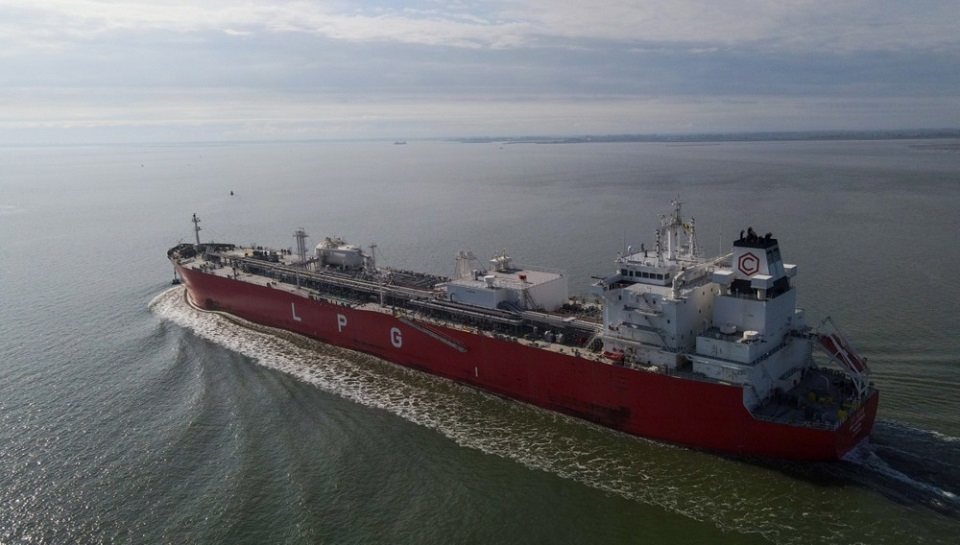
According to Euronews and shipping-route monitoring, an increasing number of liquefied natural gas (LNG) tankers are altering course — not toward Europe, but toward Asia. The reason is simple and rational: prices on Asian markets are currently higher, so traders are redirecting flexible cargoes to secure greater profits. Kpler reports 11 cargoes that have already headed to Asia, two more to Egypt and one to Turkey.
Why this happened: several key factors
First, the escalation in the Middle East region affected Qatari production. After strikes on the Ras Laffan industrial park, some exports were temporarily reduced — noticeably lifting global LNG prices.
Second, a blockade of the Strait of Hormuz is heightening logistical concerns: about 20% of global LNG supplies pass through this route. For Asian countries, where dependence on this channel can reach 80% of supplies, the risks become an urgent need to buy now — even at higher prices.
Third, simple trader arithmetic: Asian buyers are currently paying roughly $1–3 per MMBtu more than European buyers. For large-volume operations, that makes redirection economically attractive.
"We have confirmation of 11 LNG cargoes redirected from Europe to Asia, two more to Egypt and one to Turkey"
— Laura Page, Kpler representative
What this means for Europe — and for Ukraine
Europe as a whole is receiving a smaller share of gas via Hormuz and is more dependent on other sources, but it feels the effects through price competition. The TTF benchmark recently fluctuated around €53–54/MWh, having risen above €60 earlier this week — significantly higher than pre-war levels. This affects energy inflation and industrial costs.
For Ukraine, direct LNG import volumes in the overall balance may be small, but the secondary effects are significant. Higher European prices push up the cost of heating, electricity and industrial gas, which is reflected in prices and production costs across the region. In addition, a weakened European supply market complicates the EU’s collective capacity to manage crises — and Ukraine’s support depends on that capacity.
"It’s good that we are coming out of the heating season, so demand will decline. But the crisis creates serious risks for Europe during the filling of storage facilities and could complicate the next winter if stock levels are insufficient"
— Laura Page, Kpler
Consequences and response options
In the short term: competition for supplies can raise prices during storage injections — a critical phase for the European winter. That is why the EU has already urged member states to start filling storage earlier and set a deadline of 1 December to meet their commitments.
For Ukraine this means three practical priorities: 1) closely monitor global LNG flows and prices; 2) speed up diversification of energy sources and infrastructure (terminals, interconnectors); 3) coordinate with European partners on joint reserves replenishment policies to minimize the market’s temptation to abandon regional solidarity.
Outlook
If the escalation in the region stabilizes and production returns to pre-crisis levels — the pressure on supplies will ease. But if tensions persist, we will see more persistent premiums in Asian markets and intensified competition for limited supplies. This is not only a question of prices — it is a question of the EU’s energy security resilience and its ability to support Ukraine during a difficult period.
Conclusion. The LNG market is currently driven not by emotions but by profit math and logistical risks. It is important for Ukraine to monitor these changes, strengthen energy resilience and negotiate with partners so that external shocks do not turn into internal crisis scenarios.



