"The Man Who Invented 24-Hour News: Ted Turner Dies"
# The Founder of CNN Launched the First 24-Hour Television News Network in 1980 Without Any Market Research — and Changed How Humanity Gets Information. He Was 87.

By Tetiana Suchkova-Ladik
May 6, 2026 · 2 min read
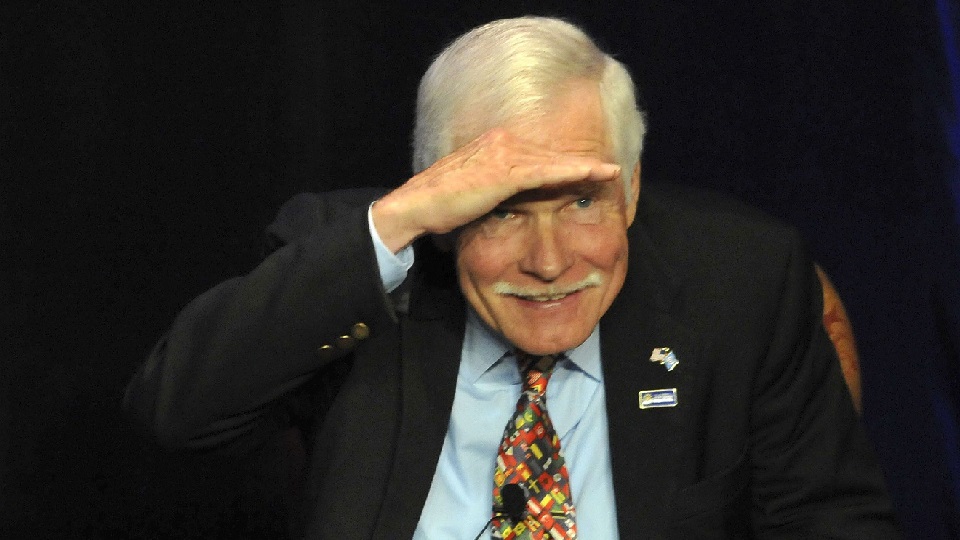
On May 6 in the United States, Ted Turner died — a media entrepreneur, philanthropist, and the man who made news endless. Turner Enterprises confirmed his death without disclosing the cause. It is known that since 2018, Turner lived with Lewy body dementia — a progressive brain disease — and suffered pneumonia in early 2025.
An idea without research — and with $21 million in pocket
In 1980, Turner launched the first 24-hour cable news channel. Cable operators refused to cover the startup costs, so he acted alone — raising $21 million from the sale of one of the independent stations in Charlotte, North Carolina. As he himself wrote: "I am often asked whether we conducted formal research on the feasibility of a 24-hour cable news channel. The answer is no."
CNN quickly gained an audience. In 1982, Turner launched Headline News, and by 1985, both channels were already self-sustaining. Today, the 24-hour news format is replicated by thousands of television channels around the world — from BBC World to Al Jazeera.
Empires and collapse
Turner was born on November 19, 1938, in Cincinnati. His father, an advertising business executive, took his own life in 1963, when Ted was 24, leaving the family business with significant debts. Young Turner took over the business, restored it — and began buying television stations.
Within 30 months of the merger with Time Warner, Turner's assets fell from $10 billion to $2 billion — he was losing approximately $10 million per day for two and a half years. This effectively marked the end of his involvement in show business.
Besides CNN, Turner founded Cartoon Network, TNT, Turner Classic Movies, and WTBS — the first "superstation" on cable. He also owned the baseball team Atlanta Braves and the basketball team Atlanta Hawks.
A billion for the UN and bison in the prairie
In 1997, Turner announced a historic donation of up to $1 billion to the United Nations and the following year founded the United Nations Foundation. One of the fund-sponsored campaigns — Nothing But Nets — helped reduce malaria incidence by nearly half by distributing a million mosquito nets in Africa, Asia, and other regions since 2006.
Turner was also a leading advocate for nature: he helped restore bison to the American prairie and became one of the country's largest landowners.
"He was and will always remain the spirit of CNN. Ted is a giant, on whose shoulders we stand."
Mark Thompson, President and Chief Executive Officer of CNN Worldwide
An illness he spoke openly about
In later years, Turner struggled with bipolar disorder and Lewy body dementia, openly discussing his health problems while continuing his philanthropic work. Despite his declining condition, including pneumonia in 2025, he remained active on his ranches in Montana. His wealth at the time of death was estimated at approximately $2.8 billion.
Turner had five children, fourteen grandchildren, and two great-grandchildren. His ex-wife, actress Jane Fonda, called him her "favorite ex-husband."
The question that remains open: will CNN — in the age of social media and fragmented media consumption — remain a symbol of what Turner built, if Warner Bros. Discovery continues to downsize newsrooms and sell off the network?



