Worker From the Shop: "Darnitsa" Appoints CEO From Production Division for First Time in Seven Years
Yevhenii Cherkas, who spent twenty years in the workshops and departments of Darnitsa production, took the helm of the company at a moment when it is betting on export expansion and certification in new markets.

By Tetiana Suchkova-Ladik
May 12, 2026 · 2 min read
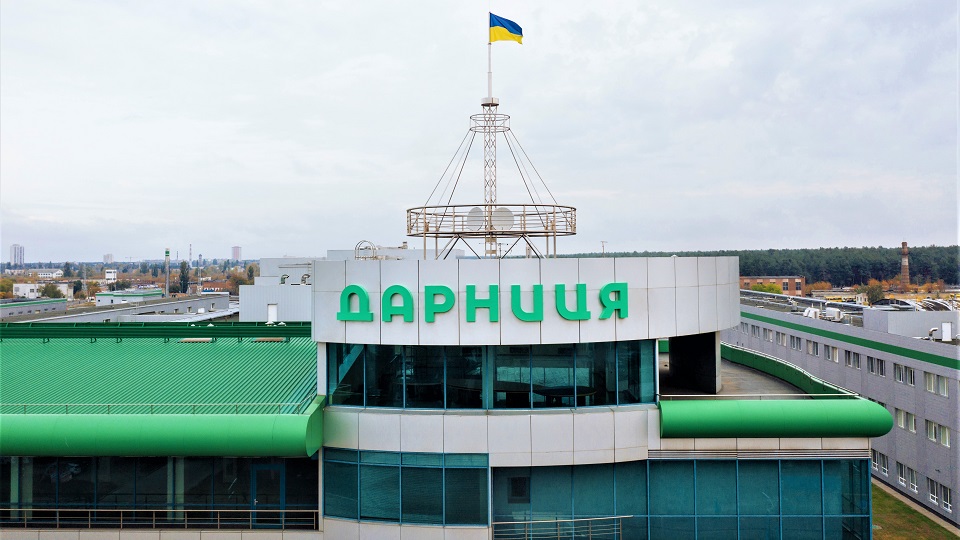
On May 11, the supervisory board of PAT "Pharmaceutical Company 'Darnitsa'" terminated the authority of Andriy Obrizan, who had led the company for seven years. The following day, Yevhenii Cherkas became the general director — and this choice is significant in itself.
Twenty years in one company
Cherkas is neither an external manager nor an anti-crisis appointee. According to Darnitsa's website, he spent over twenty years in the company: ten years heading one of the production divisions, another ten managing the production department. In fact, the new CEO grew up within the operational core of the business. His predecessor Obrizan did not leave through resignation — the SMIDA registry indicates "transfer," which implies continuation of work within the group's structure.
Why a production specialist is no accident
Darnitsa is among the ten largest pharmaceutical manufacturers in Ukraine and has been operating on the market for over 90 years. In recent years, the company has consistently moved toward international certification: it obtained a GMP certificate from the Australian regulator for sterile production — ampoule and infusion workshops. In parallel, as NV Business reported, the company aimed to increase the export share to 15-20% of business within three years.
"Artificial intelligence expands our export capabilities through market analysis, automatic document translation, and logistics optimization"
— Darnitsa, comment for Interfax-Ukraine
Against this backdrop, the appointment of someone from the production hierarchy looks like a management response to a specific challenge: international certification and production scaling require operational thinking at the top level, not marketing thinking.
Context of the change
- In June 2025, Obrizan was included in the rating of the best top managers in the pharmaceutical industry according to Focus — meaning he left from a position of public recognition, not failure.
- Darnitsa is owned by the Zahoriev family; the CEO change occurred without public statements from the owners.
- During the full-scale invasion in February 2022, Cherkas remained at the plant together with Obrizan — this detail from a Forbes article gives an idea of his position within the team.
Formally, this is a rotation within one management culture. But if Darnitsa truly plans to enter new regulated markets — Australia is already there, logically the EU or USA follow — then the operational competence of the new CEO will be the first real test of this strategy. The question is not whether Cherkas will handle the routine, but whether production logic will be sufficient to conduct negotiations with regulators and distributors in markets where Darnitsa is still a guest.



