Russia's February Collapse Proved Temporary: How Moscow Doubled Oil Revenues Despite Strikes on Ports
# Russia's Oil Revenues Surge to $19 Billion in March 2025 Russia's oil revenues reached $19 billion in March 2025—double the figure from February, which had been the worst month since the full-scale invasion began. The resilience of the shadow fleet and the redirection of maritime routes have again proven stronger than attacks on these systems.

By Tetiana Suchkova-Ladik
April 14, 2026 · 2 min read
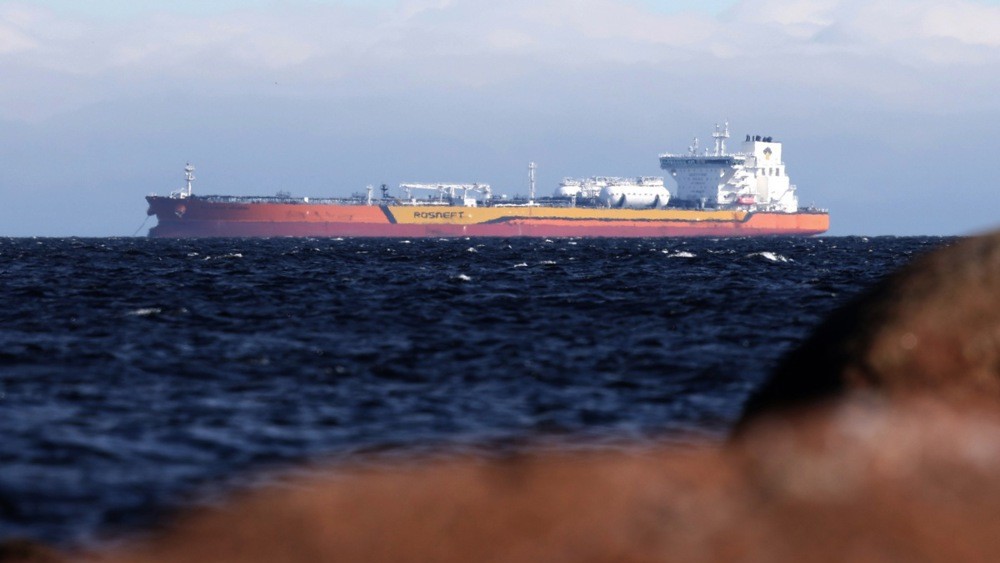
February 2025 seemed like a turning point: Russia's oil revenues fell to their lowest level since February 2022. Strikes on the Baltic ports of Ust-Luga and Primorsk, the halt of the Druzhba pipeline, sanctions pressure — all of this seemed to finally strike at the Kremlin's main artery. But March data from the IEA, cited by Reuters, dispelled this optimism in one line: $19 billion — twice as much as a month earlier.
How this became possible
The key mechanism is maritime re-export. Russia's total supply volume increased by 270,000 barrels per day, to 4.6 million b/d, and this happened precisely due to an increase in maritime shipments. Pipelines suffered a minus, the sea compensated with surplus.
According to the Kyiv School of Economics (KSE Institute), Russia is systematically building a "shadow fleet" — a network of aging tankers that transport oil beyond Western oversight. This tool has repeatedly proven its effectiveness: each time sanctions or attacks blocked one route, the fleet would redistribute to another.
"The Russian oil trading system is extremely flexible and responds quickly to external pressure"
Dmitry Peskov, Kremlin spokesman
This confidence is not merely propaganda. It is backed by statistics: despite all the strikes of 2024–2025, Russia's total oil export volume remained relatively stable.
What really pressured — and why it didn't work in March
- Attacks on Baltic ports forced a redistribution of flows, but did not stop them — maritime shipments from alternative terminals increased.
- The halt of Druzhba hit the pipeline segment, but pipelines' share in Russia's total exports has long ceased to be dominant.
- Sanctions pressure increased logistics costs, but Russia passes these expenses on to buyers — China and India, which together account for over 80% of oil exports.
Long-term dynamics — are different
March's recovery does not negate the structural trend. According to the KSE Institute's forecast, Russia's cumulative oil revenues in 2025 will amount to approximately $155 billion — significantly less than 2022–2023 levels. Urals crude trades at a significant discount: if the Kremlin's budget was calculated at ~$70 per barrel, actual prices in 2025 were substantially lower. The IEA forecasts a global oil surplus in 2026 exceeding 4 million b/d — which means a further price decline that the shadow fleet cannot already compensate for with volume.
Notably, the greatest structural risk for Russia is not Ukrainian strikes per se, but a market surplus. According to estimates by the CREA analytical center, lowering the price ceiling from $60 to $30 per barrel would reduce Russia's oil revenues by 39% from December 2022. The West has yet to dare take this step.
The question that will determine the effectiveness of pressure on Russia through the end of 2025: will the US and EU dare to lower the oil price ceiling to a level that truly hits the Kremlin's budget, or will they keep it as a diplomatic tool in negotiations, where Moscow so far sees more concessions than sanctions pressure?



