Mother with Russian passport, 4 thousand hectares under occupiers and Miami between business trips: what "Schemes" found in MP Borto
An investigation by "Schemes" reveals not just business ties with occupied territories — it documents a systemic picture: a deputy's family was re-registered under Russian law, pays taxes to the Russian Federation budget and builds roads to Simferopol airport, while Bort himself vacations in Florida.

By Tetiana Suchkova-Ladik
April 16, 2026 · 3 min read
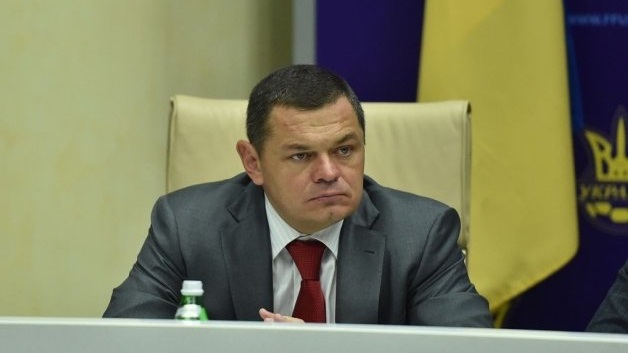
February 24, 2026, the fourth anniversary of the full-scale invasion, a plenary session of the Verkhovna Rada. The parliamentary chamber recorded deputy Vitaly Bort — with a characteristic tan from another trip to Miami. On this very day, a new investigation by Schemes was released, explaining why this is not just an aesthetic detail.
Roads in Occupied Crimea
According to Schemes at Radio Free Europe/Radio Liberty, a company associated with Bort's family and associates is building transport interchanges in occupied Crimea — ones intended to connect the Tavrida highway and the new Simferopol airport terminal. Both facilities are part of infrastructure projects into which Russia invested hundreds of billions of rubles and actively promoted as symbols of Crimea's "return."
Construction began in 2017 and continued at least until early 2026. The deputy's mother, Valentina Bort, after the occupation, in 2015, took a position at this "Road and Transport Construction Company." At least from 2019 — when she obtained a Russian passport — until her dismissal in January 2024, she held the position of deputy general director.
4,000 Hectares Paying Taxes to Russia
A separate direction — agricultural business in the occupied part of Zaporizhzhia Region. Agrarian Company Niva in the village of Uspenkivka works nearly 4,000 hectares of Azov Sea lands: grain, legume, and oil crops. The deputy's wife Olga Bort appeared among the company's owners back in 2012, and before that Bort himself was the owner.
After the occupation, the business was re-registered under Russian law. According to data from Russia's Federal Tax Service, for 2023–2025, the agrarian company's net profit from trade with Russian companies amounted to nearly a quarter of a billion rubles — over 100 million hryvnias. Over 27 million rubles in taxes were paid to the Russian budget.
"Agrarian Company Niva" uses the services of a network of private laboratories owned by a sanctioned businessman from the circle of Russian President Vladimir Putin.
Schemes at Radio Free Europe/Radio Liberty
207 Days Abroad — and New Trips
Back in December 2023, Schemes recorded that Bort spent 207 days abroad in less than two years of full-scale invasion. Then it was about three-day business trips that stretched into weeks. New data shows: in 2024–2026, the practice has not changed — most of the time the deputy rested with his family in Miami.
In summer 2024, Bort crossed the border in a car belonging to DS Prom Group, a Kyiv-region company engaged in major road repairs. The SBI confirmed that it had added new investigative materials to an existing criminal proceeding — under an article concerning official forgery by a people's deputy.
20 Years in Politics — and No Comment
Bort is a deputy of four convocations, starting from 2006. He voted for the "dictatorial laws" on January 16, 2014, publicly supported the pseudo-referendum in Makiyivka in April of that year. In 2024, he was included in a temporary investigative commission of the Verkhovna Rada on drone procurement and fortification construction — and after public outcry was excluded.
- Mother — deputy director of a Crimean construction company, Russian citizen
- Wife — co-owner of an agrarian company under occupation, paying taxes to the Russian budget
- The deputy himself — did not respond to Schemes' inquiry
Formally, none of the recorded businesses are registered directly under Bort's name. This is precisely what makes the situation legally more complex: current Ukrainian legislation does not provide for direct liability of a deputy for relatives' business in occupied territories — unless direct participation in management or profit receipt is proven.
If the SBI, within the criminal proceeding, establishes a financial connection between the deputy and the income of Agrarian Company Niva — the question will remain not procedural, but political: whether the Verkhovna Rada is ready to strip the mandate from a deputy whose family business has been financing the aggressor country's budget for years.



