Almost two years without regular service: Kyiv is repairing the tunnel between "Shevchenka" and "Pochaina" for 1.84 billion.
The Kyiv Metro has finally received the state expert conclusion for the major overhaul of a subsiding tunnel on the blue line. The repair, which had been planned for 2024, will cost nearly two billion — and this amid the war.

By Tetiana Suchkova-Ladik
March 31, 2026 · 2 min read
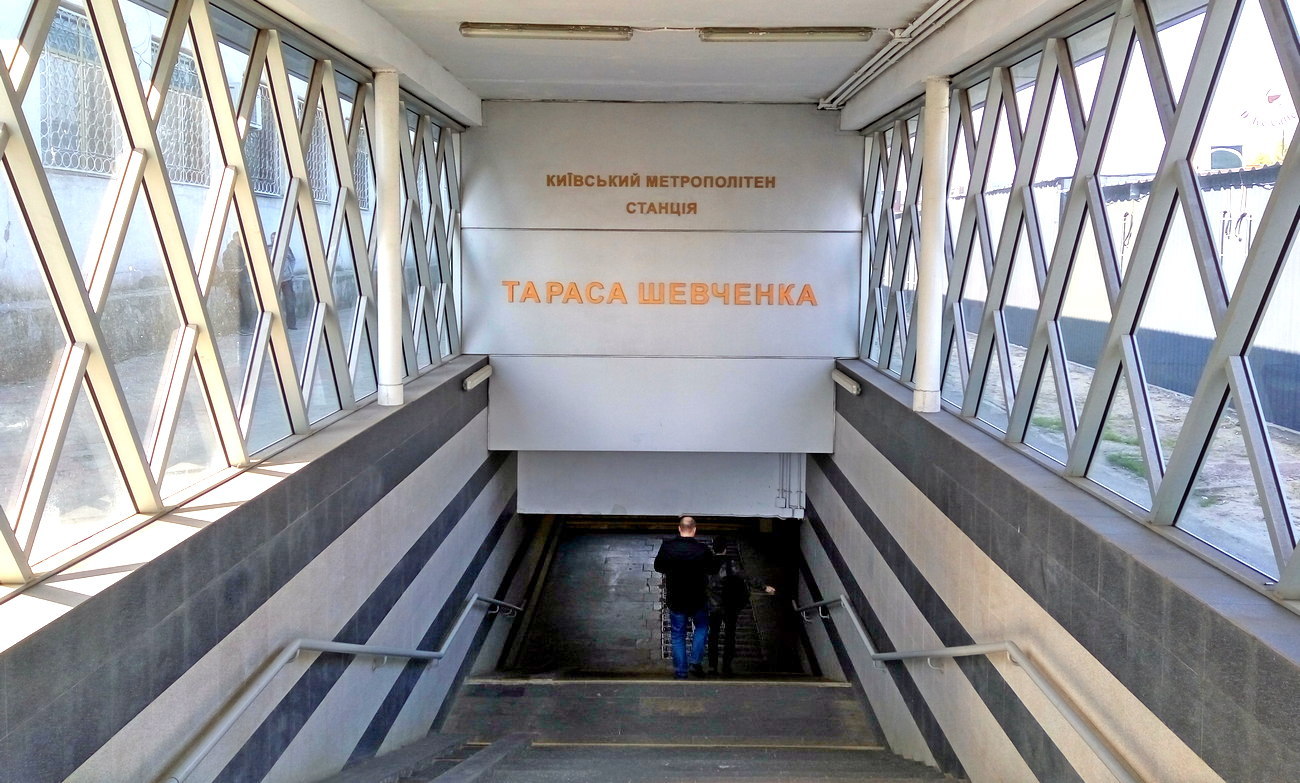
Andriy commutes from Obolon to work every day — 40 minutes by metro to Khreshchatyk. For the next nearly two years this route will become more complicated: the Kyiv Metro is preparing for a major overhaul of the running tunnel between the Tarasa Shevchenka and Pochaina stations.
The Kyiv City State Administration (KCSA) announced the start of preparations for the works. The metro has just received the state expert report — without it they could not move on to the tender. The problem is not new: the tunnel in this section is subsiding; works were planned as far back as 2024, but the documents were delayed by more than a year.
What and how much
The total scope of the works is planned for up to 23 months. The estimate is UAH 1.84 billion. This is a major repair, not a patch-up: it concerns the structural elements of the tunnel on track No. 1, where deformations have been recorded.
The blue line is not a secondary route. It connects the densely populated Obolon with the city centre and the left bank. The metro overall provides more than 50% of all passenger transport in the city. When an accident occurred in 2023 on the southern section of the same line, the city felt it immediately: surface transport couldn't cope with the load, and people spent hours stuck in traffic.
Money during the war
UAH 1.84 billion is not an abstract number. For comparison: the annual budget of some regional Ukrainian cities is smaller. The question is not whether the repair is needed — a tunnel with deformations in a metropolis is a real risk. The question is where the funds will come from and how they will be controlled.
Officially, the source of funding has not yet been disclosed in detail. Kyiv traditionally covers infrastructure costs from the city budget and borrowed loans — in particular from the EBRD and the EIB, which financed previous metro projects. Whether this repair will be subject to external audit is an open question; the answer will appear after the tender documentation is published.
What next
For now the metro is finishing the preparatory stage. The tender for a contractor has not yet been announced. Until the start of the works, passengers on the blue line are riding as usual — restrictions on movement are expected only during the construction itself.
For a city where the metro is virtually the only transport option during air-raid alerts and where each disrupted station is immediately felt on the surface, 23 months of repairs is not a technical detail but a city-wide problem that requires a clear plan for traffic organisation. That plan has not yet been presented publicly.
Will the metro publish a detailed detour scheme and a timetable of restrictions before the tender is announced — or will Kyiv residents again have to learn about changes after the fact?



