McDonald's opened 12 restaurants in 2025 — an investment in everyday life and the Ukrainian economy
The chain opened its 120th operating outlet in Ukraine: a new restaurant near the "Bukovina‑West" bus station in Chernivtsi — a sign of investor confidence and a step toward a return to normal life.

By Tetiana Suchkova-Ladik
December 29, 2025 · 2 min read
Briefly
In 2025 McDonald's opened 12 new restaurants in Ukraine, the most active region being Lviv. The company's press service and LIGA.net reported this. For the chain this is not just expansion: the opening of the 120th operating outlet during the war is a marker of economic resilience and a return of service to the regions.
Where the restaurants opened
Among the new locations are two restaurants in Zakarpattia (Uzhhorod and Mukachevo), which became the only ones in Ukraine operating around the clock (24/7). There was one opening each in Brovary, Lutsk, Hatne, and Zhytomyr. Three new outlets appeared in Lviv, including the first restaurant with a sustainable design concept. Two restaurants opened in Kyiv, including one on the grounds of the zoo. The twelfth and final outlet this year opened in Chernivtsi on December 26.
The restaurant in Chernivtsi — details
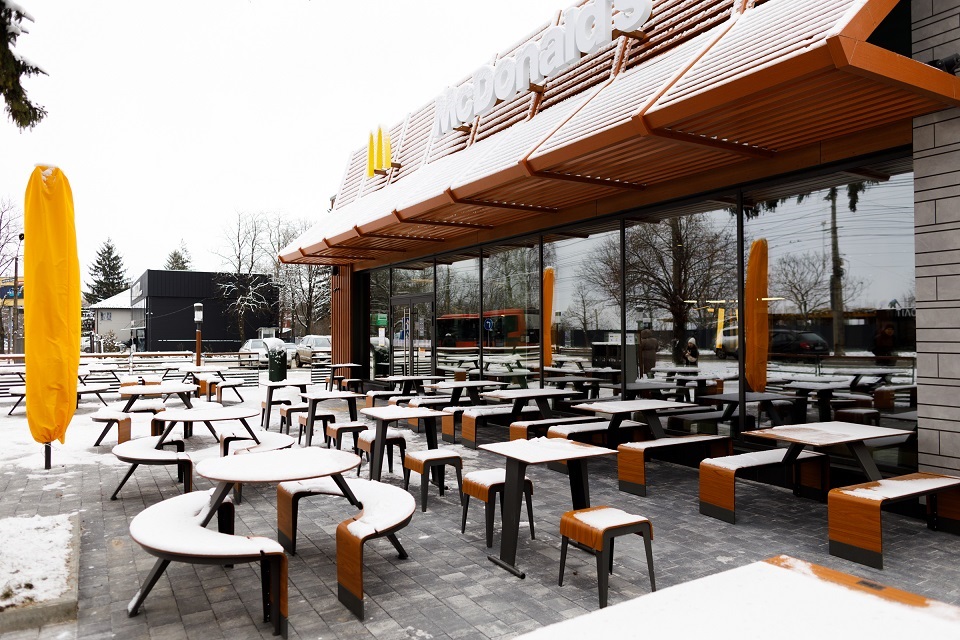
The new McDonald's on 242‑A Ruska Street is the second in Chernivtsi and the region. It is located next to the Bukovyna‑West bus station, at an active transport hub in the Graviton residential area. The restaurant covers 471 m²; the dining area has 121 seats, and the terrace has another 160. All ordering channels are available: in‑restaurant orders (7:00–23:00), McDelivery (7:00–22:00) and McDrive (5:00–23:30). The outlet is equipped with 10 self‑service terminals for faster service.
"We open new restaurants in line with the network's development strategy, to be closer to our customers and give Ukrainians more opportunities to enjoy their favorite meals in convenient locations and formats."
— Press service of McDonald's Ukraine
Why this matters
These openings are not just about a Big Mac or coffee. For the economy and local communities they mean jobs, taxes and the operation of supply chains. For investors they signal that big brands are willing to invest in Ukraine even under heightened risks. Market experts note that the increase in openings (+4 restaurants compared with 2024) is an indicator of business adaptation to new realities and the return of demand to regions and tourist points.
What next
McDonald's says it will continue to invest in Ukraine. The question for 2026 is whether this confidence will turn into a broader inflow of investment into retail and regional infrastructure. For Ukrainians it is a simple but important indicator: the return of familiar services close to home means the restoration of daily life, business optimism and real economic effects, not just PR gestures.
Sources: press service of McDonald's Ukraine, LIGA.net



