Mesaros Wrote a Letter to Madyar — While His Shares Fell 10%
Hungarian billionaire and Orbán ally Lőrinc Mészáros appealed to the future prime minister following statements about oligarchs fleeing the country. Behind the letter stand 60,000 employees and a conglomerate that has lost more than half its value in six months.

By Tetiana Suchkova-Ladik
April 27, 2026 · 3 min read
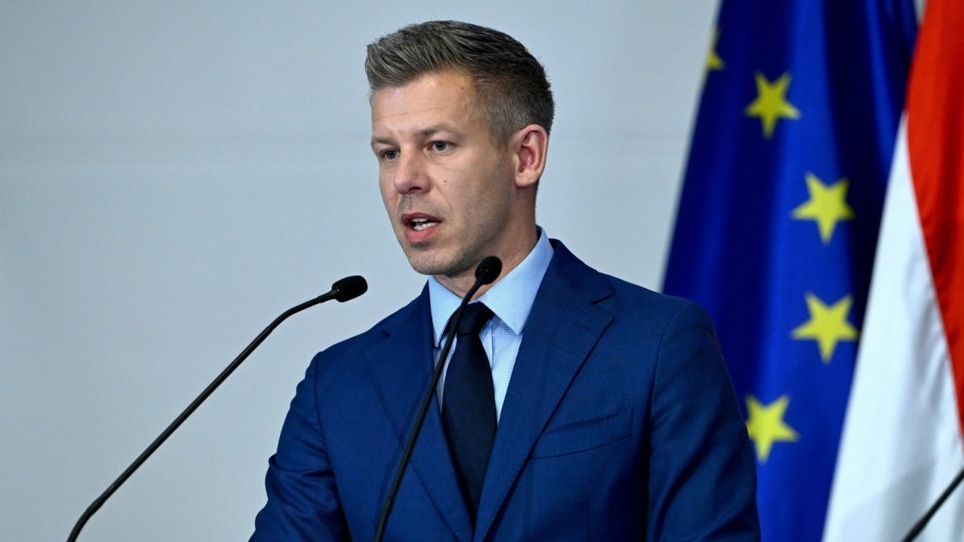
On April 27, shares of Opus Global — the flagship of business magnate Lőrinc Mészáros, Hungary's richest man and personal friend of Viktor Orbán — fell to 317 forints. A year earlier, they were worth over 600. The same day, Mészáros wrote a letter to Péter Magyarra.
What Magyarra said and how Mészáros responded
On April 25, Magyarra — leader of the Tisza Party, who won the elections on April 12 with a two-thirds majority — announced in a Facebook video that oligarchs from Orbán's circle were massively withdrawing tens of billions of forints to the UAE, USA, Uruguay, and other countries without extradition treaties. According to him, several influential families had already left Hungary: children were removed from schools, security was hired. The Mészáros family, according to Magyarra's information, would "head to Dubai in the coming days."
Magyarra also claimed that the TV2 television channel and other media assets linked to Fidesz were being sold at undervalued prices. He separately mentioned the communication company Lounge Event Kft of businessman Gyula Balássy — who immediately denied the sale information.
"I once again call on the prosecutor general, the police chief, and the head of the Tax Authority to arrest the criminals who have caused the Hungarian people damage in the tens of thousands of billions of forints, and not to allow them to escape to countries that currently do not extradite suspects."
Péter Magyarra, future Prime Minister of Hungary, April 25, 2026
Mészáros did not respond publicly. According to the Hungarian publication Telex, on Monday his conglomerate published a statement and reported that the owner "sent a letter to Mr. Magyarra the same day with the aim of providing accurate information and resolving the tense situation." The details of the letter were not disclosed.
What lies behind the numbers
The fall of Opus Global shares is not a one-day reaction. According to Investing.com and Portfolio.hu, since summer 2025, the securities have lost approximately 47% of their value: from a peak of over 600 forints to 317 as of April 27. The first sharp decline occurred in March — after the publication of a Medián poll showing Fidesz trailing Tisza by 23 percentage points. At that time, Opus Global and 4iG — another conglomerate linked to Orbán's government — fell 10–12% in a single day, and the forint strengthened by 4 units in an hour.
Opus Global CEO Koppány Lelfai told Portfolio at the end of March that the decline "does not reflect the true fundamental value of the company" and called the sell-off "unjustified." According to him, analysts tracking Opus rely on a target price of 598–620 forints per share.
However, the market assesses not fundamental metrics, but the risk of changing the rules of the game. Mészáros's conglomerate grew primarily on state contracts and concessions: roads, Hunguest hotel chains, banking stakes in MBH. When the government customer changes — the value of assets changes as well.
60,000 employees as an argument
Mészáros chose an unusual tactic: instead of legal denials — an appeal to social scale. The conglomerate's statement states that "public statements and ambiguous remarks create uncertainty among employees about their future." Signed: "Hoping for a response that will reassure 60,000 families."
According to registry data and investigations by Telex and Direkt36, Mészáros's business structures through Konzum PE, Opus Global, and related funds include hotel chains, food companies, construction enterprises, and a stake in MBH Bank. How many of the 60,000 employees directly depend on government subsidies — there are no public data.
Verification and what remains unverified
Confirmed: the fall of Opus Global shares on April 27 (stock exchange data), publication of the letter through the conglomerate's press service (Telex, Index), Magyarra's statements from April 25 (video address, confirmed by Reuters, CNN, VSquare). Not independently confirmed: the fact of the Mészáros family's departure to Dubai; the specific amount of funds withdrawn abroad; the contents of the letter.
Magyarra appealed to the Tax Authority and police demanding the freezing of assets and arrest of those responsible. No public confirmation that these bodies began acting was received as of April 27.
If the Magyarra government, after taking office, initiates an audit of state contracts of the Mészáros group — the scope and transparency of these inspections will determine whether the rhetoric about "60,000 families" becomes a real defense argument, or merely a figure in a negotiation memo.



