Paton Bridge: Ministry of Regional Development places responsibility on Kyiv — what this means for the capital’s safety and traffic
The ministry reminded municipal authorities of their legal responsibility. We explain who should pay for the major repairs, which technical risks experts have already identified, and which possible solutions could speed up the work.

By Tetiana Suchkova-Ladik
March 19, 2026 · 3 min read
Briefly: the essence of the disputed position
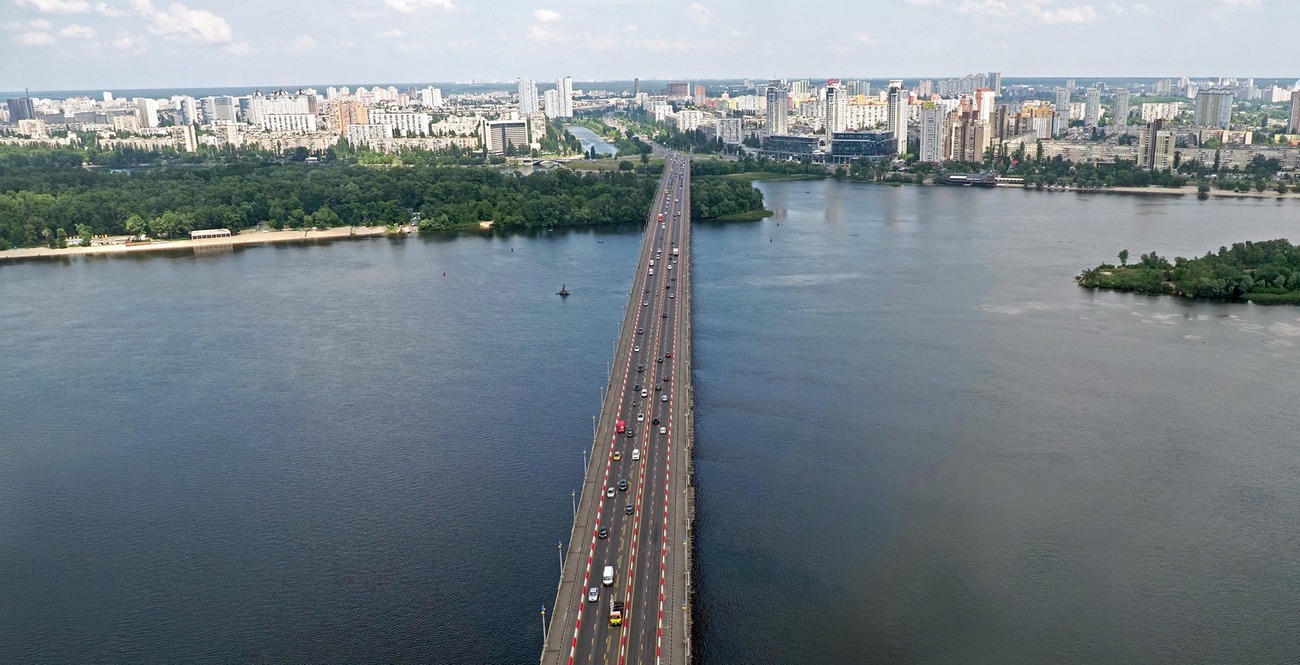
The Ministry for Communities and Territories Development published a position: the Yevhen O. Paton Bridge is an object of communal ownership of Kyiv, therefore the local authorities are responsible for its technical condition. This comes against the background of a public debate about corrosion and the need for major repairs to one of the key transport links across the Dnipro.
Who is responsible for what (legally and in practice)
Under the law, streets, roads and engineering structures within populated areas are the responsibility of local self-government bodies. In the ministry's statement:
"The Yevhen O. Paton Bridge across the Dnipro River is an object of communal ownership of the city of Kyiv... Therefore, it is Kyiv City Council and its executive body that have the authority and the obligation to ensure its proper technical condition."
— Ministry for Communities and Territories Development
At the same time, the practical side is more complicated: in 2023–2025 state bodies prepared documentation for a new tender, but funding was not secured in 2025. That is, legal status is not always accompanied by financial capacity.
What experts say
Specialized inspections confirmed: the bridge was declared unsafe as early as 2018; anti-emergency measures were partially carried out in 2018–2019, after which there were no systemic works. At a technical council meeting in early March, specialists confirmed that the bridge can be used only under strict restrictions — axle load limited to 7 tonnes, total weight limited to 17 tonnes, and special traffic organization.
"I would not want to alarm people, but corrosion is relentlessly eating away at this structure. The threat of partial or total collapse is entirely real."
— Vyacheslav Bohdanov, First Vice-President of the National Academy of Sciences of Ukraine
"The bridge needs to be closed immediately and repaired, because there is terrible corrosion there."
— Ihor Kryvtsun, Director of the E.O. Paton Institute of Electric Welding (interview with LIGA.net, July 2024)
Politics and funding logistics
Kyiv Mayor Vitali Klitschko acknowledges the need for reconstruction, but points to difficulties with tender procedures that were blocked by appeals to the Antimonopoly Committee, and after 2022 — cancellation of tenders due to the war. According to the mayor, state bodies prepared documentation in 2023–2024, but in 2025 the State Agency for Restoration reported a lack of funding, and the process stalled.
"After that, the state, in effect, sidelined the city and took the project upon itself."
— Vitali Klitschko, Mayor of Kyiv
Consequences for Kyiv residents and the economy
Practical risks: traffic restrictions affect logistics, public transport and travel times for thousands of people; in the long term — the safety of residents. Given the wartime context, stable infrastructure is also an element of the capital's resilience.
Possible solutions
- Kyiv City Council allocates funds from the local budget or attracts credit/off-budget mechanisms (for example, public-private partnership, loans from international financial institutions).
- The state finances the project as a strategic national object — but this requires a political decision and resources.
- A combination of sources: partial state co-financing + international technical assistance + a transparent tender process that unblocks the works.
Conclusion — what's next?
The problem has two dimensions: legal (who is responsible) and practical (who can pay and when works will start). Experts and the National Academy signal a real threat to safety, and funding delays increase risks to the daily lives of Kyiv residents. The ball is now in both courts: the city authorities must speed up financial decisions or secure state and international support, and the state must set priorities for restoring critical infrastructure. Whether they will find a compromise that guarantees both rapid repairs and transparent financing remains an open question.



