Mobile Storage Instead of Central Generation: Cabinet Formalized Energy Equipment Reserve for Blackouts
The government approved the procedure for forming and using a decentralized reserve of power plants, boiler houses and transformers — to be financed from the state budget, local budgets and international aid, but the mechanism for controlling the distribution is not publicly described.

By Tetiana Suchkova-Ladik
May 15, 2026 · 2 min read
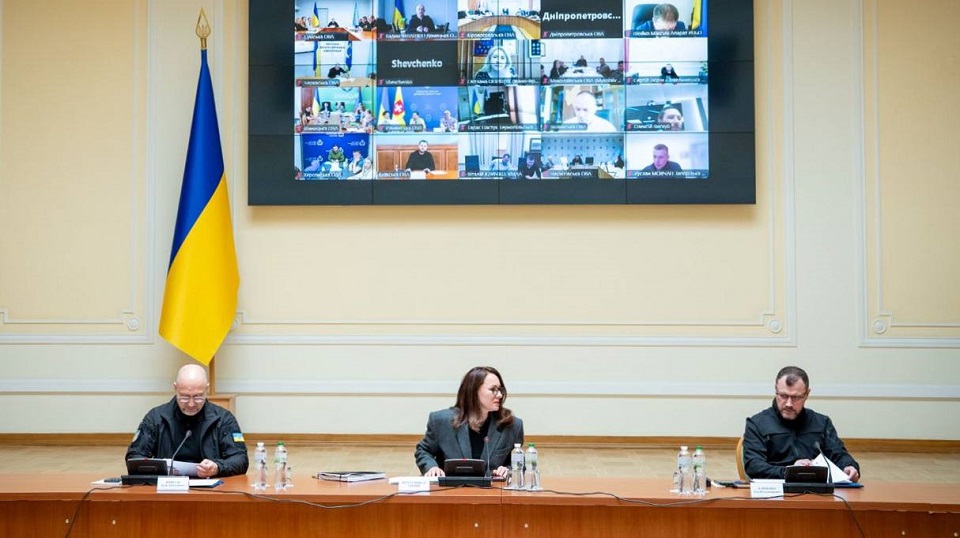
Winter 2025–2026 left Ukraine without up to 55 GW of pre-war generation capacity: as of 2025, only about 17.5 GW remained in operation. Against this backdrop, on May 15, the Cabinet of Ministers approved the procedure for forming and using the National Reserve of Autonomous Generation.
What is it and how does it differ from "Resilience Points"
The reserve is not a network of stationary shelters with charging stations, but a decentralized stockpile of mobile equipment: power plants, cogeneration units, boiler houses, transformers. The logic is to deliver it where needed, rather than waiting for people to reach a heat point.
"This is about a decentralized stockpile of mobile power plants, cogeneration units, boiler houses, transformers and other equipment for urgent provision of critical infrastructure with electricity, heat and water".
Yulia Svyrydenko, Prime Minister, Telegram channel after coordination center meeting
Cogeneration units are critically important: they can operate in so-called island mode — autonomously, completely disconnected from the general grid. This means a critical infrastructure facility functions even if the regional power system completely collapses.
Where the money comes from and who is responsible
According to Svyrydenko, the formation of the reserve will be financed from three sources:
- state budget;
- local budgets;
- international support.
Coordination has already been developed in crisis mode: during past energy emergencies, the need for generators by region was analyzed daily by the Ministry of Development, Ministry of Energy, Interior Ministry and State Emergency Service. The new procedure should formalize this process before the next heating season arrives — by autumn 2025.
Why this is a change in approach, not just another plan
Russia changed its strike tactics: if in the first year of the war attacks targeted large generation facilities, later the emphasis shifted to substations, heat generation and high-voltage lines. Restoring large thermal power plants becomes irrational — too expensive and too easy to destroy again.
As of November 2025, the heat supply sector already had 182 cogeneration units in operation (83 fully operational) with a total capacity of 147.3 MW, as well as 239 block-modular boiler houses with a capacity of about 635 MW. Through international aid programs, communities received over 90 modular units. The new reserve should systematize what has so far accumulated chaotically.
A simplified mechanism for construction and modernization of energy facilities — "design-build", where permitting documentation can be completed after work is finished — has been in effect since late 2023 and remains in force.
What remains unanswered
The procedure has been approved, but publicly it has not been disclosed who exactly decides which community gets equipment first during simultaneous attacks on multiple regions. Past experience has shown: conflicts between the center and local authorities are most acute precisely at the moment of resource distribution between regions.
If before the start of the 2025/2026 heating season the government publishes clear prioritization criteria — who receives mobile generation first and by what algorithm — the reserve will become a tool. If not, it risks becoming a warehouse managed ad hoc.



