"Iran's Naval Blockade: How 36 Hours Could Change Nuclear Negotiations"
The United States has completely blocked Iranian ports following the collapse of negotiations in Pakistan. The economy, which relies on oil exports, has now been deprived of its main source of hard currency — and this, rather than bombing, could prove to be the real pressure on Tehran.

By Tetiana Suchkova-Ladik
April 15, 2026 · 2 min read
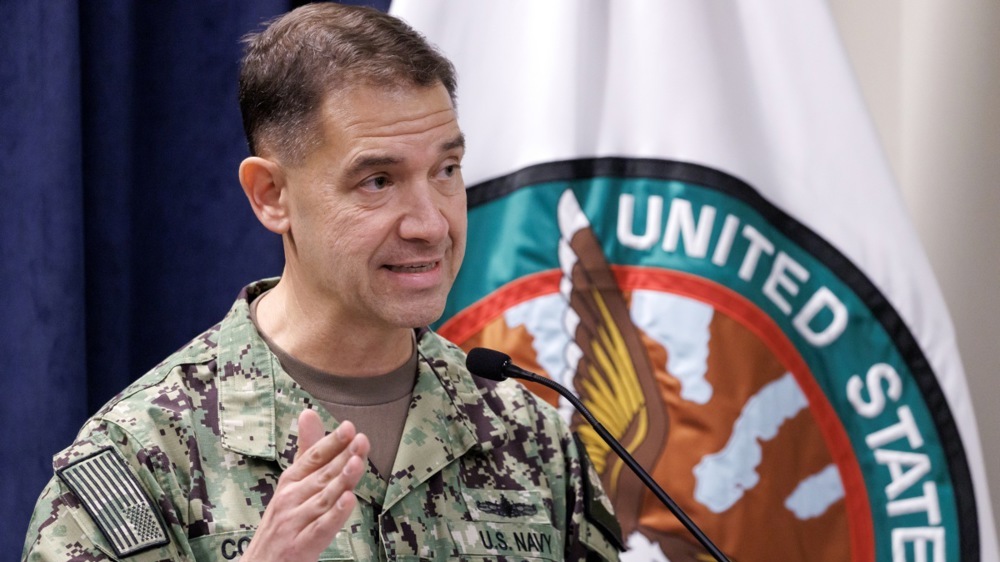
Admiral Brad Cooper, commander of U.S. Central Command, announced that American forces have established a complete naval blockade of Iranian ports in less than 36 hours. According to him, approximately 90% of Iran's economy depends on international maritime trade — and all of this trade has been halted.
But to understand why the blockade emerged precisely now, one must look not at the fleet, but at the diplomatic failure that preceded it.
Negotiations collapsed — and then the fleet appeared
The blockade became a direct response to the failure of peace negotiations between the United States and Iran in Pakistan. After they reached an impasse, Trump announced the implementation of a naval blockade from April 13, stating that he was "indifferent" to further talks. Meanwhile, Tehran had effectively closed the Strait of Hormuz using missiles and drones, but continued to allow its own oil tankers to pass through — profiting from the sharp rise in oil prices caused by its own blockade.
"The United States can collapse Iran's economy by cutting off its oil exports. This could open the Strait of Hormuz much faster than anything else."
Robin Brooks, senior fellow at the Brookings Institution
Mechanism of pressure: not explosions, but hyperinflation
The main stakes of the blockade are not military, but financial. Without oil exports, Iran loses the hard currency needed to pay for imports. Brooks predicted a classic scenario in a Substack post: currency collapse → devaluation spiral → hyperinflation. Indirect confirmation comes from the current situation: according to Reuters, prices in Tehran have risen approximately 40% since the start of the war, and the Iranian rial has depreciated 8% on the black market.
Analysts, including retired NATO Supreme Allied Commander Admiral James Stavridis, characterize the blockade as a middle ground between inaction and destruction of oil infrastructure — which the United States will want to preserve after any settlement.
Where it's thin, it will tear
There are two key vulnerabilities in the American strategy. First — China: it is the main buyer of Iranian oil and, by Brooks's logic, has an incentive to pressure Tehran to resume supplies. But Beijing could choose another option — quiet support for blockade evasion. Second — the Strait of Hormuz itself: American officers previously described it as Iran's "zone of destruction," saturated with anti-ship missiles, drones, and mines.
- Two destroyers have already crossed the strait to begin mine-clearing operations
- Another carrier strike group is heading to the region
- Iran's Islamic Revolutionary Guard Corps warned that any approach of military vessels will be considered a violation of the ceasefire
Stavridis estimates that a full blockade requires two carrier strike groups plus about a dozen destroyers — and they are available. But whether they will be sufficient to maintain the blockade regime under constant threat of attacks is a question that will be answered over weeks, not days.
If within two weeks Iranian oil does not reach Chinese terminals, Beijing will face a choice: either pressure Tehran to sit down for negotiations, or openly support blockade evasion — and thereby directly confront the American Navy.



