Mukachevo’s “Mriya” is being turned into a residential complex: what the city will lose and what it could gain
The city council has approved the development of a detailed plan for 4.1 hectares occupied by a knitwear factory. The sale of the company, production cuts, and unstable financial results explain why the owner envisions residential development there — but the decision carries consequences for jobs and urban space.

By Tetiana Suchkova-Ladik
December 30, 2025 · 3 min read
Decision and its essence
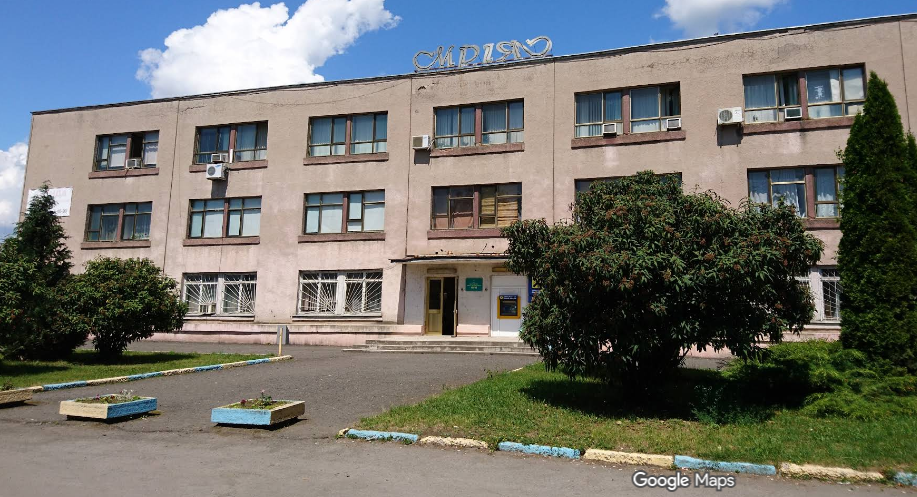
On December 23, the Mukachevo City Council adopted a decision to grant permission to develop a detailed plan for a territory of 4.1 ha on Tomas Masaryk — Volodymyr Danchevskyi streets. This site houses the facilities of the knitwear factory "Mriya" — an enterprise now being considered as a potential location for a residential quarter with trade and entertainment infrastructure (source: zaxid.net).
"Mukachevo knitwear factory 'Mriya' has received permission to develop a detailed territory plan for the possible construction of a residential quarter..."
— zaxid.net
History of the factory and current state
Factory "Mriya" was founded in 1973 and was once one of the largest enterprises in the region — at its peak about 5,000 people worked there. In 2005 the enterprise became a subsidiary of the Lithuanian company Utenos Trikotazas and maintained export ties with the markets of Sweden, Finland, Germany, France, Switzerland, Austria and Spain.
However, recent years have shown significant decline: according to annual reports, in 2024 the factory recorded a loss of UAH 7.28 million, and net revenue fell by 15% — to UAH 20 million. As of the beginning of 2025, 84 people were employed at the enterprise (previously — 113).
Who bought it and which connections drew attention
In October 2025 more than 98.87% of the factory's shares were transferred to Translum LLC (Mukachevo) — a company registered shortly before the purchase. According to data published by the media and YouControl, the ultimate beneficiary is named as Mukachevo businessman Vladyslav Vitvinov. The report also noted that at 6 Oleksandra Dukhnovych Street there is an office of the company "Andezit M", associated with the Balog family — a fact that drew attention due to local politico-economic ties.
Consequences for the community: jobs, space, budget
Converting an industrial site into residential use entails several practical consequences. First, the risk of permanent loss of jobs in an industry that has already reduced staff over several years. Second, the change in land function will affect urban infrastructure — transport, schools, utilities — and will require investments from the local budget or the private sector.
On the other hand, renovation of the area and new housing could bring additional taxes and revive local commerce, if the project proceeds transparently and includes social guarantees for workers or mechanisms to support reintegration into other industries.
Why this happened
The reasons are evident from the financial indicators: falling revenues, losses and drastic staff reductions make the industrial cycle less attractive for investment. Therefore the new owner is likely assessing the commercial feasibility of using the site for housing instead of restoring large-scale production.
What next — a call to the authorities and the public
The facts are already known: the sale of shares, financial difficulties, permission to develop a detailed plan. Now the question is for the city authorities and the community: will priorities be given to preserving jobs and industrial potential, or will short-term interest in profitable development dominate? Regional development analysts emphasize the importance of transparent planning procedures and public consultations in such cases.
"The transformation of industrial zones must take into account both the economic and social consequences for the community"
— regional development analyst (comment based on media publications)
The decision on the detailed plan is not the final point, but the start of procedures that may define the face of the city for years. Now it is up to the authorities and residents: will it be possible to reconcile the investor's interests with those of the community, or will the industrial heritage simply be turned into a site for high-rise blocks?