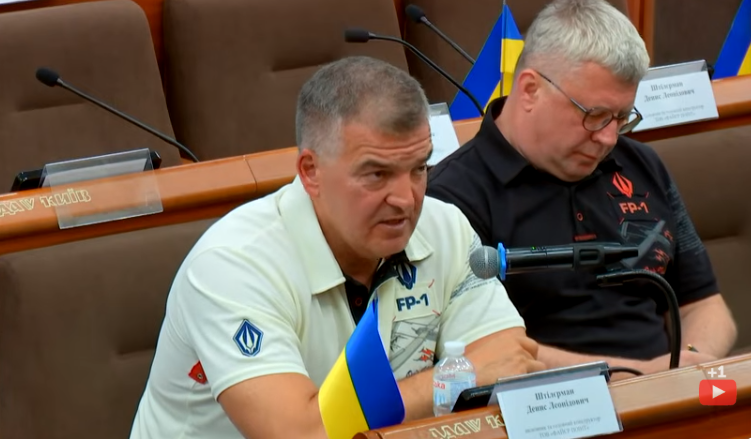
Customs Official, Hotel and Brother: How Sergiy Tupalsky 'Earned' Five Years at Bukovel — Now in Pretrial Detention
# Former Deputy Head of Kyiv Customs Unable or Unwilling to Post 20 Million Hryvnia Bail — Remains in HACC Custody The former deputy head of Kyiv Customs failed to or refused to post a 20 million hryvnia bail and remained in custody at the High Anti-Corruption Court (HACC) hearing. According to the National Anti-Corruption Bureau (NABU) and the Specialized Anti-Corruption Prosecutor's Office (SAPO), $2 million in cash obtained through customs corruption schemes was converted into a restaurant and hotel complex registered under his brother's name.

By Tetiana Suchkova-Ladik
May 18, 2026 · 3 min read
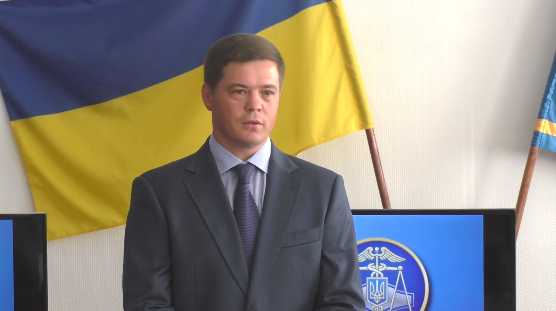
Scheme: cash → construction → legal income
According to the version presented by investigators from the National Anti-Corruption Bureau and prosecutors from the Specialized Anti-Corruption Prosecutor's Office, the money laundering mechanism was classical, but large-scale. Serhiy Tupalskyi, while serving as deputy head of the Kyiv Customs, accumulated assets whose origin cannot be confirmed by the family's official income.
In 2020–2021, he invested more than $2 million in cash in the construction of a restaurant and hotel complex in the village of Polanytsya in Ivano-Frankivsk region — on the territory of the Bukovel resort. To sever the connection between himself and the asset, the real estate property and land plots were registered in the name of his brother — Oleksandr Tupalskyi. However, as detectives established, actual control and management remained with the suspect himself.
After the hotel was put into operation, it began generating official income. This stage, according to NABU, became the final phase of legalization: dirty money took on the appearance of completely legitimate profit from the tourism business. This continued until 2025.
Not the first time under NABU's scrutiny
This is not Tupalskyi's first appearance in cases involving the anti-corruption agency. In November 2019, NABU detectives detained him along with nine other suspects in a case concerning violations of customs legislation and understatement of customs value of goods — it was linked to businessman Vadym Alperin. At that time, the court chose house arrest, but the appellate chamber of the High Anti-Corruption Court overturned the decision, and Tupalskyi was released.
After that scandal, according to journalistic investigations, he opened a furniture business — a sole proprietorship under the second group of the unified tax — and continued activities related to the Carpathian hotel. He publicly stated that "the lawfulness of actions had been proven repeatedly."
"To legalize them, in 2020–2021 he invested more than $2 million in cash in the construction of a restaurant and hotel complex on the territory of the Bukovel ski resort in the village of Polanytsya in Ivano-Frankivsk region. To conceal this, the complex was registered in the name of a close relative."
— NABU, official statement
From bail to detention — in one court session
On March 27, 2026, NABU and the Specialized Anti-Corruption Prosecutor's Office announced the suspicion. In April, the investigative judge of the High Anti-Corruption Court, at the request of detectives, set bail of 20 million hryvnias with procedural obligations — a standard preventive measure for cases of this level.
On May 18, when it became clear that the bail had not been posted, the Specialized Anti-Corruption Prosecutor's Office appealed to the court with a motion to change the preventive measure. The investigative judge of the High Anti-Corruption Court supported the prosecutor's position and directly in the courtroom changed the decision: detention in custody with the alternative of the same bail of 20 million hryvnias. The suspect remained in jail.
- Suspicion — Part 3 of Article 209 of the Criminal Code of Ukraine (legalization of property obtained through criminal means)
- Amount of legalized funds — more than $2 million
- Size of bail — 20 million hryvnias (~$480 thousand at current rate)
- Asset — restaurant and hotel complex registered in the name of his brother
What's next
The case is at the stage of pre-trial investigation. Tupalskyi remains a suspect — there is no court verdict, which means the presumption of innocence applies. However, the logic of events is revealing: a person who already walked away unscathed in 2019, this time remained in the courtroom in custody.
The key question is not whether someone will post 20 million hryvnias in bail, but whether the investigation can prove in court the very fact of illegal origin of those $2 million invested in Bukovel: if the defense proves even partial legitimacy of the source of funds — the charge will fall apart.