Gold worth UAH 2.7 million intercepted on the border with Romania — ingots hidden in socks and chains concealed in a prayer book
Two incidents at the Porubne–Siret checkpoint in a single day illustrate how the joint efforts of border guards and customs officers busted a smuggling scheme — and why this matters for economic security.

By Tetiana Suchkova-Ladik
January 21, 2026 · 2 min read
What happened
On 20 January at the international checkpoint “Porubne — Siret”, border guards and customs officers detected two attempts to smuggle valuables into Romania. The information was released by the Western Regional Directorate of the State Border Guard Service of Ukraine and the Chernivtsi Customs.
Inspection details
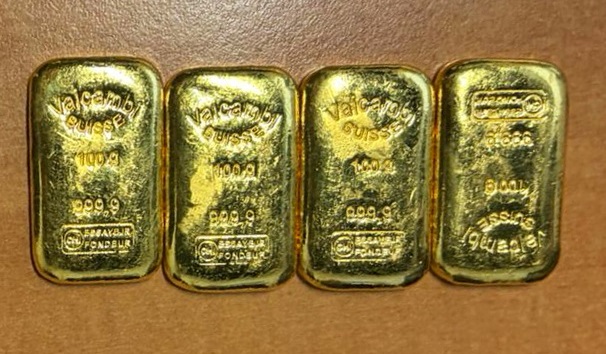
During a joint inspection, two Ukrainian citizens (born in 1980 and 2009) traveling on foot were identified. One of them was found to be wearing four cast gold bars of the Valcambi Suisse 999,9 brand, each weighing 100 g — two bars in each sock. The total weight was 400 g, with an estimated value of about UAH 2.6 million.
In the other woman’s personal belongings, officers found 10 gold chains with a combined weight of 36 g, hidden in a plastic bag inside a prayer book.
"All gold items, the total value of which exceeds UAH 2.7 million, were seized."
— Western Regional Directorate of the State Border Guard Service and Chernivtsi Customs
Legal context
Protocols on customs violations were drawn up under part 1 of Article 483 of the Customs Code of Ukraine. The seized property has been transferred to the appropriate procedures, and the materials have been forwarded for further consideration in the prescribed manner.
Context and trend
This incident is not isolated. A few days earlier, on 16 January, customs officers stopped a van arriving from Poland carrying 829 units of Apple devices (approximate value — UAH 35.5 million); Danylo Hetmantsev, head of the Verkhovna Rada’s Finance Committee, named the "Yabko" network as one of the delivery targets. Such cases indicate a variety of smuggling schemes — from small-scale operations to organized supplies of electronics and valuables.
Why it matters
This is not only a matter of petty crime — such flows of money undermine economic security, fuel shadow markets and bypass tax and currency controls. The concealment methods (socks, a prayer book) show that smugglers are adapting to tighter checks, but effective coordination between border guards and customs officers remains a strong barrier.
What’s next
The issue is not isolated arrests but systemic measures: technological modernization of control, risk analytics at the border, and transparent investigative procedures. Will there be enough resources and political will to turn these occasional successes into a sustained strategy against smuggling? That is a question for the authorities and society at large.
For now the fact is simple: two attempts were stopped in one day, and the seized valuables were processed in accordance with the law. Next — the work of the system.



