World's largest robotic batch-milking farm to be built in Kyiv region — what it means for Ukraine
The first phase will be launched in 2026 with 24 robots out of the planned 60. It’s not just a technological case — the project strengthens food security, energy independence and the competitiveness of the dairy sector.

By Tetiana Suchkova-Ladik
March 12, 2026 · 2 min read
An Investment That Works for Food Security
Investments during reconstruction are a marker of investor confidence and a signal of long-term plans. In 2026, LLC "Ukrainian Dairy Company" (UMC) will begin construction of the first phase of the world's largest robotic farm for group milking — launching 24 robots of the planned 60. The new complex will use Batch milking technology, which changes the logic of herd care and operational costs.
What exactly will be installed
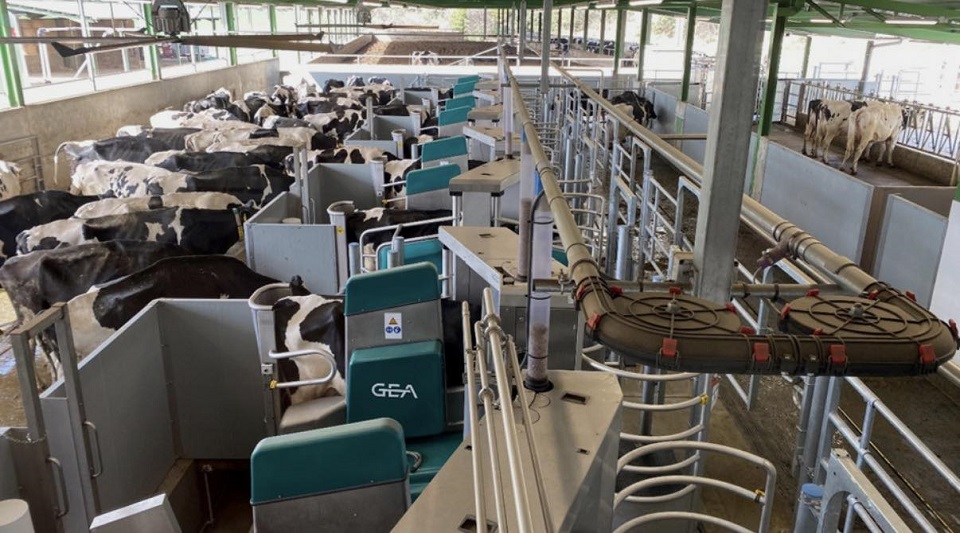
The project provides for placing the milking robots in two rows — models DairyRobot R9650 from German GEA Farm Technologies GmbH. The equipment allows animals to be milked in groups at scheduled times, and most technological elements will be located in a basement under the robots, minimizing the impact of service maintenance on the milking process.
Technical advantages and economic effect
Automation yields several concrete outcomes: reduced labor costs, a lower risk of staff injury when working with animals, and the ability to individually supplement the diet of each cow — which increases productivity and milk quality. Placing technologies in the basement also optimizes service logistics and makes the process more predictable.
"This is an absolutely landmark and unique project not only for Ukraine but for the global dairy industry — both in terms of its scale and the number of implemented innovative solutions"
— GEA Ukraine, equipment supplier
Who stands behind the project
LLC "Ukrainian Dairy Company" was founded in April 2006. The enterprise has a total herd of about 12,000 head of cattle (of which approximately 4,400 are cows), a production capacity of about 170 tons of milk per day, and a land bank of 11,000 ha. A biogas plant operates on the farm for waste disposal and energy generation; the company holds the status of a special raw-material zone for baby food. The ultimate beneficiary is named Vitaliy Haiduk.
GEA Group AG (Germany) is one of the world's leading suppliers of solutions for the food and dairy industries. In Ukraine, GEA has been present for over 25 years, with two local offices, a service department, and a spare parts warehouse — all critical for keeping robotic systems operational.
What this means for the market
The project is an example of how technology is shifting the balance of power in the agricultural sector. Automation raises product quality and reduces dependence on seasonal labor markets, which is important for recovery and export. Industry analysts note: if the first phase confirms the expected indicators, it could encourage other Ukrainian farms to pursue large-scale modernization.
Summary
This is not just a record in size — it is a test of the industry's readiness to operate under new rules: more efficiently, cleaner, with less human risk and higher milk quality. The key task now is to ensure sustainable service maintenance and sales markets so that the innovation turns into a long-term economic effect for Ukraine.



