German-Ukrainian JV launches serial production of drones — Zelensky accepted the first UAV, 10,000 systems planned this year
Quantum Frontline Industries' first facility in Germany combines Ukrainian field-developed designs with German automation. This is not marketing — it's a step toward large-scale, secure delivery of UAVs to the front lines.

By Tetiana Suchkova-Ladik
February 13, 2026 · 2 min read
Why this matters
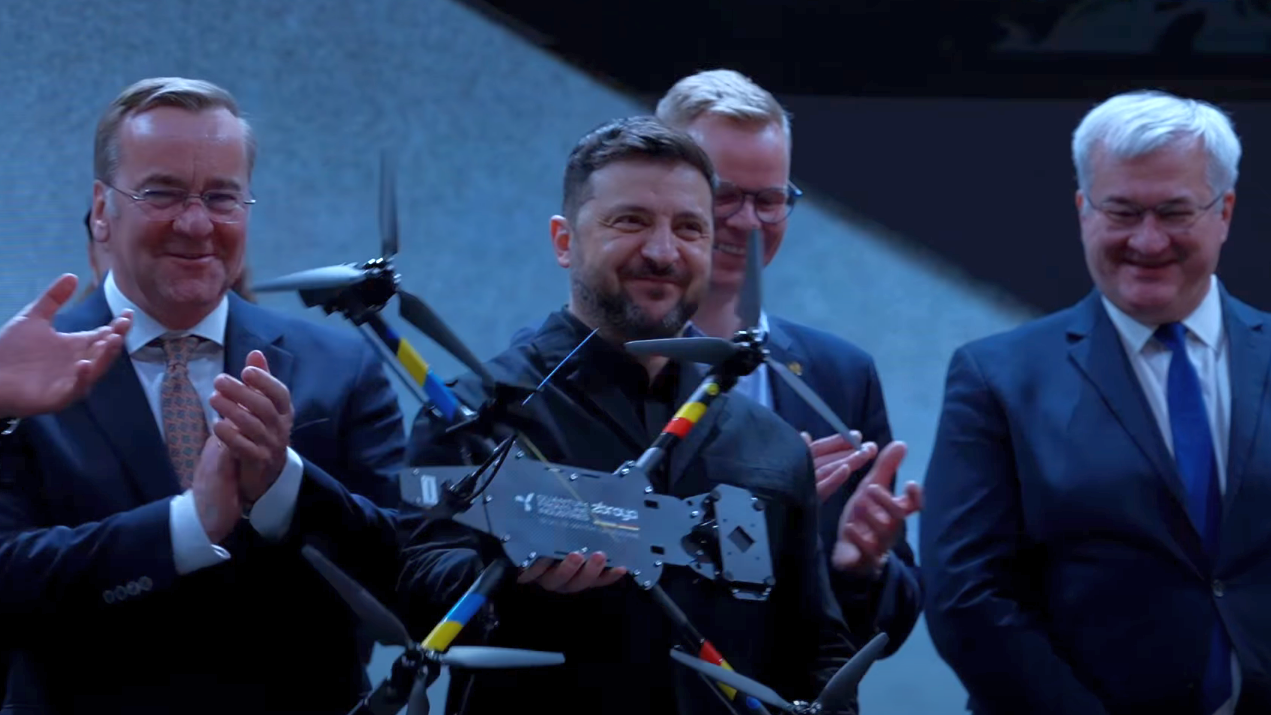
On Friday, February 13, President Volodymyr Zelenskyy visited the first German‑Ukrainian drone manufacturing company — Quantum Frontline Industries (QFI). According to him, during the visit he accepted the first jointly produced strike drone equipped with artificial intelligence. QFI is the first of ten enterprises that Ukraine plans to open in Europe under the Build with Ukraine initiative.
Positions
The company was created by the German firm Quantum Systems and the Ukrainian Frontline Robotics. QFI combines “battle‑tested Ukrainian technologies” with German industrial automation, and its products, by agreement, are to be supplied 100% to the Defense Forces of Ukraine in volumes determined by the Ministry of Defense.
The company is led by Matias Lena, a former officer of the German army. The exact location of the production facility is not disclosed for security reasons.
"This is modern Ukrainian technology. Battle‑tested. Equipped with artificial intelligence. It will carry out strikes, perform reconnaissance, and protect our soldiers. And already this year 10,000 drones produced here will be delivered to Ukraine and will strengthen our forces."
— Volodymyr Zelenskyy, President of Ukraine
What this means for the front lines and industry
Combining Ukrainian combat algorithms with German industrial expertise allows production to be rapidly scaled up — it’s not only a matter of quantity, but also of quality, standardization, and logistical stability. Defense industry analysts note that a distributed production model in the EU increases supply‑chain resilience and reduces the risk of simultaneous supply disruptions.
At the same time, the effect will depend on three components: signed contracts and financing, the integration of new systems into tactical units, and the provision of training and maintenance on site.
Risks and next steps
Site security, control over export procedures, and partner support are key success factors. It is now important that declarations turn into signed contracts and a clear logistical delivery plan. If this does not happen, the scale of production risks remaining declarative.
Conclusion
The launch of QFI is a concrete example of how international cooperation can quickly convert battlefield developments into industrial volumes. For Ukraine, it is an opportunity not only to strengthen the front lines quantitatively but also to anchor technological competencies within the European manufacturing chain. The next step is oversight of the implementation of the announced plans and turning promises into deliveries of arms to the units that need them.