Nova Poshta Leaves Komyshuvakha — Settlement 13 km from Front Line That Was an "Oasis" a Year Ago
From April 24, the only branch in the frontline town of Komyshuvaкha in Zaporizhzhia Region has not been operating. The company acknowledged that intensive shelling and FPV drones have made it impossible for staff to work.

By Tetiana Suchkova-Ladik
April 24, 2026 · 2 min read
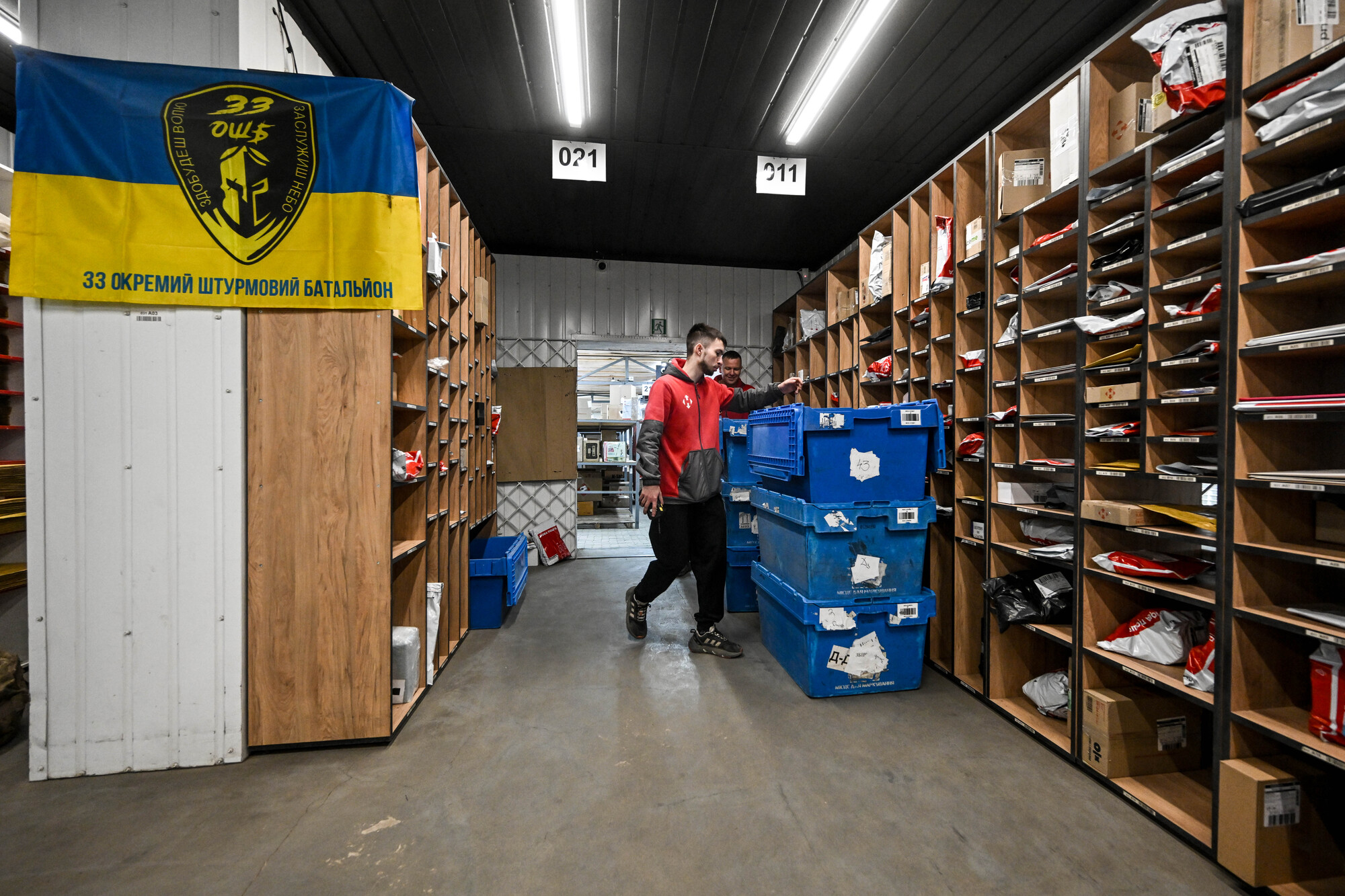
Nova Poshta has closed its only branch in the urban-type settlement of Komyshuvalka in Zaporizhzhia. The official date is April 24, 2025. This is not an administrative decision or reorganization — the company directly named the reason: personnel safety.
"We delayed this moment until the last possible moment, but unfortunately, security conditions no longer allow our colleagues to work in this settlement. Dense shelling, FPV drones and proximity to the front line pose a daily threat."
Nova Poshta Press Service
13 kilometers and the countdown
According to SODA publication, which visited Komyshuvalka during reports from the front lines, the settlement is located 13 kilometers from the front line. A few years ago it was a transit hub for journalists and volunteers heading to Orikhiv or Preobrazhivka: markets, queues in shops, new services. Now — a different picture.
Komyshuvalka community is part of the Orikhiv direction, where hostilities are ongoing. The National Police recorded strikes on the settlement itself: including airstrikes that injured civilians. FPV drones also attacked fields within the community — a 63-year-old man was wounded during field work in the village of Novoyakovlivka in Komyshuvalka community. So the threat is not abstract: it operates within the community, not just "somewhere nearby."
What this means for those who remained
According to pre-war data, Komyshuvalka's population was over 5,400 people. How many remain now is unknown: there is no official statistics for front-line urban-type settlements in public access. But even for those who were not evacuated, closing the post office is not an inconvenience, but a breakdown in logistics: receiving medicines, documents, humanitarian aid.
- There are no alternatives in Komyshuvalka itself — the branch was the only one.
- The nearest operating branches are in cities that are extremely difficult to reach without a car under shelling conditions.
- Along with the post office, the settlement is losing other services: one operator's closure typically accelerates decisions by others.
The logic of business retreat
Nova Poshta is not the first and probably not the last company to reduce its presence in the front-line zone. Similar decisions are made by banks, pharmacy chains, mobile operators. The mechanism is the same: first they reduce operating hours, then transfer personnel to rotation, finally — they close. Komyshuvalka has gone this path to the end.
Military analyst Bohdan Myroshnikov noted that the situation in the Zaporizhzhia direction is changing: if previously the Huliaipole area was a zone of relative calm compared to Donetsk region, the activity of Russian intelligence and sabotage groups has increased significantly. This means that pressure on front-line communities is not a peak, but a trend.
If the Armed Forces hold positions on the Orikhiv direction and the front line stabilizes, Komyshuvalka could theoretically become a candidate for service restoration. But as long as the 13-kilometer distance does not increase — each new closure makes a return less likely: infrastructure that is lost rarely returns on its own.



