Novorossiysk Resumes Pumping — But Chevron and Kazakhstan Still Counting Losses from Same Attack
# Sheskharis Terminal Resumes Tanker Shipments After Five-Day Halt, But CPC Pipeline Damage Threatens US Oil Assets The Sheskharis terminal has resumed dispatching tankers following a five-day shutdown, but another port facility—the CPC pipeline, which carries 80% of Kazakhstan's oil—has sustained damage that jeopardizes the assets of American companies Chevron and ExxonMobil.

By Tetiana Suchkova-Ladik
April 10, 2026 · 2 min read
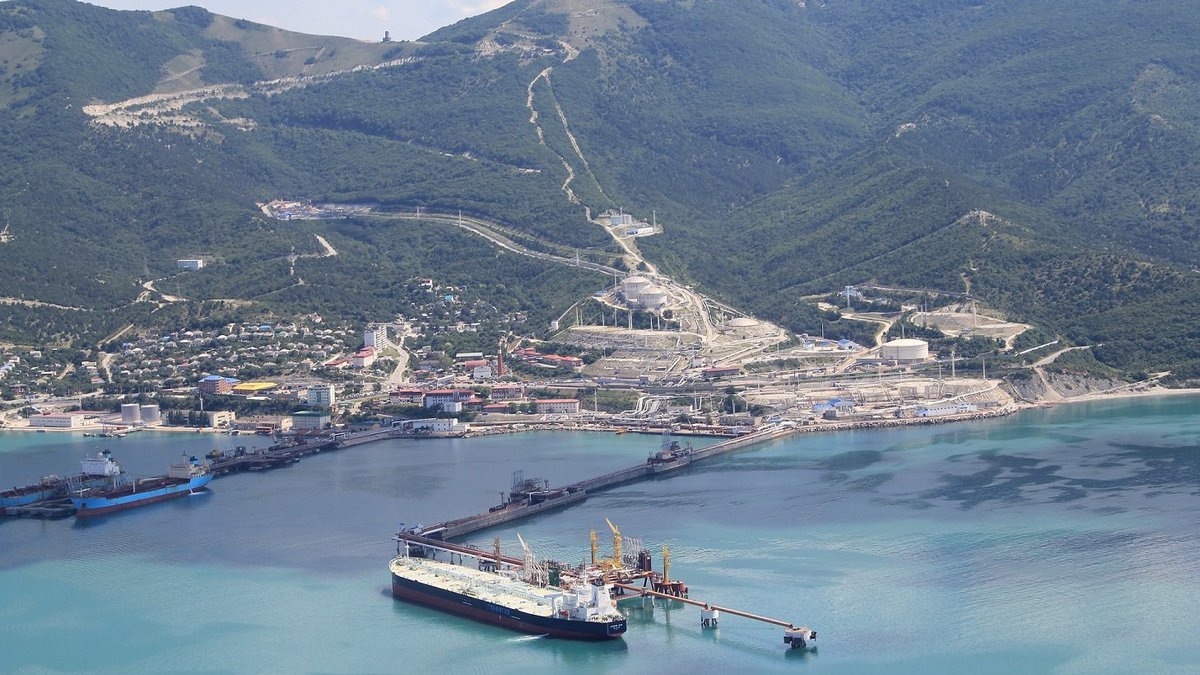
On April 9, the Shesharis terminal in Novorossiysk resumed crude oil shipments — five days after a massive drone attack and fire. According to Reuters, one berth is currently operational: on Friday, one tanker with a capacity of 80,000 tons departed from it. In normal mode, the terminal pumps about 700,000 barrels per day.
But "recovery" is not the complete picture of what happened at the port this week.
Two terminals, two damaged
The April 6 attack affected not only Shesharis. Fifteen kilometers away is the marine terminal of the Caspian Pipeline Consortium (CPC) — a separate facility through which Kazakhstan transports most of its oil to world markets. According to OilPrice.com, one of the CPC's single point mooring systems — SPM-2 — sustained "significant damage" following the maritime drone attack.
The CPC is not a purely Russian asset. Among the consortium's shareholders are Chevron and ExxonMobil, which also control the largest Kazakh fields — Tengiz, Kashagan, and Karachaganak — that feed this pipeline. Russia owns 24% of the CPC — the largest share, but far from the only one.
"Our oil operations in all directions are stable, exports through the CPC continue normally"
— Sungate Yesimkhanov, Deputy Minister of Energy of Kazakhstan, TRT World
Yesimkhanov spoke on Tuesday — the day after Russia announced damage to the CPC infrastructure. That is, Astana responded to Moscow's statements rather than to its own independent assessment. Earlier, similar attacks on the CPC reduced Kazakh oil exports by up to 40% and forced production shutdowns at the Tengiz field.
Resilience as the price of recovery
The previous attack on Shesharis in early March halted shipments for five days. The current downtime — exactly the same. The pattern repeats: strike → fire → pause → partial recovery with one berth. The infrastructure proves resilient, but not undamaged.
Market analysts, according to Pipeline Technology Journal, warn: so far Kazakhstan is meeting planned export targets, but any further damage to the CPC will leave global markets practically without a buffer — there are no alternative routes of equal capacity for Kazakh oil.
- Shesharis — partially recovered, one berth of several
- CPC SPM-2 — damaged, loading status as of publication being clarified
- Previous attack on CPC in November 2024 completely disabled VPU-2
The question is not whether Russia will continue exporting oil through Novorossiysk — it recovers after each strike. The question is how many more such cycles the CPC infrastructure can withstand before Chevron and Kazakhstan are forced to publicly choose between silence and demanding protection of their assets.
```


