Obolonskyi Avenue to Podil: Can Kyiv Handle Traffic After the Rybalskyi Development?
Instead of emotions — figures and consequences: development of Rybalskyi could overload the only connection to the city. We break down why extending Obolonskyi Avenue is not a bit of populism but a technical necessity.

By Tetiana Suchkova-Ladik
January 6, 2026 · 2 min read
Why this matters for Kyiv residents
The reconstruction of Rybalskyi Island from an industrial zone into a residential neighborhood is not just an investment in real estate. It concerns daily commutes, emergency services’ response times, and the resilience of the capital’s transport network. If nothing changes, adjacent arteries—chiefly Naberezhno-Rybalska—risk becoming a bottleneck for thousands of new residents and workers.
History and scale of the project
- As early as 2016 the Kyiv City Council approved a detailed plan for the Rybalskyi peninsula that covered the "Kuznya on Rybalskyi" site.
- In 2019 the project envisaged a neighborhood for about 15,000 residents—roughly 36 buildings, 6,200 apartments, and a business center of 58,000 sq. m.
- At that time the project was announced by the owner of Kuznya, Serhiy Tihipko; today the initiative is being advanced by businessman Ihor Mazepa.
Possible solution: extending Obolonskyi Avenue
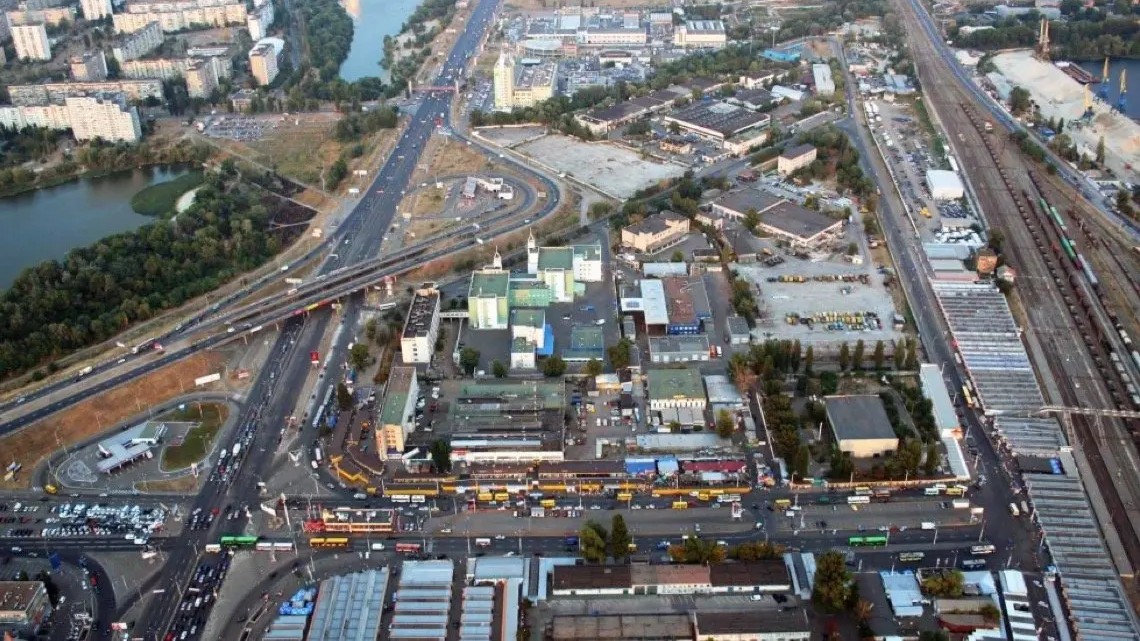
Andriy Semenov, CEO of developer UDP, told LIGA.net directly that one way to relieve traffic would be to incorporate the option of extending Obolonskyi Avenue directly to Podil. This requires changes to urban planning documents and consideration in Kyiv’s general plan.
"Once this neighborhood is fully launched, adjacent highways will be overwhelmed by the additional traffic flows. The solution to this issue lies within the scope of Kyiv's general plan. In particular, the possible extension of Obolonskyi Avenue directly to Podil should be provided for in urban planning documentation. This would help relieve Naberezhno-Rybalska Street, which is currently the only point of connection to Rybalskyi Island."
— Andriy Semenov, CEO of UDP (LIGA.net)
Currently Obolonskyi Avenue ends near the railway by the Pochaina metro station. Therefore any changes require coordination with the city council, Ukrzaliznytsia and the owners of adjacent plots — this is not a single decision but a series of technical steps: adjusting plans, designing overpasses or underpasses, and engineering load calculations.
Implications and alternatives
If the avenue extension becomes part of the plan, it will take some load off Naberezhno-Rybalska and improve access to Podil. Without it the risks are longer traffic jams, slower public transport routes and a decline in quality of life in neighboring districts. Transport models used by municipal and private analysts show that infrastructure must precede development of territories; otherwise the costs of compensatory measures rise.
Conclusion
The development of Rybalskyi is an opportunity for Kyiv to renew a waterfront part of the city, but only with synchronized infrastructure planning. Extending Obolonskyi Avenue is not decorative — it is a tool that can turn the risk of a transport collapse into managed development. The next step is a clear timetable for amendments to the general plan and transparent coordination between authorities, urban planners and investors. Whether there will be enough political will and technical resources is a question whose answer will affect the comfort of millions of Kyiv residents.



