Obriy near Bukovel: 8,000 m² retail park in Tatariv — an investment in tourism and the local economy
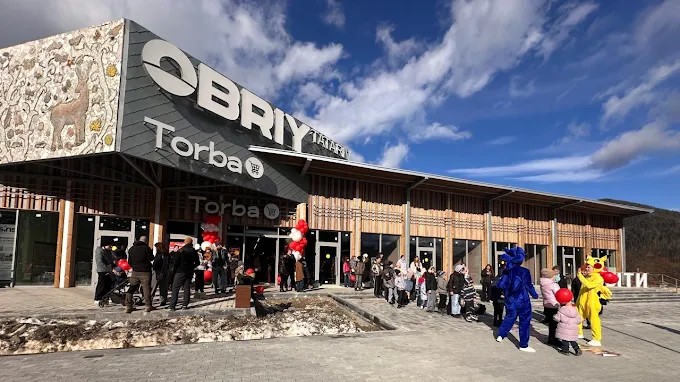
In Tatariv, the 8,000‑square‑meter Obriy retail park has been put into operation. This is not just new shops on the road to Bukovel — we will analyze how the project will affect jobs, tourist spending, and the community’s budget.

By Tetiana Suchkova-Ladik
February 17, 2026 · 2 min read
What happened
On February 3, in the village of Tatariv (Ivano‑Frankivsk region) the retail park Obriy with a total area of 8,000 sq. m was commissioned, according to records in the Unified State Electronic System in the Field of Construction. The facility is located along the road to Vorokhta — on the way to the Bukovel ski resort — and therefore will attract a noticeable flow of visitors both from the local community and from tourist traffic.
"The 8,000 sq. m facility was commissioned on February 3"
— Unified State Electronic System in the Field of Construction
Who is building and who is leasing
The developer of the project is the company Building Development. According to RAU, among the already signed tenants are the supermarket Torba, Sinsay, Jysk (A3 format), the pharmacy Podorozhnyk, Eva, Andi, Epicenter Home, pet store BelliZoo and Victoria's Secret. The opening of the children's entertainment center «Krayina Mriy» is planned (scheduled for March), and there are preliminary agreements with the Polish chain CCC, Lviv Croissant, OKWINE, Avrora and a number of local operators.
"Retail parks are cheaper to build than shopping malls, and their payback is faster"
— Roman Kurytskyi, founder of Building Development (in a comment to LIGA.net)
Project economics in brief
Retail parks are typically cheaper to build and reach profitability faster compared with multi‑storey shopping malls. Typical projects of 3,000–5,000 sq. m are completed within a year to a year and a half, and the indicative construction cost often does not exceed $1,000 per sq. m, market experts noted in industry publications. Obriy, at 8,000 sq. m, is larger than the standard, and therefore potentially offers a wider range of services and a greater inflow of shoppers.
Why this matters to the reader
For the local economy: new jobs in retail and services, tax revenues for the community, and a retention of purchases that previously "leaked" to other regions.
For the tourist: convenience and services en route to the resort — from a supermarket and pharmacies to a food court and a children's center.
Risks and issues: increased car traffic in the village center, pressure on local small businesses, and the need for coordinated infrastructure (parking, safety, wastewater management). These factors are overseen by local authorities together with the developer.
What’s next
Obriy has already assembled a pool of tenants and positions itself as a service enhancement for the tourist corridor to Bukovel. The next step is to focus on flow management and partnership with the community so that the economic effect turns into sustainable local development rather than creating new problems. A question for investors and local authorities: how to combine a quick payback for the project with the long‑term resilience of the community?



