One Icebreaker for the Whole Winter: How Russia Bypasses Sanctions on Arctic LNG 2 and What It Means for Energy Security
Money loves silence, but these routes are worth knowing: Bloomberg reports that the sole icebreaking tanker Christophe De Margerie continues to carry LNG from the sanctioned Arctic LNG 2 plant. This is not an isolated incident — the scheme has systemic consequences for the market and for the effectiveness of sanctions.

By Tetiana Suchkova-Ladik
January 5, 2026 · 2 min read
Briefly
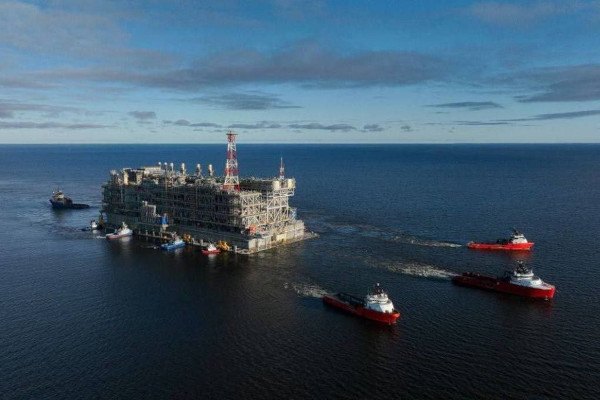
Russia continues to export liquefied natural gas from the Arctic LNG 2 plant, which is under U.S. sanctions, using the only available icebreaking tanker. According to Bloomberg, the tanker Christophe De Margerie berthed at the terminal on January 5 and is preparing to dispatch its third cargo of gas since late December.
"The tanker Christophe De Margerie is preparing to send its third cargo since December 20"
— Bloomberg
How it works
An Arc7-class tanker can operate in icy waters year-round. It loads LNG on the shore at Arctic LNG 2 and delivers the cargo to the floating storage Saam in the Murmansk region. From there the gas is transshipped onto conventional feeder tankers that deliver the cargo to the final buyer — currently, mostly Chinese companies.
Due to a shortage of icebreaking cargo vessels, the plant is operating well below capacity — around 25% of potential. At the same time, Russia is accelerating capability building: in December the first domestically built icebreaking LNG tanker, "Aleksey Kosygin," was completed and is heading to the Arctic.
Technical and covert chains
The export scheme relies on a combination of an icebreaker for the initial evacuation and local feeders to carry cargo to Asian markets. It is also notable that European shipyards, including Damen (France) and Fayard (Denmark), have reportedly been repairing Arc7 vessels used in these deliveries — creating technical and legal loopholes that allow the system to operate despite sanctionary pressure.
Why it matters
First, it is a question of Russian revenue: even limited shipments bring foreign-currency inflows and enable the maintenance of infrastructure. Second, it is a test of the effectiveness of sanctions — if repair, insurance and logistics chains remain open, restrictions lose part of their impact.
Third, for the global LNG market and Ukraine's energy security, it is a signal: Moscow retains the ability to manipulate supplies and prices while seeking new markets (primarily in Asia). Energy market analysts note that such "seasonal" logistics could operate at least until summer, when icy routes become more accessible.
What’s next
The single-icebreaker scheme currently limits volumes — but the arrival of "Aleksey Kosygin" and repairs at European shipyards change the picture. If partners do not close the technical and financial gaps (repairs, insurance, intermediary companies), export volumes could rise within a few months.
The analysts' forecast is simple: the scheme will continue to operate until summer, but its expansion depends on external oversight and the willingness of Western partners to step up monitoring of shipping, repair work and financial flows related to the Arctic.
Conclusion
This story is not just about one tanker. It is about how technical details and logistics determine the strength of sanctions and economic pressure. While attention is focused on headlines, the real work either stops or enables such schemes to exist. The question for partners: are they ready to close not only political but also technical loopholes?