Office of the Prosecutor General launches internal probe over prosecutors' investments in Bukovel — a test of the system's transparency
Bihus.info highlighted purchases at the luxury Glacier complex by relatives of three prosecutors. The Prosecutor General’s Office investigation is not merely a check of isolated facts but an indicator of trust in the law enforcement system during the war.

By Tetiana Suchkova-Ladik
February 12, 2026 · 2 min read
Briefly
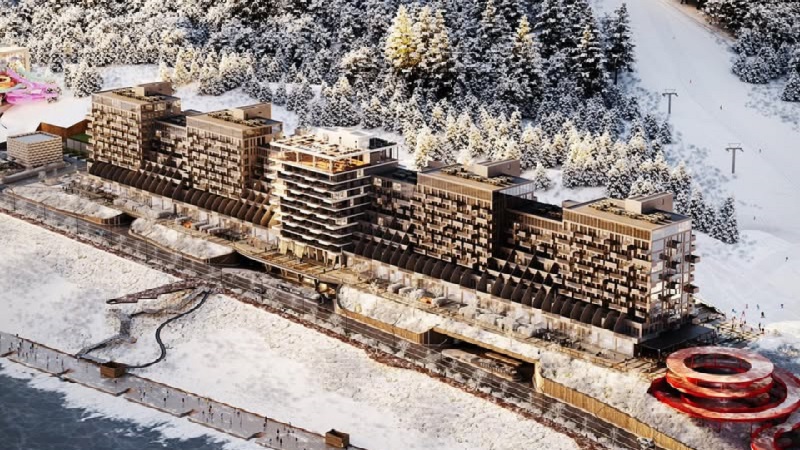
We set emotions aside — let’s look at the facts. On February 10 the Office of the Prosecutor General (OPG) announced an internal investigation after a Bihus.info report that revealed investments by close relatives of three prosecutors in the Glacier Premium Apartments complex at the Bukovel resort. This is a case that concerns not only specific officials but also trust in an institution that should hold people accountable, not protect its own.
What happened
On February 9 journalists from Bihus.info published a piece detailing property acquisitions in Glacier by relatives of three prosecutors. The next day, February 10, Prosecutor General Ruslan Kravchenko ordered an internal investigation — an official response that formally launches a review of the circumstances and the compliance of the officials’ behavior with anti-corruption legislation.
"In order to establish all the circumstances and to give an appropriate assessment to possible non-compliance with the requirements, prohibitions, or restrictions established by the Law of Ukraine 'On Prevention of Corruption,' an internal investigation has been launched regarding prosecutors Chechitka O. A., Mykhailyna O. M., Synyuk O. V."
— Office of the Prosecutor General
Who is involved and what are the facts
According to the Bihus.info investigation, relatives of the head of the Volyn Prosecutor’s Office department, Oleksandr Synyuk, an employee of the Vinnytsia Prosecutor’s Office, Oleh Mykhailyna, and the head of the Left-Bank District Prosecutor’s Office in Dnipro, Oleksandr Chechitka, own property in Glacier. In addition, journalists note that about $160,000 was invested in the complex by the wife of former member of Vinnytsia’s military-medical commission, Yevhen Pazyuk.
"Bihus.info journalists found that relatives of three prosecutors and the wife of a former member of the military-medical commission invested in the Glacier apartment complex"
— Bihus.info, investigative report
The piece also recalls earlier publications: in May 2025 Bihus.info wrote about the involvement of the daughter of former Deputy Minister of Internal Affairs Chebotar in the Glacier project, raising questions about the sources of financing.
Why it matters
Prosecutors hold a special public trust — they represent the state’s interests in criminal cases and are expected to be examples of impartiality. When doubts arise in the public sphere about the origin of funds of officials’ close relatives, it undermines confidence in all decisions of the justice system. This is particularly critical during wartime, when resource allocation and the fight against corruption are matters of national security.
What could happen next
The OPG’s statement promises to make a decision "in accordance with the law" based on the results of the internal investigation. Practically, this could mean a review of the consistency between declared incomes and expenditures, disciplinary sanctions, or referral of materials to bodies that handle criminal proceedings if grounds are found. The key question is how open and swift the process will be: formal steps without publicized results will not restore trust.
Conclusion
This story is not only about specific investments in Bukovel. It is a test of the system: whether institutions can provide a clear answer to the public and hold those responsible to account without exceptions. A question for readers and authorities alike: will the internal probe become a real mechanism of cleansing, or remain a formality?



