OKKO Building Wind Energy Vertical: Third Wolhynia Project Already Seeking €262 Million
While the first WES group of OKKO has yet to be launched, the company is already structuring financing for the third — 189 MW with the participation of EBRD, IFC and DBFR. This is not business diversification, but a bet that Western capital is flowing to areas where missiles have already struck.

By Tetiana Suchkova-Ladik
April 25, 2026 · 3 min read
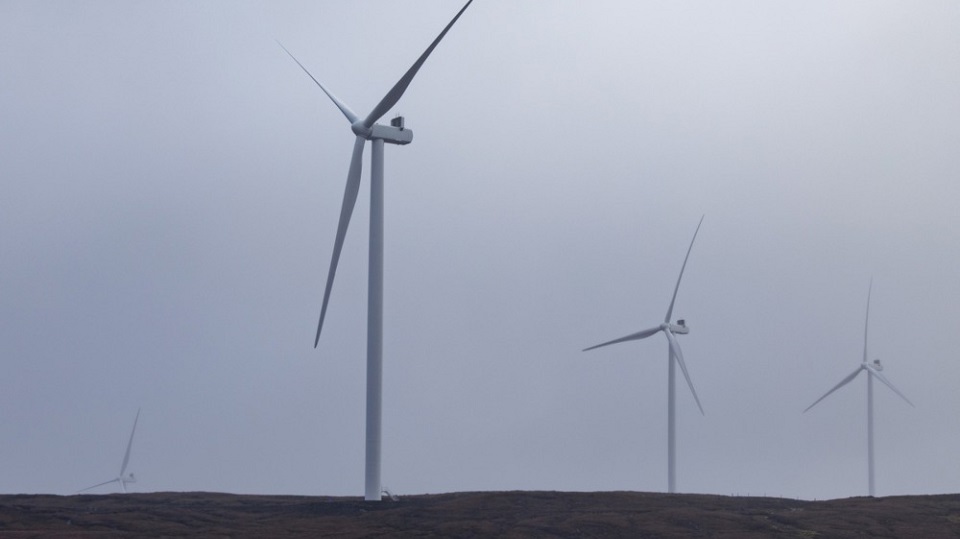
OKKO Group is simultaneously implementing three wind energy projects in Volyn — each one larger than the previous. The first, Ivanichi Wind Farm with a capacity of 147 MW, is set to become operational by the end of 2025 — beginning of 2026. The second, Zaturci Wind Farm with 192 MW, received mandate letters from the EBRD and IFC during the Ukraine Recovery Conference in Rome in July 2025. The third — 189 MW — was announced on the EBRD website on April 24, with the board of directors' decision scheduled for May 28, 2026.
For the third project with a total cost of €262 million, the EBRD is considering a long-term loan of up to €50 million. The funds will be received by specially created project companies — "Volyn West Wind-2" and "Volyn West Wind-3", majority-controlled by the VI.AN holding as part of OKKO Group. The EBRD loan will form part of syndicated debt financing — alongside the International Finance Corporation (IFC) and the Black Sea Trade and Development Bank (BSTDB): exactly the same scheme used for the first wind farm.
What one station will provide
According to EBRD estimates, a wind farm with a capacity of 189 MW will generate approximately 467 GWh of electricity annually — this is roughly the annual consumption of 200–230 thousand average Ukrainian households. CO₂ emission reductions are estimated at 300 thousand tons per year.
For comparison: in 2024, due to Russian attacks in Ukraine, approximately 10 GW of generating capacity was damaged or destroyed — more than half of the country's total consumption of ~18 GW. Against this backdrop, 189 MW is less than 2% of what was lost, but private construction in the western part of the country, far from the front lines, is one of the few realistic paths to new generation without state budget funds.
"Wind generation before the full-scale invasion accounted for approximately 2.5% of Ukraine's energy balance, and now this figure has dropped to 1.2% — due to the occupation of wind power stations in the south,"
Andriy Koneychkov, chairman of the board of the Ukrainian Wind Energy Association
Koneychkov also notes that the total installed capacity of wind farms in Ukraine is 1.9 GW, of which 1.3 GW is under occupation — in Donetsk, Luhansk, Kherson, and Zaporizhzhia regions. OKKO's three Volyn projects together represent 528 MW of new capacity in a relatively safe region.
The money is already there — or it may still come
It is important to distinguish between two projects that are currently simultaneously in the public sphere. In April 2025, the EBRD, IFC, and BSTDB announced the actual provision of €157 million for the Ivanichi Wind Farm — the money is confirmed. The 189 MW project is different: the EBRD is only considering participation, the document has been published as a "project under development," and approval is scheduled for May 2026. Between "is considering" and "is providing" — a year and a board of directors.
The National Action Plan for Renewable Energy until 2030, approved by the government in August 2024, envisages achieving 24 GW of renewable energy capacity and 27% share of renewables in gross final energy consumption. OKKO's three Volyn projects together close only ~2.2% of this goal — but they are real, private, and already have international creditors.
If the EBRD approves the loan for the third wind farm in May 2026, and the first becomes operational by that time without serious operational failures — this will become a precedent: private business is building wind generation in a country with active combat operations faster than the state is restoring destroyed thermal power plants.



