Oil in the Black Sea: Russia destroyed three processing facilities in a month — and this is no accident
Following a series of strikes on ports and facilities in Odesa and Dnipro regions, Ukraine is approaching a halt in sunflower oil exports. This is not collateral damage — it is a systematic attack on the second-largest item of agricultural foreign currency earnings.

By Tetiana Suchkova-Ladik
April 27, 2026 · 2 min read
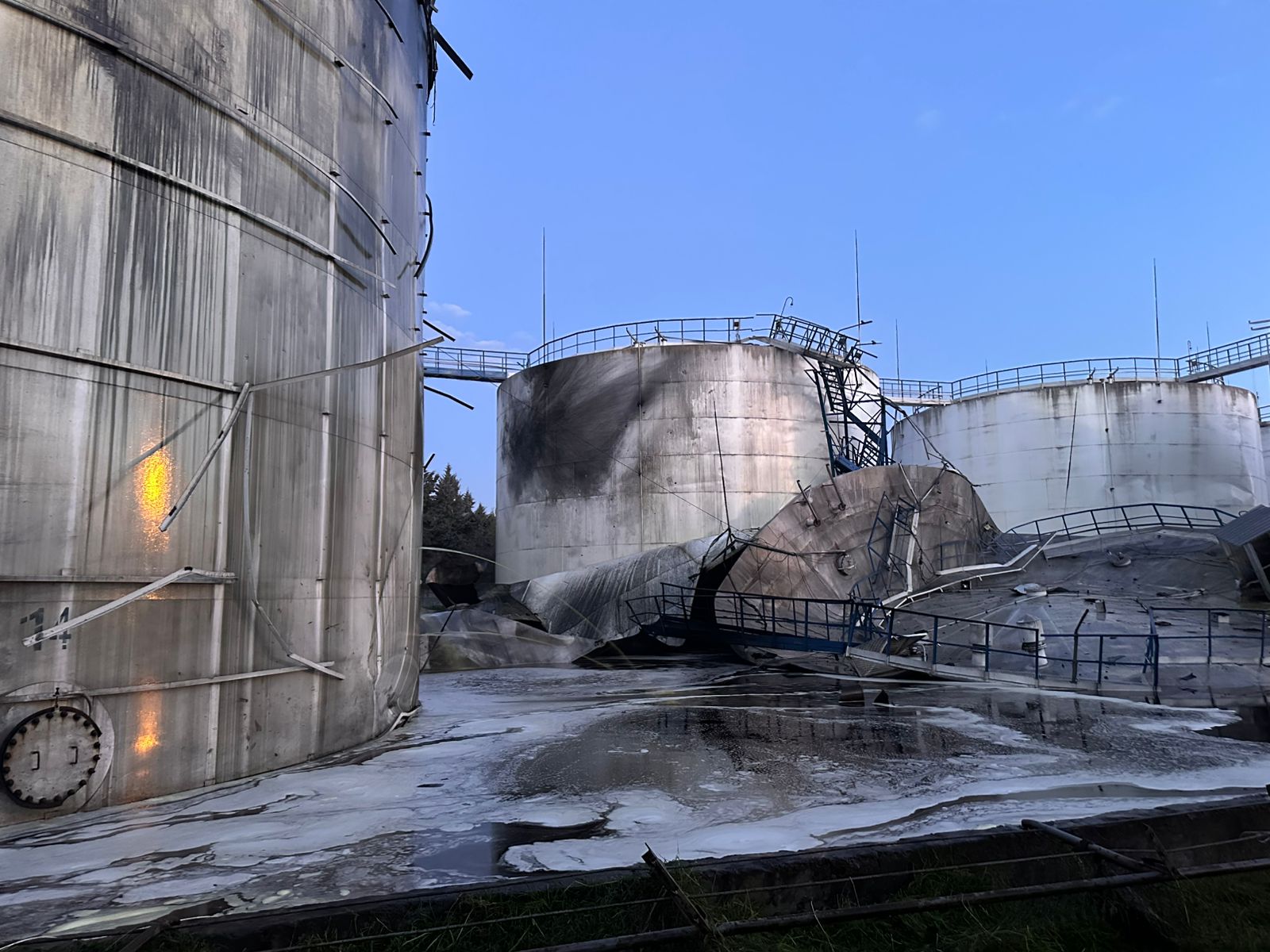
The State Environmental Inspection of the Southwestern District confirmed that after a new strike on the port of Chornomorsk, vegetable oil spilled into the water area. Boom barriers are being installed to contain the spill. The inspection did not clarify details about the volume of the leak or the type of damaged facility.
Three strikes — one target
This is not the first or second incident. In recent weeks, Russia has consistently destroyed oil infrastructure throughout the entire supply chain — from the plant to the berth:
- December 2025: strike on Allseeds Black Sea at the port of Pivdennyi — Ukraine's largest vegetable oil terminal. According to trade director Cornelis Vrins, one employee was killed and two were wounded.
- December 2025: destruction of Kernel oil plant at the port of Chornomorsk.
- January 5, 2026: strike on Bunge plant in Dnipro — the producer of "Oleyna". Approximately 300 tons of oil spilled onto the roadway section of the embankment, blocking traffic for several days.
Now — another strike on Chornomorsk. The pattern repeats: ballistics, tanks, spill.
Why this matters for the market
Ukraine controls approximately 33% of global sunflower oil exports. According to CBI data, over the past decade the share has fluctuated between 45 and 55% of global supply — Russia ranks second with 15–25%. Sunflower oil is Ukraine's second-largest agricultural export commodity after corn: in the first quarter of 2025 alone — 441 thousand tons worth 503 million dollars.
Oil spills disrupt the oxygen regime of coastal waters, negatively affecting plankton and early stages of fish development. For the semi-enclosed Black Sea ecosystem, such a concentration of stress factors means long-term consequences.
National Environmental Center of Ukraine
Tactical sense of the series
Strikes on Allseeds, Kernel, Bunge, and again on Chornomorsk cover both production and port transshipment. This is not simply pressure on infrastructure — it is an attempt to eliminate two key nodes simultaneously: processing capacity within the country and the export route for finished products to foreign markets. If port terminals do not resume operations before the spring harvest, delays will hit foreign currency revenues at a critical moment for the state budget.
As Euromaidan Press writes, Ukraine is approaching a complete halt of sunflower oil exports — and this is no longer a question of individual plants, but of 20% of the country's entire agricultural exports.
If Bunge, Kernel, and Allseeds do not receive protected transshipment capacity by the start of the new marketing season, will Ukraine be able to maintain even half of its share in the global sunflower oil market — and who will take it in that case?



