Pepco enters Ukraine during war: why the discounter is betting on an impoverished market
5–10 stores in Q4 2026 is a pilot, not a strategy. The logic behind Pepco's entry seems paradoxical at first glance, but it is quite organic for a market where over 80% of spending goes to basic needs, precisely the format of low prices.

By Tetiana Suchkova-Ladik
May 24, 2026 · 2 min read
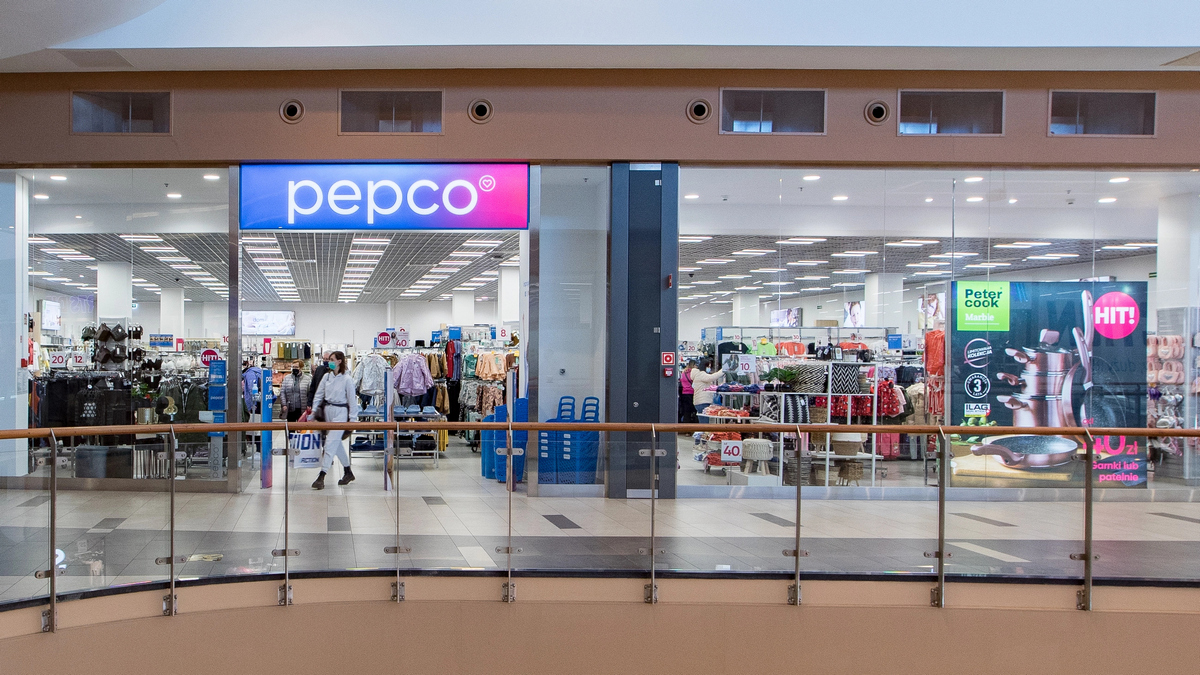
Polish discount retailer Pepco has officially confirmed its entry into the Ukrainian market. The first stores could open as early as the last quarter of 2026 — with several locations at once. However, behind this news lies a non-trivial logic: the company consciously chooses a market where people have become poorer.
Who is entering and on what terms
The official exclusive representative of Pepco in Ukraine is the consulting company Retail & Development Advisor (RDA). Its technical team is already negotiating with contractors regarding the arrangement of specific properties.
«It is better to open the first projects in verified locations»
— Andriy Lototskyi, CEO of RDA, in a comment to LIGA.net
The exact opening dates are still being finalized — agreements are in the processing stage. Regarding Ocean Mall shopping center, which is also planned to open at the end of 2026, Lototskyi was direct: «It will happen someday. For now, we haven't agreed».
The decision to enter was confirmed by the group's general director Steven Borchert in the report for the first half of the 2026 financial year.
«We are beginning a cautious attempt to enter certain regions of Ukraine — a market where Pepco already has genuine brand recognition»
— Steven Borchert, CEO Pepco Group, Wiadomosci Handlowe
Why an impoverished market is an argument "for" rather than "against"
According to research by Deloitte Ukraine, in 2025 Ukrainians spent only 5% of their monthly budget on clothing and footwear — half of what they would like to. More than 80% of spending goes to basic needs: food, utilities, and medicine. For such a market, the discount store format — low prices on clothing and household goods — is organic.
Competition in this segment is partly closed by secondhand stores and online marketplaces, which grew sharply during the war. However, a physical store with a wide assortment and fixed quality is a different proposition.
What Pepco means in scale
Today, the network has more than 4,000 stores in 18 countries — mainly Central and Eastern Europe. By 2030, the company plans to open at least 600 new stores in Western Europe, doubling its presence there. Ukraine in this geography is a separate track, not part of the overall European rollout.
In parallel, Polish retail already dominates Ukrainian fashion retail. Sinsay (LPP group) is opening hundreds of stores during a full-scale war — and this model of rapid presence is the benchmark for Pepco.
Where and how many
- Number: 5–10 stores by the end of 2026
- Timeline: Q4 2026 — first openings
- Locations: «carefully selected regions» — the company does not disclose specific cities
- Format: full-fledged stores with complete assortment
- Key location selection criterion: employee safety
The company openly states: the security situation is not a background risk but an operational parameter that directly influences the choice of cities.
If by the end of 2026 Pepco opens stores in three or more regions and shows a positive operating result — this will signal to other major European retailers who are monitoring Ukraine as a "watch list" category. If the pilot is limited to one city and stalls — it will confirm that even the most cautious market entry depends not on business model, but on the dynamics of the front.



