Arson in Siauliai: How Russia's Security Services Tried to Sabotage Equipment Shipments to the Armed Forces of Ukraine
Lithuania has sent to court the case against six foreigners: the investigation points to coordination from Russia and a broader wave of sabotage aimed at disrupting aid to Ukraine.

By Tetiana Suchkova-Ladik
January 19, 2026 · 2 min read
Briefly
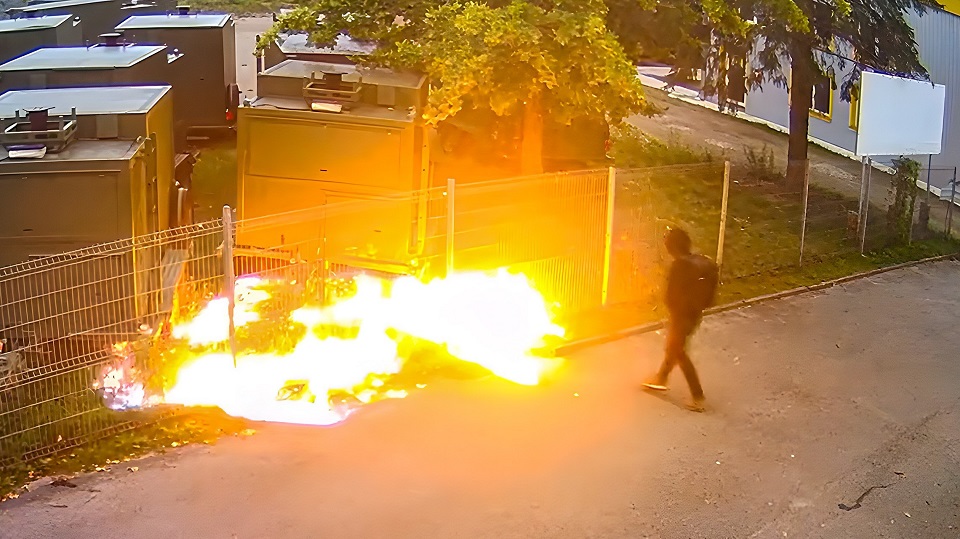
The Lithuanian police have sent to court a criminal case against six foreign nationals suspected of arson at a factory in Šiauliai that manufactured equipment for the Armed Forces of Ukraine. This is not a local incident — investigators see it as part of a broader operation aimed at discrediting and disrupting logistics supporting Ukraine.
Timeline and suspects
According to law enforcement, materials have been forwarded in the case concerning six detainees: among them a Russian citizen, a Belarusian citizen, as well as a Cuban woman and a Colombian man, who, according to investigators, had various roles — from directly attempting arson to acting as intermediaries and financiers. Two failed arson attempts were recorded on 17 and 22 September 2024; some of the suspects were detained in Riga and handed over to Lithuanian authorities. Four other persons are being sought: one has already been apprehended in Colombia, and international arrest warrants have been issued for the others.
What was attacked and why it matters
The target of the attacks was the company UAB TVC Solutions and its product — mobile radio-frequency analysis stations used for the needs of the Armed Forces of Ukraine. The value of the produced equipment is estimated at around €1.5 million, and total property damage at over €4 million. This is not just damage to business: it is an attack on elements of the supply chain that support Ukraine’s defensive capabilities.
"The group's actions were coordinated from Russian territory and are connected with the Main Intelligence Directorate of the Russian Federation"
— Lithuanian Police
Networked nature of the attacks
Investigators indicate the group operated according to a single pattern and may have been involved in similar sabotage acts in the Czech Republic, Romania and Poland. In the context of European security this looks like a series of transnational actions against infrastructure linked to support for Ukraine — not isolated incidents but a systemic challenge.
Legal and practical consequences
In Lithuania, participation in a terrorist organization is punishable by up to 15 years in prison. At the same time, the incident is spurring increased interstate intelligence-sharing and the protection of critical manufacturing facilities that are part of supply chains for Ukraine.
What next
The investigation continues: law enforcement is working through international channels; arrests and wanted notices are ongoing. For Ukraine the key question is whether partners will be able to systematically protect the logistics and aid infrastructure so that such attacks do not reduce the effectiveness of support at the front. Whether declarations of solidarity will be turned into concrete protective mechanisms is the question whose answer will determine the real resilience of the supply chains.



