Over 50 million hryvnias from fishing auctions: how these funds are being returned to waterways and communities
The average increase in lot prices was more than a third above the starting price. Auctions on Prozorro.Sales generated budget revenues earmarked for fish restocking and local needs. We examine where the money went and what this means for food and environmental security.

By Tetiana Suchkova-Ladik
December 18, 2025 · 2 min read
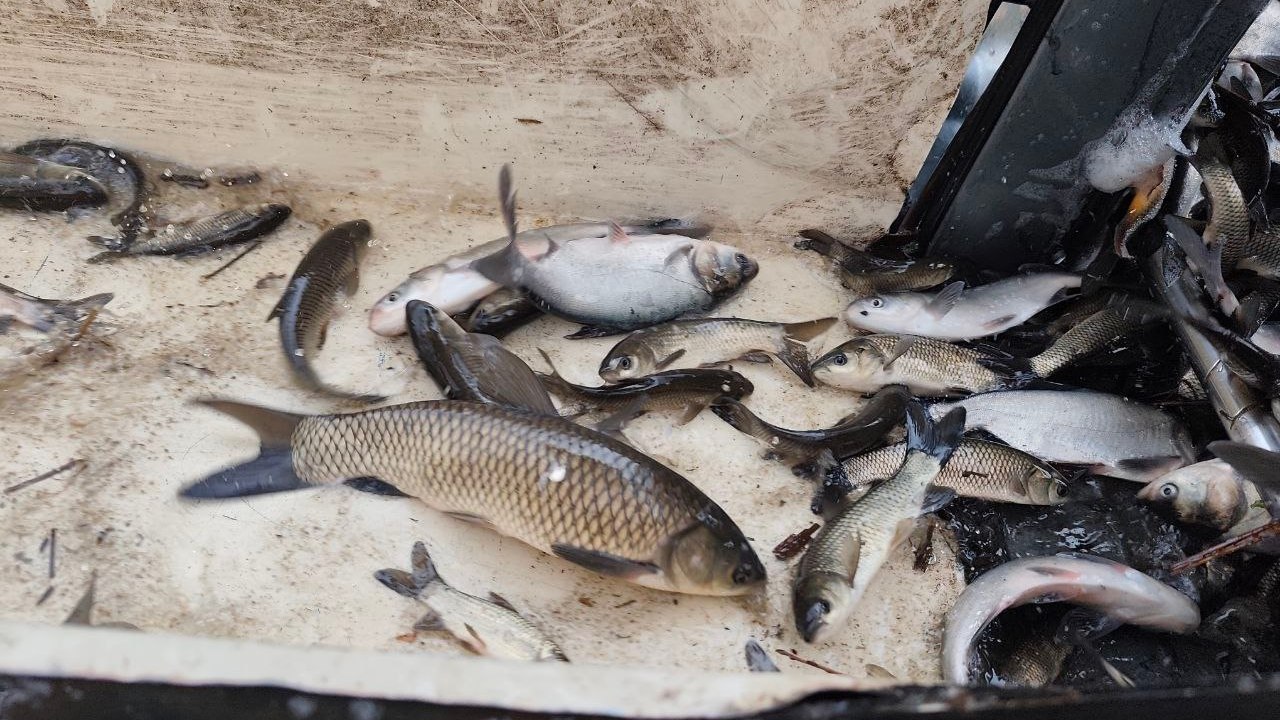
These auctions are not just additional receipts for the treasuries. They combine market competition with financing the restoration of aquatic ecosystems and supporting local budgets, which is important for food security and the economies of communities.
What happened
Since the beginning of the year, the Prozorro.Sales system has held 189 successful auctions for the right to industrial fishery. According to the press service of the State Fisheries Agency, auction participants actually paid 52.3 million UAH, which significantly exceeds revenues before the introduction of the auctions.
"As a result of the auctions, industrial fishers under concluded contracts actually paid 52.3 million UAH, which far exceeds the cash revenues obtained before the introduction of auctions for commercial fishing."
— Press service of the State Fisheries Agency
Where the funds went
The distribution of proceeds is clearly divided: 41.2 million UAH went to local budgets, and another 11.1 million UAH was directed to the state special fund for restocking water bodies. These funds are being used to restore populations in priority aquatic sites.
The largest receipts were recorded for the Dniester estuary, the Kremenchuk and Kaniv reservoirs. Examples of specific auctions illustrate the effect of competition: a commercial fishing lot for the Kamianske Reservoir with a starting price of 490.9 thousand UAH was sold for almost 1.3 million UAH.
"This year, at the auctions the final price of lots for fish catches on average rose by more than a third over the starting price."
— Serhiy But, CEO of Prozorro.Sales
Effect for populations and communities
Part of the funds are already working toward restoration: this year there was restocking of the Dniester estuary, the Kremenchuk and Kaniv reservoirs. For example, in the Cherkasy region financing from the regional budget (co-financed with auction proceeds) made it possible to release 61.5 t of silver carp fingerlings; on November 25, 18.5 t of white and mottled silver carp were released into the Kremenchuk Reservoir.
At the same time, industrial catch in the country remains below pre-crisis levels: in 2023 the catch amounted to 11,190 t (+12% vs. 2022), and in 2024 — 11,883 t (+6% vs. 2023). This means that the financial effect of the auctions is important but not a self-sufficient answer to restoring the sector.
On September 23, the Ministry of Economy announced the start of auctions for restocking the Dnipro — but of the first five tenders only two proved successful, indicating uneven competition and a need to improve procedures.
Conclusion
The auctions have shown that a market mechanism can create resources for restocking and supporting communities. However, the effect will depend on two things — the stability of competition in the auctions and the transparency of fund use. If these elements are preserved, the auctions can transform from a one-off revenue source into a systemic tool for restoring fish stocks and strengthening local budgets.
Question to sector leaders and communities: how broadly will it be possible to translate these local victories into a long-term strategy for population recovery and creating jobs locally?



