Prozorro.Sales 2025: privatization and auctions brought in UAH 16.2 billion — what this means for budgets
Money Loves Silence: UAH 16.2 billion on the state platform in 2025 — we break down which lots made the biggest contribution and why it matters for local and state budgets.

By Tetiana Suchkova-Ladik
January 7, 2026 · 2 min read
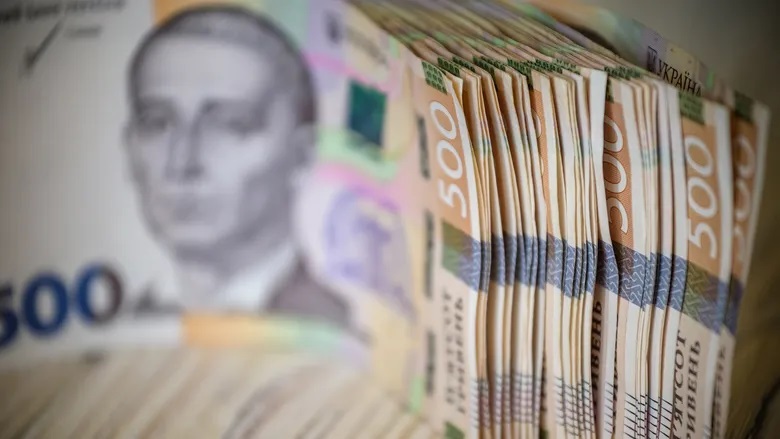
Prozorro.Sales — 2025 results
In 2025, the state platform held almost 28,700 online auctions, which brought organizers 16.2 billion UAH. These figures were published by the Ministry of Economy, Environment and Agriculture — a metric that should be analyzed not only as a sum, but as a signal for the market and local budgets.
"In 2025, the state system Prozorro.Sales conducted almost 28,700 online auctions for a total of 16.2 billion UAH."
— Ministry of Economy, Environment and Agriculture
Most valuable lots
The largest proceeds came from privatization and the sale of distressed assets: claims on loans of the Ukrlandfarming group — more than 1.1 billion UAH; the sale of the former head office of Sberbank in Kyiv — 916 million UAH; privatization of Ukrbud — 805 million UAH. These large deals form the backbone of the platform's revenue stream.
Where the biggest competitions were
By number of bidders, notable local lots included: a bus station complex near the railway station in Rivne — 41 bidders, amount 35.1 million UAH; premises in Berehove — 35 bidders, 3 million UAH; sale of a Skoda Octavia in Kropyvnytskyi — 35 bidders, 137,200 UAH. This shows that even small assets can attract serious competition and bring real revenue to local treasuries.
Revenue structure and potential
By sector, privatization leads — around 5.2 billion UAH. Land auctions yielded nearly 3.6 billion UAH, sales of property and assets — about 1.8 billion UAH. More than 3,300 auctions are still at the contract-signing stage and could add an additional 3.4 billion UAH to the budget.
Why this matters: it's not only the absolute sums that are important, but what they show — the auction mechanism works, the market responds to open auctions, and local communities gain a tool for filling budgets without directly burdening taxpayers.
"The 2025 results indicate growing interest in Ukrainian assets even amid uncertainty, and transparent trading makes it possible to deliver real funds to communities."
— market analysts
What's next
Prozorro.Sales proved in 2025 that the platform can generate significant revenue. The next test is the speed and transparency of concluding deals, transferring funds, and their targeted use. If this happens promptly, the 2025 figures will turn into investments in infrastructure and services, rather than remaining statistics in reports.
Summary: 16.2 billion UAH is not just a line in a report. It is an indicator of market confidence and potential for real change in communities. But whether the authorities and the market can turn these proceeds into tangible results for people remains an open question.



