Reshetnikov admitted: "reserves are exhausted" — and this happened sooner than the Kremlin planned
Russia's Minister of Economic Development has for the first time so openly named four reasons for the contraction of the economy — and all of them are structural rather than cyclical. Behind the scenes, there is an expected GDP decline in the first quarter of 2026 of 1.5%.

By Tetiana Suchkova-Ladik
April 17, 2026 · 3 min read
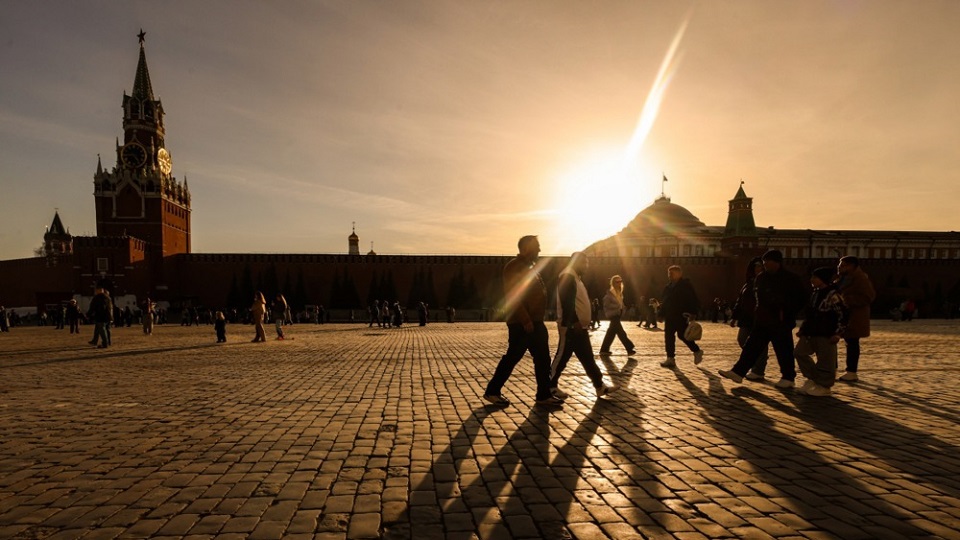
On April 17, at the "My Business" entrepreneurship forum in Vsevolozhsk, Russian Minister of Economic Development Maxim Reshetnikov said something that Moscow had previously tried to phrase more carefully: the reserves of the Russian economy are "largely exhausted". A forum for small business is not the most convenient platform for such admissions.
Four reasons — and none of them temporary
According to Reshetnikov, the economy is simultaneously pressured by four factors: a strong ruble (hurting exporters), record-high interest rates, labor shortages, and budget constraints. The minister called workers "the most deficient resource in the economy" — and added that businesses will have to adapt to new taxes or "scale back certain areas."
This is not the first such admission from an official. Back in June 2025 at the St. Petersburg Economic Forum, Reshetnikov said that Russia "already seems to be on the verge of entering a recession." At the same time, Central Bank of Russia Chair Elvira Nabiullina confirmed: the resources that ensured growth in 2023–2024 have been exhausted. Deputy Finance Minister Vladimir Kolychev in November 2025 stated the exhaustion of state finance reserves — and explained that without raising taxes, the budget cannot be balanced.
"Over the last 6 years, the budget's expenditure side has grown from 16.6% of GDP to 19.7% of GDP, including due to defense spending, which has reached 30% of the budget — a record since Soviet times"
Vladimir Kolychev, Russian Deputy Finance Minister, November 2025
The figures behind the minister's words
While Reshetnikov spoke of "challenges," Rosstat and independent analysts recorded specifics. According to The Moscow Times, GDP in the first quarter of 2026 contracted by 1.5% year-on-year — the Institute of Economic Forecasting of the Russian Academy of Sciences confirms this figure. The Ministry of Economic Development had previously forecast growth of 2.4% for the year. The IMF in April 2026 lowered its forecast to 0.8%.
Investments fell by 2.3% in 2025 and, according to the ministry's own estimate, will continue to decline. Industrial capacity utilization fell to 78% overall and to 70% in manufacturing. Analysts at the Center for Macroeconomic Analysis (CMAKP) warn of a "massive wave of corporate bankruptcies": by late 2024, more than 20% of manufacturing companies were spending more than two-thirds of pre-tax profits on debt servicing.
What this means for ordinary people
Recession is not an abstraction. Economists interviewed by 74.ru explain the mechanism simply: rising unemployment, slowing wage growth, unaffordable mortgages. In provincial cities — Volzhsky, Volgograd region — price jumps on food products were recorded as early as January 2026, writes Euromaidan Press citing local media.
It is telling that Reshetnikov's admission was made precisely at a forum for small businesses — that is, for those who feel the cooling first: the decline in demand for investment products, machine building, cargo transportation is already visible in order statistics.
"The economy has largely exhausted the temporary drivers that supported growth in 2023–2024"
The Moscow Times, January 2026
Military spending as a structural trap
According to the NEST Centre analytical center, in 2026 defense spending along with "national security" consumes the lion's share of the budget, while civilian sectors remain underfunded. Growth in defense production is occurring, but as independent economists warn, it diverts resources from the civilian economy and cannot sustain overall GDP growth indefinitely.
Putin in February 2026 called the slowdown "man-made" — saying it was deliberate cooling to tame inflation. The Central Bank lowered its key rate only to 15.5% — a level most businesses still consider prohibitive for borrowing.
If the rate remains above 14–15% through year-end, and oil does not recover to budgeted levels, a deficit of 3.8 trillion rubles will turn out to be an optimistic scenario — and then the question is no longer whether there will be a recession, but how many quarters it will last.



