Russia has lost the ability to conduct crewed launches after an accident at Baikonur
An accident at the Baikonur Cosmodrome has damaged the only launch pad for crewed missions.

By Oleg Bazylewicz
November 27, 2025 · 1 min read
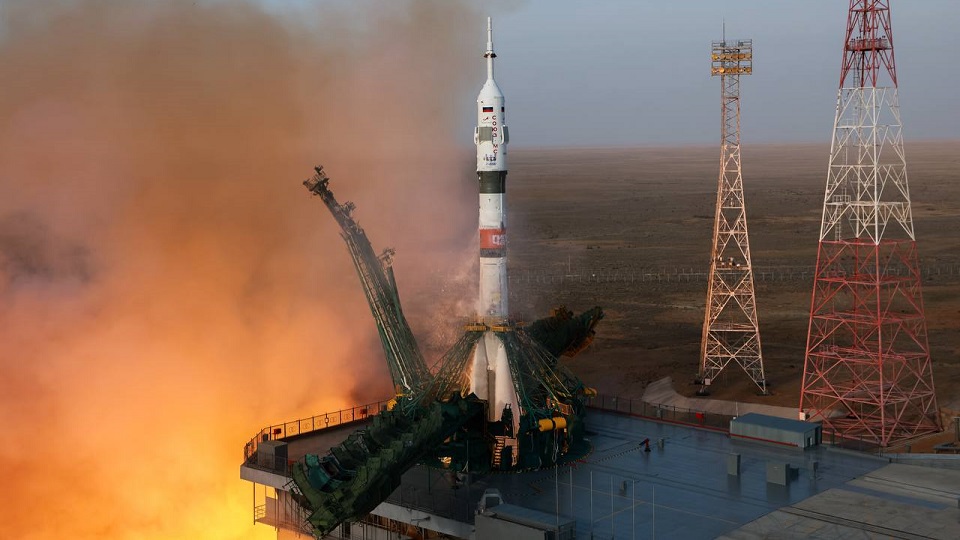
An accident occurred at the Baikonur Cosmodrome during the launch of the Soyuz spacecraft, which damaged the launch complex for crewed missions. Experts reported this in several publications.
On November 27, the Soyuz MS-28 was launched from Baikonur's Site 31. The spacecraft delivered three crew members to the International Space Station: two Russians and American Christopher Williams.
The launch was broadcast by NASA.
After the flight, it was discovered that the exhaust plume from the rocket's first-stage engine had damaged a section of launch complex No. 6 at Site 31.
According to some estimates, repairs to the damaged pad could take up to two years.
As N+1 notes, Site 31 is Russia's only pad for crewed Soyuz launches, and its damage could lead to delays in the schedule of cargo and crewed spacecraft launches.
Spaceflight popularizer Vitaly Yegorov believes that Russia has effectively lost the ability to conduct crewed launches into space for the first time since 1961. He said that either launch pad No. 31 must be repaired or the original "Gagarin's Start," which is currently located in Kazakhstan, must be modernized.
Roscosmos confirmed that damage to elements of the launch stand was found during the post-launch inspection.
"Damage can occur after a launch, so a mandatory inspection is necessary. The condition of the launch complex is currently being assessed. We have all the necessary spare parts for restoration, and the damage will be repaired in the near future," Roscosmos said.
- At the end of October 2025, the European Union initiated talks on Ukraine's participation in satellite programs.
- The European Space Agency appealed to member states to increase its budget by one third due to the expanding military presence of European countries in space.



