Rostov Company Leased Five Luhansk Mines—and Went Bankrupt Without Paying Wages
# Translation "The trading house 'Donetsk Coal' received mines with a promise to invest 40 billion rubles, but instead left miners without money and initiated its own bankruptcy. This is not an isolated failure — this is a model.

By Tetiana Suchkova-Ladik
April 27, 2026 · 2 min read
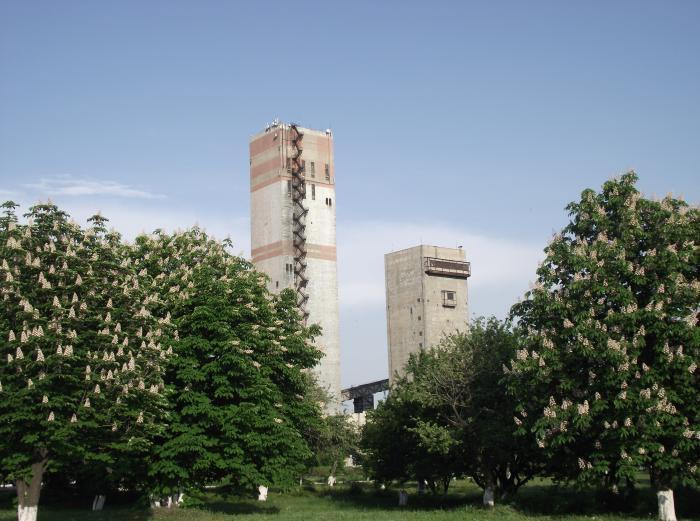
In March 2026, three mines in Luhansk Oblast closed: "Red Partisan" in Voznesenkivka, "Dozhanska-Kapitalna," and the Sverdlov mine in Dozhansk. Miners did not receive wages for either December 2025 or the months they worked in 2026.
"People were simply thrown onto the streets"
— Red Partisan miner Anatoly, as quoted by The Moscow Times
In January, management had still been reporting "reductions aimed at optimizing the organizational structure." By March, the enterprises simply shut down. Shortly thereafter, their operator — the Rostov-based LLC "Don Coal Trading House" — initiated its own bankruptcy proceedings. The total amount of claims against the company at the beginning of 2026 reached nearly 2 billion rubles.
How it began: a lease with conditions that no one fulfilled
In February 2024, the occupation administration transferred five mines in Luhansk Oblast to "Don Coal" under a lease agreement with the right to purchase them after five years, provided that at least 40 billion rubles were invested in production. Later, five more mines were added to the lease. In August of the same year, 90% of the company was transferred to Oleg Knyazev, the former vice-premier of the Astrakhan Oblast government, who shortly thereafter resigned.
Even before the mines closed, the Luhansk regional administration documented the dismantling of equipment at "Red Partisan" and "Dozhanska-Kapitalna": everything that could be cut was transported to Russia. In other words, the "investor" acted in the exact opposite way — not investing, but extracting.
Why the market won't save it
According to energy expert Omelchenko, Donbas coal was largely unprofitable even before the occupation — only a few mines were profitable. The situation is now worse: Russian coal is under EU sanctions, China is reducing its imports, and the cost of underground coal mining in Donbas is significantly higher than in Kuzbas, where coal is extracted by open-pit mining.
According to researchers, since the start of the full-scale invasion, the number of operating mines in the occupied territories of Donetsk and Luhansk oblasts has decreased from 114 to approximately 15. Along with the mines, coking plants, metallurgical facilities, and the chemical industry are disappearing — the entire technological chain that had been built over decades.
- Avdiivka Coke and Chemical Plant — destroyed during the 2022–2024 fighting
- Mariupol metallurgical plants — shut down or destroyed
- Azot chemical plant in Sievierodonetsk — put out of service
The closure of three mines in Dozhansk is neither an accident nor a result of military operations. It is the result of a scheme: transfer an asset to a loyal company, allow equipment to be exported, then declare bankruptcy and leave workers unpaid.
If the occupation administration continues to transfer mines using the same model — without real oversight of investment obligations — the question is not whether the next enterprises will close, but how many more miners will be left without wages by the time it becomes public.



