Fuel spill on the Dniester after Russian strike: water temporarily cut off in northern Moldova
Because of a rocket fuel leak following the March 7 attack, several districts in northern Moldova should prepare for temporary water supply interruptions. We explain what emergency services are doing, who is providing assistance, and why this matters for the entire river system.

By Tetiana Suchkova-Ladik
March 14, 2026 · 2 min read
What happened
On March 14, Moldova's Ministry of Environment reported that, due to contamination of the Dniester by petroleum products, water may be temporarily cut off in several districts in the northern part of the country. The pollution was detected after video footage from the vicinity of the village of Naslavcha; the preliminary cause is a leak of rocket fuel in the area of the Dniester Hydroelectric Power Station following a Russian strike on March 7.
Who will be affected
Shutdowns are expected in the village of Naslavcha and in the Soroca, Bălți, Florești and Sîngerei districts. Recommendation for residents — stock up on drinking water and follow official updates on the restoration of water supplies.
What is being done on site
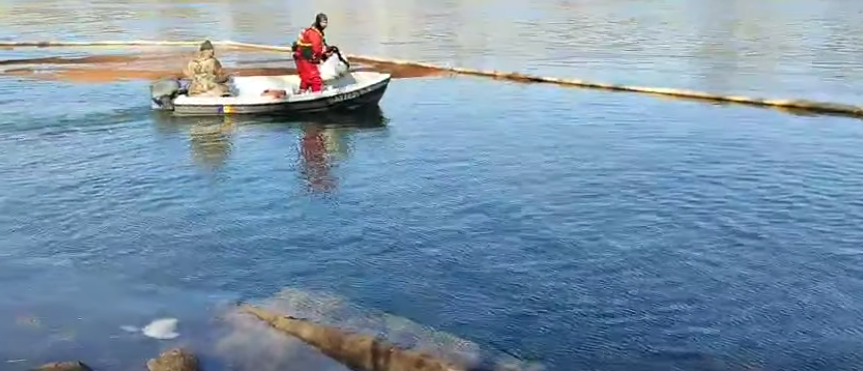
Emergency services are protecting critical water intakes: the Kosaut intake station, which supplies water to several districts, has been surrounded with an absorbent dam to prevent contaminated water from entering the system. A special absorbent material is being spread on the river surface to contain and neutralize the slicks.
Monitoring — a mobile laboratory is taking samples every six hours; the latest analyses, according to the ministry, show positive trends, but the source of the contamination still remains.
The latest laboratory analyses confirm positive progress — works on site are helping restore safe water parameters. However, the source of the contamination still persists; emergency services remain mobilized around the clock.
— Gheorghe Hazder, Moldova's Minister of Environment
Who is helping
Moldova has appealed to the European Union for assistance; specialists from Moldova, Romania and Ukraine, as well as the National Army of Moldova, are already involved in mitigating the consequences. Such transnational coordination increases the chances of quickly containing the spill and restoring safe water supplies.
Why it matters
The Dniester is a transboundary river: pollution upstream can have consequences for consumers on both sides of the border. Beyond the direct health risk, the incident underscores the need for investment in the protection of critical infrastructure and rapid environmental diagnostics.
Conclusion
In the short term the priority is to minimize harm and ensure drinking water for communities. In the medium and long term the goals are to strengthen infrastructure resilience and cross-border coordination mechanisms. Whether international statements translate into real resources and contracts for restoration will determine the speed at which normal water supply returns.



