Demining funded with $1.5M from UNITED24: hospital, lyceum and two forestry sites to be cleared — benefit for communities and cost savings
Donor funds have been turned into tangible work: competitive tenders have lowered the cost of demining, the first contracts have been signed — what this means for security and infrastructure recovery.

By Tetiana Suchkova-Ladik
January 6, 2026 · 2 min read
What happened
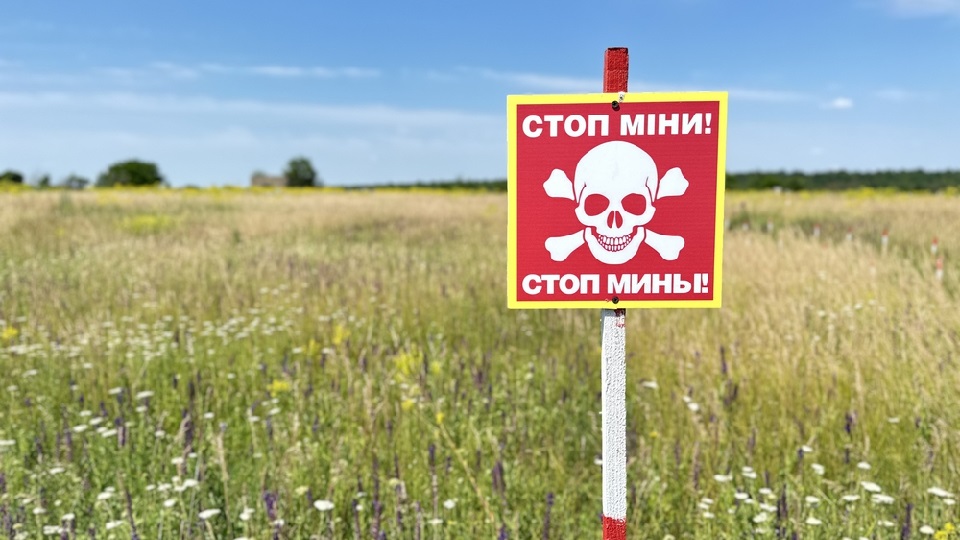
The Center for Humanitarian Demining held tenders to clear three sites using funds raised through the "Step by Step" initiative on the UNITED24 platform. The sites are Vysokopillia Hospital (Kherson region), Hrakivskyi Lyceum (Kharkiv region) and Fenevytske and Irpin forestries (Kyiv region). The Ministry of Economy reports this.
Quick facts
The amount collected — more than $1.5 million (April–May). As a result of the tenders, the price of services fell from 61.4 million UAH to 53.3 million UAH; ten demining operators took part in the auctions. At the start of January, contracts were signed for works at Hrakivskyi Lyceum and for several dozen hectares in the two forestries; the signing procedure for Vysokopillia Hospital is ongoing.
"I am glad that ten demining operators came to the auctions, even though this is not a classic minefield clearance job. In the end we have three different winners for three different sites that are important for local communities. This is the first such joint project with the Center for Humanitarian Demining (CHD) and UNITED24, and I hope this is only the beginning of implementing similar projects with the support of all those who care."
— Ihor Bezkaravaynyy, Deputy Minister of Economy
Why it matters
Safety and restoration of services. Clearing the hospital and the lyceum is not just an infrastructure project; it is a prerequisite for the safe return of medical services and schooling for local residents. Cleared forestries reduce the risk of accidental detonations during logging, recreation and farming activities.
Cost efficiency and transparency. Competitive tenders reduced the total contract sum by roughly ~8.1 million UAH — a sign that the public procurement mechanism and the use of donor funds can deliver savings for taxpayers and philanthropists.
Context and social proof
The UNITED24 platform launched the fundraising together with the Ministry of Economy, the national platform Demine Ukraine and the Center for Humanitarian Demining (CHD). Data showing the participation of ten operators demonstrate that capable contractors exist on the market, and donor money can be turned into real work more quickly and at lower cost.
What’s next
Signing the contract for Vysokopillia Hospital is the next key step. If the project demonstrates proper coordination and quality control, the model can be scaled to other sites that require demining. For donors and communities this means: donations produce a tangible result — cleared sites and reduced risk to people.
It is now important that the work is carried out according to standards, and that reports on spending and results are available — this builds trust and allows the scale-up of such initiatives in the future.



