Seven Years, Contractor Bankruptcy, and $11.6 Billion: Golden Pass Finally Ships First LNG
A plant in Texas started operations after the main contractor Zachry went bankrupt with a $2.4 billion cost overrun — and this is just the first of three technology modules.

By Tetiana Suchkova-Ladik
April 23, 2026 · 2 min read
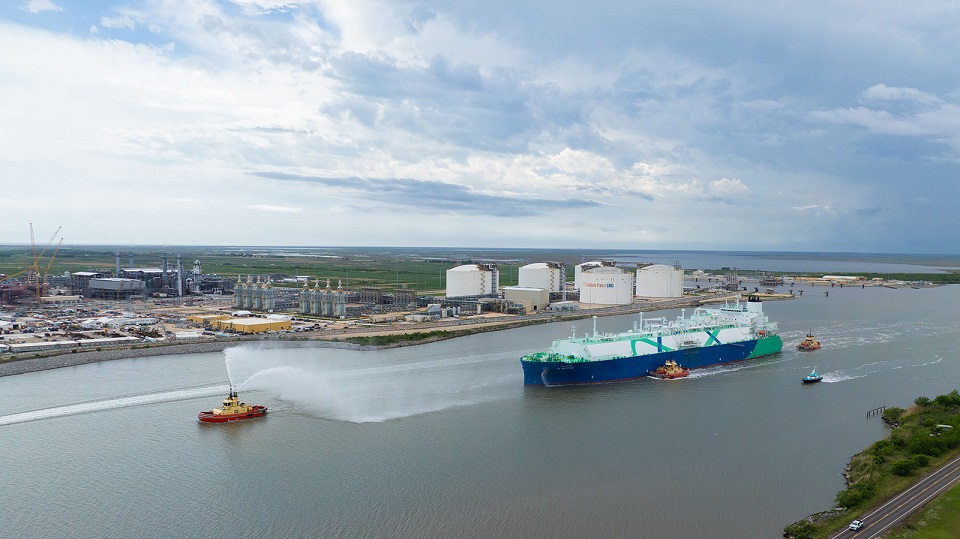
On April 23, the tanker Al-Qaiyyah with a capacity of 174,000 cubic meters took the first shipment of liquefied gas from the Golden Pass terminal in Sabine Pass, Texas. Behind this line in the QatarEnergy press release lies seven years of delays, one corporate bankruptcy, and a bill that has grown by a quarter compared to the initial estimate.
How $9.25 billion became $11.6 billion
When in 2019 the joint venture of QatarEnergy (70%) and ExxonMobil (30%) signed a contract with contractor Zachry Industrial, the project cost $9.25 billion. By August 2022, it was already $11.6 billion: pandemic inflation, supply chain disruptions, hundreds of official warnings from Zachry about budget overruns, which, as the company later claimed, ExxonMobil ignored.
In May 2024, Zachry filed for bankruptcy under Chapter 11,
— and halted work for several thousand construction workers on the site. After a settlement, Zachry exited the contract; McDermott and Chiyoda International took over the completion."citing pandemic-driven cost inflation and delays"
Riviera Maritime Media
What has been launched — and what hasn't
Currently only the first of three technological modules (Train 1) is operational. According to OilPrice.com, the construction and commissioning of Train 2 and Train 3 are ongoing. The plant's design capacity is 18 million tons of LNG per year, which will make it one of the largest export terminals in the US — but only after all three modules reach full capacity.
The launch of Train 1 itself occurred with delays: initially the facility was supposed to begin operations in the first half of 2025, then the deadlines shifted by approximately six months, and the first LNG at the facility was obtained even earlier — on March 30, 2025 — as a technological "cool-down" of the equipment.
Why this matters beyond Texas
Golden Pass was built for global LNG demand, which surged after 2022 — when Europe began urgent reorientation away from Russian pipeline gas. Full capacity of 18 million tons per year represents approximately 10% of the total LNG import volume to the EU in 2023. Qatar gains not only profit from gas sales but also a foothold for American exports: QatarEnergy controls 70% of the enterprise on US territory, which provides flexibility in cargo routing depending on market conditions.
- First shipment: tanker Al-Qaiyyah, 174,000 m³, shipped on April 23, 2025
- Final estimate: over $11.6 billion versus initial $9.25 billion
- Delay: Zachry's bankruptcy added at least 6 months to the schedule
- Readiness: Train 1 is operational; Train 2 and 3 are in the commissioning process
The real question will emerge when Train 2 and 3 reach capacity: will Golden Pass be able to conclude long-term contracts with European buyers at prices competitive with Norwegian pipeline gas — or will the project remain an instrument of Qatari flexibility rather than a true alternative for Europe?



