Roshen warehouse in Yahotyn nearly destroyed — what this means for supplies and prices
Missile attack knocks out confectioners' main logistics hub; workers sheltered, no casualties reported. We explain why this matters for stock levels and retail chains nationwide.

By Tetiana Suchkova-Ladik
February 7, 2026 · 2 min read
Briefly
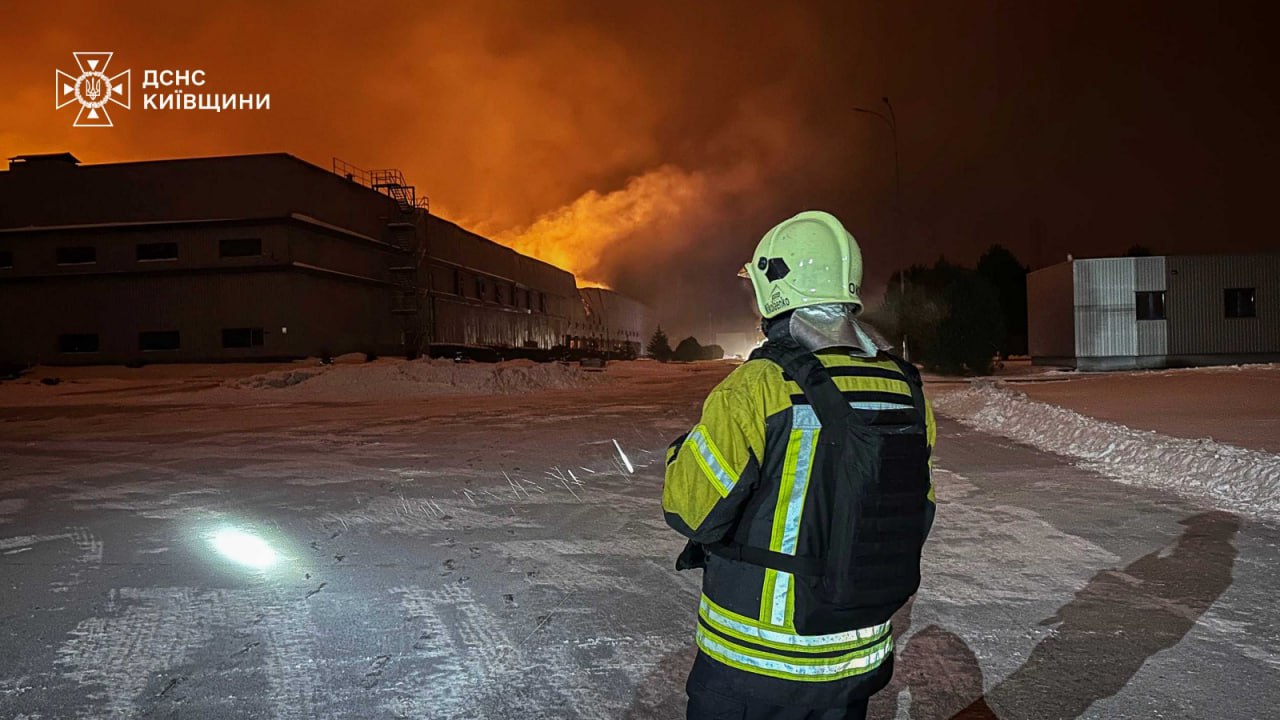
Confectionery company Roshen confirmed that during a nighttime Russian attack its logistics warehouse in Yahotyn was struck. Workers were in shelters — no casualties have been recorded, but the company says its stocks of finished products were almost completely destroyed.
What is known
The State Emergency Service had earlier reported a fire at a warehouse in Yahotyn as a result of a missile-and-drone attack on the morning of February 7. In its statement Roshen noted: "our largest warehouse with finished products has been almost completely destroyed." The company announced a switch to round-the-clock operations and assured that it will not raise product prices.
"At the same time, our largest warehouse with finished products has been almost completely destroyed."
— Roshen press service
MP Oleksii Honcharenko identified the site as a Roshen warehouse. MP Viktoriia Siumar reported that the fire has not yet been extinguished and, according to her, about 10,000 tonnes of products have burned.
"The fire still has not been put out. 10,000 tonnes of product have burned."
— Viktoriia Siumar, Member of Parliament
This is not an isolated strike on the company: on the night of January 24 Roshen's factory in Kyiv was damaged — a woman was killed, two other people were injured, and production and office premises were affected.
Why it matters
The hit to a logistics hub means not only lost stocks but also complications in routing deliveries across the country. Warehouses are a buffer between production and the store: if they are taken out of service, retailers will receive less product in the short term, and transportation and storage costs will rise.
In the context of massive attacks on the energy sector — which Energy Minister Denys Shmyhal reported (targets: substations and 750 kV and 330 kV lines, thermal power plants) — the risk of technological downtime and logistical disruptions increases. This amplifies pressure on supply chains during the cold spell and the state of emergency in the energy sector, in effect since January 14.
Reaction and consequences
Roshen says it is operating in an enhanced mode and intends not to raise prices, which should curb panic reactions among consumers. However, in the medium term the partial loss of 10,000 tonnes of product and the destruction of logistics are harder to compensate: rerouting supplies, additional storage costs and restoring infrastructure will be required.
The state and the private sector must coordinate priorities: restoring logistics corridors and securing power supply to reduce knock-on losses for food and industrial networks.
Conclusion
This is another example of how strikes on infrastructure have multi-layered consequences — from human safety to everyday goods on shelves. Russian attacks not only destroy buildings but also undermine logistics and stocks that everyday life depends on.
Now the ball is in the partners' and the state's court: will there be enough resources and speed to re-route logistics and minimize shortages while Roshen and other companies restore capacities?



