Sweet Trap: Candies Laced with Ecstasy, Cannabis and LSD Sold in Lviv and Kyiv — Scale and Risks
Law enforcement has exposed a network that disguised psychotropic substances as sweets in a chain of “coffee shops.” This is not just a criminal case — it’s a safety issue for cities and young people.

By Tetiana Suchkova-Ladik
January 21, 2026 · 2 min read
Detection of the operation: why it matters
In Lviv region a joint operation by the National Police and the State Customs Service exposed an underground scheme that disguised narcotic products as confectionery and sold them in Lviv and Kyiv. The risk is not only the illegal circulation, but that the substances were presented as ordinary products and could reach vulnerable groups, including young people.
Details of the investigation
According to law enforcement reports, group members imported isolates and distillates with psychotropic components and cannabis extracts from EU countries, then produced candies, gummies, chocolates and vape cartridges in underground laboratories. The products were disguised as legal goods and distributed through a network of stores in two cities.
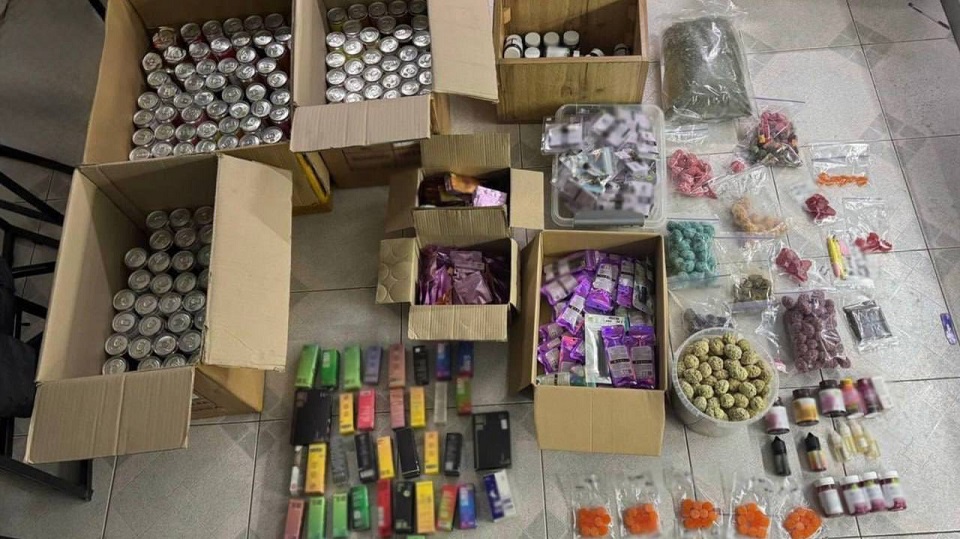
During sanctioned searches the following were seized:
- more than 800 gummies;
- more than 500 candies and chocolates;
- about 300 cartridges and inhalers;
- canisters and jars of psychotropic substances;
- 115 jars of cannabis extract, zip‑lock bags with psilocybin mushrooms, MDMA, LSD and ketamine;
- production equipment, packaging materials and rough notes.
"A significant quantity of products and substances that were manufactured and disguised as confectionery items was seized during the searches. Three people have been detained, and the seized substances have been sent for examination."
— National Police of Lviv Region
How the scheme worked
The scheme relied on several conditions: access to components from the EU, laboratory equipment to produce the goods, and a distribution network that created an appearance of legality. This approach lowers consumer suspicion and makes early detection of the crime more difficult — as long as the product looks like ordinary sweets.
Legal assessment and process
A 45‑year‑old organizer (a Kyiv resident) and two Lviv women (21 and 22 years old) have been detained. The organizer has been notified of suspicion under parts 2 and 3 of Article 307 of the Criminal Code of Ukraine — punishable by up to 12 years and confiscation of property; the women are accused under part 2 of Article 307 — punishable by 6–10 years with confiscation. The organizer is held in custody without bail; the women were ordered held in custody with the possibility of bail. The pre‑trial investigation continues, and the seized items have been sent for examination.
What this means for communities and what to do
This case shows how criminals adapt approaches: from smuggling components to disguising the final product as familiar goods. For communities this is a security issue — especially when it concerns products that can reach children and teenagers.
Security analysts point to two conclusions: first, tightening control over the import of components and more thorough checks of retail outlets; second, the need for information and training for parents and schools about atypical risks in consumer goods. Systematic work by law enforcement produced results in this case — further coordination is needed to prevent recurrence.
Questions for authorities and communities: is the supply chain transparent enough and how effective are inspections of commercial outlets that sell products with atypical recipes? The answers will determine whether similar schemes remain isolated incidents or become a systemic threat.



