Supernova Holds the Line: How Nova Poshta's Airline Stays Ready for the Reopening of the Skies
Supernova operates cargo flights six times a week between Belgium, the Czech Republic and Israel — not just business, but a strategic reserve for Ukraine’s logistics. We examine why the company chose short routes and what this means for the restoration of air service.

By Tetiana Suchkova-Ladik
January 23, 2026 · 2 min read
Preserving the Option — Business and National Readiness
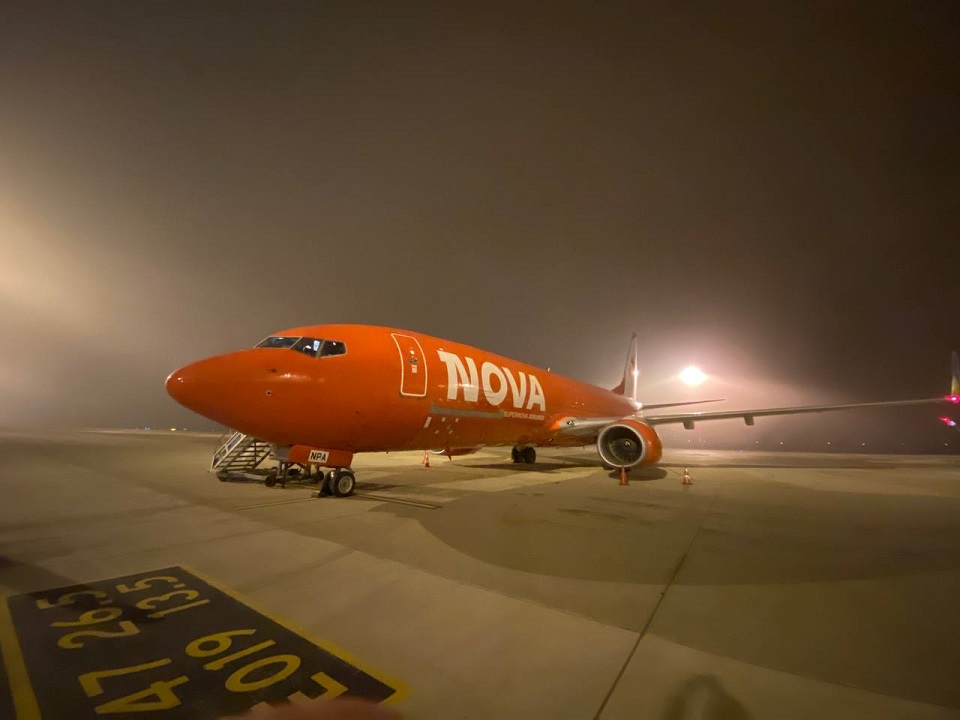
Freight airline Supernova Airlines, part of the Nova group, is currently operating flights six times a week between Belgium, the Czech Republic and Israel. The information was confirmed in an interview on the YouTube channel LIGA Business by Nova Poshta co‑owner Volodymyr Popereshnyuk. This is not just a temporary operation — the company is maintaining technical and operational capability in case it becomes possible to resume flights from Ukraine.
“When we created the company, the task was — delivery of parcels from Ukraine to the States and from China in a day. Now, because our sky is closed, our little plane is idling, because we cannot get permission there, we cannot — Ukrainian company, and the market is very regulated. So now we found the Ostrava – Liège and Ostrava – Tel Aviv routes. That is, we run these small routes just to keep the airline loaded.”
— Volodymyr Popereshnyuk, co‑owner of Nova Poshta
“We are keeping this company so that it survives.”
— Volodymyr Popereshnyuk, co‑owner of Nova Poshta
Routes, equipment, timeline
Briefly the facts: Supernova was founded in 2021. In early February 2022 the company leased two freighter Boeing 757-200F aircraft; flights were planned to start in September 2022 — but the outset of the full‑scale war postponed those plans. The launch was pushed to 2023, initially using other aircraft. Since September 2024 Supernova has been operating flights with its own Boeing 737-800SF under Ukrainian registration marks UR-NPA.
Why they chose short European corridors
Because of the closed skies over Ukraine and the high level of regulation for international permissions, a Ukrainian carrier effectively cannot deploy full transcontinental routes under the national flag. In response, Supernova operates short cross‑border flights — for example, Ostrava – Liège and Ostrava – Tel Aviv — to preserve crews, equipment and certification, and to maintain operational readiness.
What this means for Ukraine’s logistics
In a prolonged war, having reliable air reserves is not a decorative option but a real tool for restoring supply chains. Keeping Supernova in the Nova group's assets means that after the skies open or permissions are eased, the company will face fewer technical and personnel barriers to quickly scaling up direct cargo routes from Ukraine.
Economically, it is also a signal to the market: investing in aviation during uncertainty increases the chances of faster logistics recovery when geopolitical conditions change. Now the question is not whether the equipment will exist — it already does — but when permissions and safety will allow it to be used to its full potential.
Whether this operational reserve will turn into a full‑fledged restored air corridor for Ukraine depends on two variables: opening the skies and the speed of agreeing international permissions. Until then Supernova performs its role as a strategic reserve in the hands of Ukrainian logistics.



