Swarmer heads to Nasdaq: Ukrainian drone-swarm software seeks up to $15 million
A startup with offices in Kyiv and Austin has filed an S‑1/A with the SEC and plans to list its shares on Nasdaq. Its technology was battle‑tested in Ukraine — a test of market confidence and a signal for the defense sector.

By Tetiana Suchkova-Ladik
February 23, 2026 · 2 min read
What happened
Deftech startup Swarmer, founded in 2023 by Serhiy Kuprienko and Alex Fink, updated its S‑1/A filing with the U.S. Securities and Exchange Commission (SEC) to raise up to $15 million through an initial public offering on Nasdaq (ticker SWMR).
IPO details
The company plans to offer 3 million shares at a price of $4 to $6 per share with a 450,000‑share overallotment option. The maximum raise including the option is about $16.2 million. In the S‑1/A these terms are presented as the base offering to investors.
Team and positioning
Swarmer has offices in Austin, Texas, Kyiv and Warsaw. Erik Prince is listed as the non‑executive chairman of the board — a fact that draws additional attention from media and regulators due to his public background.
Technology and combat use
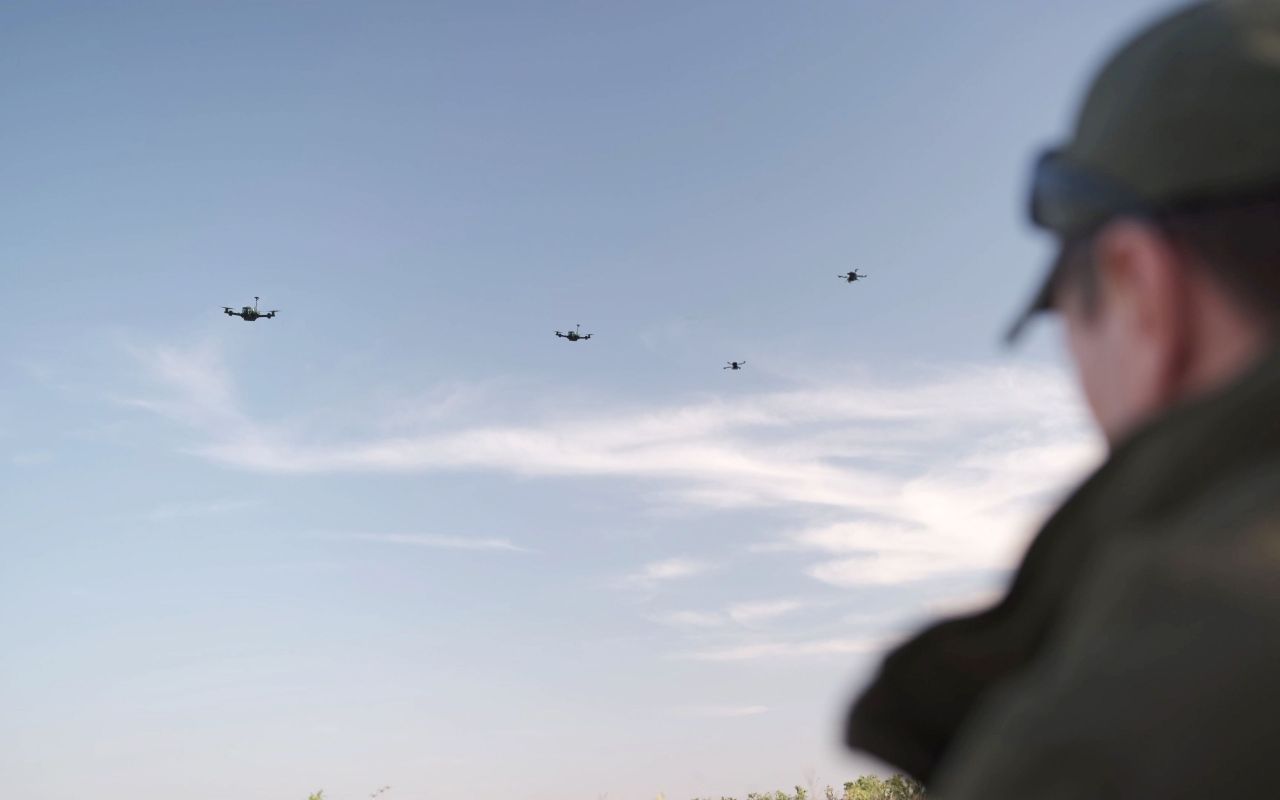
The company develops artificial intelligence and autonomous coordination systems that allow a single operator to control dozens or hundreds of platforms as a swarm. The platform is not tied to a specific UAV manufacturer and can integrate with various hardware solutions.
"The company is not dependent on a specific UAV manufacturer and can integrate its software solution with any compatible hardware"
— S‑1/A, Swarmer (statement to the SEC)
According to the company, the platform has been used in Ukraine since April 2024 — the S‑1/A mentions the accumulation of data from more than 100,000 combat missions under conditions of intense electronic warfare. This is the company's main argument to investors: the technology has undergone a form of combat testing, which increases its practical value for the defense market.
Finances and risks
Swarmer has not yet reached profitability: in 2025 the company recorded a loss of $8.5 million on revenue of $310,000. This is a typical risk for early deftech projects — the technology may be commercially attractive, but the transition to stable contracts and a margin‑rich business can take years.
Why this matters
An IPO on Nasdaq is not only about money. It's a test of institutional investors' trust in technologies with "Eastern European" roots and a signal of the possibility of integrating Ukrainian developments into global defense supply chains. For Ukraine it is also an indicator: not only hardware, but also the software core is becoming an export competency.
Market analysts point to two key questions: whether Swarmer will be able to convert combat use cases into long‑term contracts with governments and defense contractors, and how the company will address profitability. At the same time, the presence of public figures in leadership increases media interest and potential reputational risks.
Conclusion
The request for $15–16.2 million is more a signal than a verdict: investors will have the opportunity to back the software component of unmanned systems, which already has field experience. What matters next is whether market interest will turn into steady contracts and the company's financial resilience — this is a question not only of business, but of national security.
Context: in August 2025 the first Ukrainian company went public on Nasdaq via a SPAC merger; the experience of such deals may serve as a reference for subsequent players, including defense‑profile startups.



