Tanker from Gazprom's sanctioned plant heading to India — after Modi's promise to abandon Russian energy
# Kunpeng loaded at "Portova" and heading to Daheji: if cargo is accepted, India will officially violate commitments that Trump announced to the world — and Delhi has not publicly confirmed.

By Tetiana Suchkova-Ladik
April 16, 2026 · 2 min read
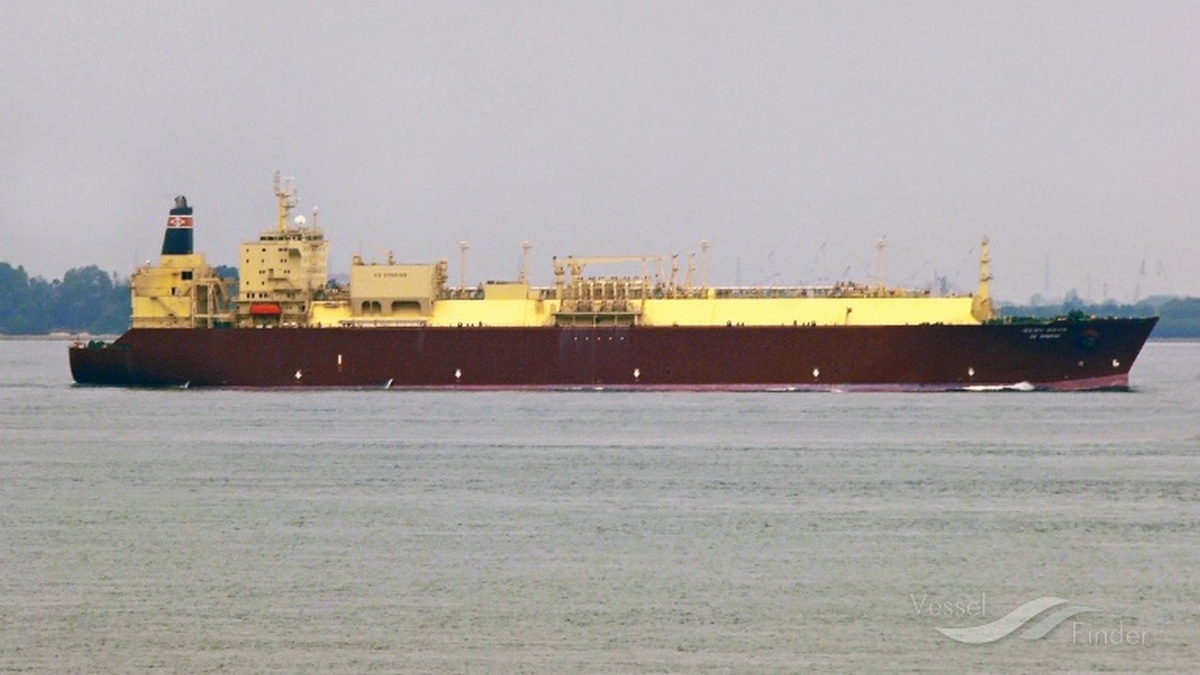
The tanker Kunpeng, carrying liquefied natural gas from the sanctioned "Portovaya" plant, is approaching the import terminal in Dahej in western India. If the cargo is accepted, it will be India's first purchase of gas from a US-sanctioned facility after Trump stated in February that Modi personally promised him to stop importing Russian energy.
Plant under sanctions, tanker is not
"Portovaya" — Gazprom's only LNG export plant — along with its operator Gazprom SPG Portovaya LLC, was sanctioned by the US in January 2025 in one of the Biden administration's final packages aimed at undermining Russia's ability to produce and sell liquefied gas. Kunpeng was loaded on December 18-21 and set sail for India, according to LSEG and Kpler data.
The tanker itself is absent from sanctions lists — this is the key point. The scheme tested at Chinese ports is now being tested on the Indian market: taking gas from a blocked plant through an unblocked carrier.
"Russia is ready for uninterrupted fuel supplies to India."
Russian President Putin at the India-Russia bilateral summit in New Delhi, December 2025
What Delhi says — and what it doesn't
In October, Trump publicly stated: Modi personally assured him that India would stop purchasing Russian oil. The same day, India's Foreign Ministry responded evasively — no confirmation of the promise, no mention of Russia. "Ensuring stable prices and reliable supplies is our goal," the ministry noted.
In August 2025, Trump signed an executive order imposing an additional 25 percent tariff on Indian imports linked to Russian energy trade. Despite this, Russia remained India's largest oil supplier in the first half of 2025 — over 30% of all crude oil imports.
A precedent that already exists
"Portovaya" has already supplied sanctioned LNG to India through the Chinese port of Beihai — both directly and through transshipment at sea from the sanctioned tanker Perle. Parallel to Kunpeng's shipment to India, Gazprom delivered a second sanctioned cargo from "Portovaya" to China.
- Portovaya LNG — under US sanctions since January 2025 (along with its operator).
- Kunpeng — not on sanctions lists, connected to a Chinese company.
- Dahej terminal — a major import hub; cargo has not yet been accepted.
- In parallel: The EU increased Russian LNG imports by 22% in the first half of 2025 — to 21 billion cubic meters.
It is telling that India's Foreign Minister Jaishankar directly pointed to this Western inconsistency: "If Europe can make a choice in favor of its energy security, why can't India?"
If the Dahej terminal accepts the cargo and this becomes a public fact, Washington will face a choice: either apply the tariff instrument it already has, or silently admit that the promises Trump made to the world had no binding force — and no mechanism exists to enforce them.



