"What happens in one sector spreads to the entire society": EU fears repeating 2022's mistake
The Persian Gulf is closed, gas prices have soared 70%, oil prices up 50%. The European Commission is already urging countries not to do what they did three years ago — and what caused inflation to spiral out of control.

By Tetiana Suchkova-Ladik
April 6, 2026 · 3 min read
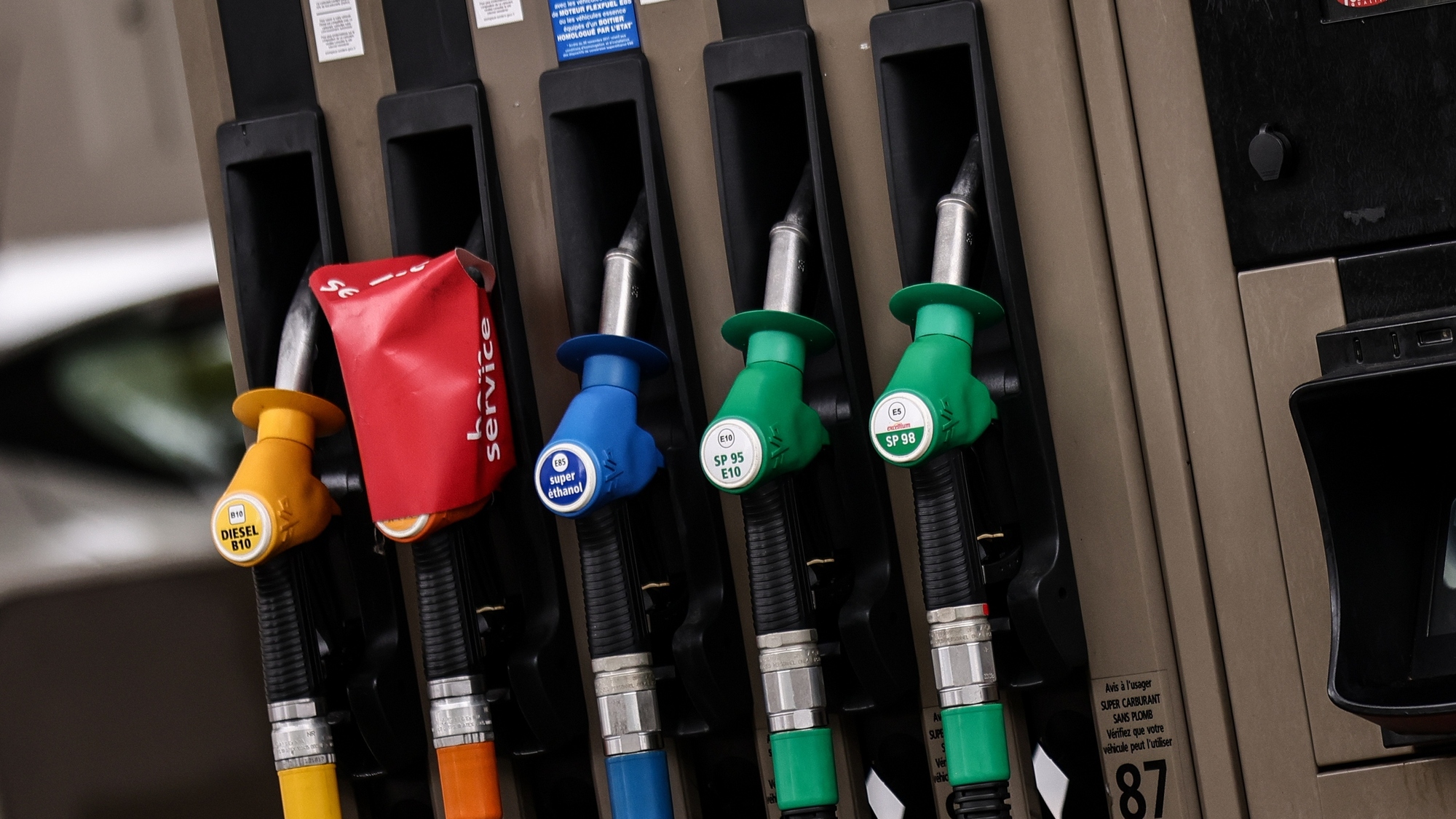
In early April 2026, the European Commission found itself facing déjà vu: the third major energy shock in six years — after the pandemic and Russia's invasion of Ukraine. This time, the cause is the effective closure of the Strait of Hormuz following American-Israeli strikes on Iran and Iranian counterstrikes on Persian Gulf infrastructure.
What happened to prices
According to the European Commission's assessment, natural gas prices rose by 70%, oil prices by 50%. Within the first ten days of the crisis, Europeans have already overpaid at least €2.5 billion compared to pre-crisis levels — such calculations are provided by the Ember analytical center. For comparison: during the previous 2021–2023 crisis, overpayment for the entire duration reached almost a trillion euros.
The situation is complicated by the fact that Europe entered 2026 with gas storage filled to only 46 billion cubic meters — compared to 60 billion a year ago and 77 billion two years ago, according to Bruegel analysts' calculations. Summer storage replenishment operations may stop, which will increase pressure on industry in the fall.
Brussels' warning
"What happens in one sector of the economy can spread to all of society."
Dan Jørgensen, EU Commissioner for Energy, — Financial Times
According to Jørgensen, EU countries should respond "within available fiscal space" — that is, not spend money they don't have. The European Commission has officially warned governments: subsidies, tax cuts, and price controls should be limited in time and scale.
The subtext of this warning lies in 2022 figures. Then, according to Bruegel, EU governments allocated €758 billion to protect households and businesses from energy prices. However, only about 27% of these funds went to targeted assistance — the remaining three-quarters were spent on broad price controls and tax benefits used by everyone, regardless of need.
What economists say
Financial Times economist Martin Sandbu formulated a principle that was only paid lip service to in 2022: support should be "timely, targeted, and temporary." But then most governments failed to meet any of the three criteria — programs expanded and dragged on.
Bruegel analysts directly warn: if prices remain high, support for energy-intensive industries effectively becomes permanent price subsidization — and ultimately costs more for all other sectors and households. Cutting fuel taxes in response to a price shock is "intuitively appealing, but economically counterproductive," warns the IEA.
Five finance ministers — from Spain, Germany, Italy, Portugal, and Austria — have already called for introducing an EU-wide windfall tax on energy companies' profits. That is, states are moving in the opposite direction from subsidies: not paying consumers, but taking from those who are profiting from the crisis.
What this means for people
- Annual inflation in the eurozone has already accelerated to 2.5% in March 2026 — from 1.9% in February, with energy price growth being the main driver.
- If storage cannot be replenished in the summer, industry will again face shortages and high costs in the fall — this is a blow to employment and purchasing power.
- Broad subsidies — if governments do pursue them — will increase budget deficits in countries that already have growing debt-to-GDP ratios.
Jørgensen does not rule out strict rationing of aviation fuel and diesel if the situation worsens. The European Commission is ready to open strategic oil reserves again — a tool that was already used in 2022.
The question is not whether electricity bills will rise this summer — they already are. The question is whether governments will withstand voter pressure and avoid distributing broad subsidies that in a year will again turn into inflation and deficits: if the Strait of Hormuz remains blocked for longer than three months, the fiscal discipline that Brussels is now calling for is unlikely to survive the test of elections.



