Private quarry locomotive rammed Intercity+ train in Vinnytsia region: two cars destroyed, 576 passengers evacuated
At the "Brailiv" station, a locomotive from a mining enterprise collided with the Kyiv-Przemysl train. This is not the first critical threat to the Hyundai Rotem fleet — the fleet is already exhausted by the war.

By Tetiana Suchkova-Ladik
April 18, 2026 · 2 min read
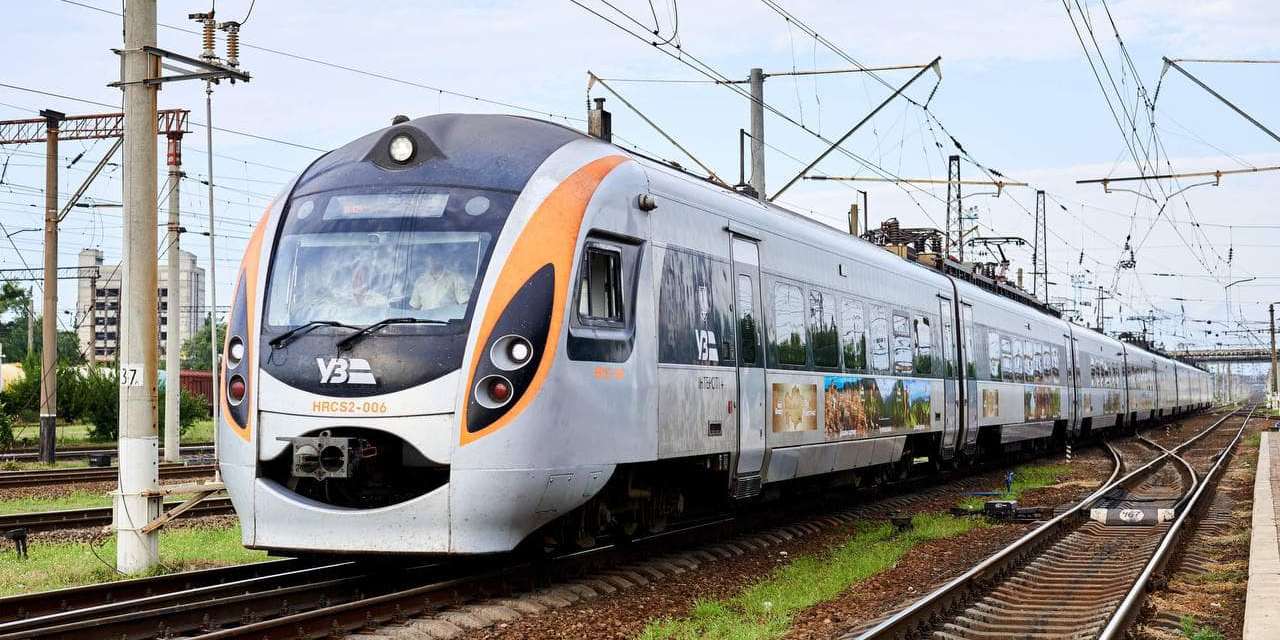
On April 18 at the "Brailiv" station in Vinnytsia region, a locomotive belonging to a private quarry rammed the Intercity+ train No. 740/739 on the Kyiv–Przemysl route. There were 576 passengers on board — none were physically injured, but two cars sustained serious damage, visible in videos from social media.
What happened and who is responsible
The train was performing an international route to Polish Przemysl when a locomotive from a third-party enterprise appeared on the track section. Ukrzaliznytsia confirmed the collision and immediately sent a replacement train set. Passengers were transferred and the journey continued.
"The incident will be thoroughly investigated. A Ukrzaliznytsia team was dispatched to the scene to provide assistance and clarify the circumstances of the incident."
— Ukrzaliznytsia, April 18, 2025
The key phrase here is "private quarry". Train sets operated by mining enterprises may use railway infrastructure under contracts with UZ, but the procedure for accessing main tracks is regulated by the dispatcher. Whether the locomotive was authorized to be in this section is exactly what investigators are now determining.
Why the damage is greater than it appears
Intercity+ trains are electric sections HRCS2 manufactured by Hyundai Rotem, purchased for Euro-2012 under a contract worth $307 million (10 units). The fleet is small and has barely been replenished. On August 28, 2025, Russia deliberately attacked the depot in Kyiv — the HRCS2-006 storage facility burned down. Now another train has been taken out of service for repairs due to the Brailiv incident.
- Total number of HRCS2 units in UZ's fleet — 10 units, each designed for 579 passengers.
- After the August attack, the fleet was effectively reduced to 9 operational trains.
- The Brailiv incident takes another unit out of service for an indefinite repair period.
For the Kyiv–Przemysl route, which is one of the main evacuation and repatriation corridors, this means a direct strain on the schedule.
Questions without answers
Ukrzaliznytsia promised an investigation but did not name the locomotive's owner enterprise or provide specific timelines for conclusions. Precedents show: if a private operator accessed the main track without dispatcher authorization — that is a criminal offense. If authorization was given — the question falls on UZ's traffic management system.
If the investigation establishes the dispatcher service's fault rather than solely the locomotive operator's — it will open a broader discussion about how safe it is to share railway infrastructure with commercial enterprises during martial law, when every Intercity car counts.



