The Elephant House returns: the café where Rowling wrote "Harry Potter" reopens after 4½ years
The reopening of a venue in central Edinburgh is more than just local news for its fans: it’s an example of restoring cultural memory after destruction. We examine what happened and why it matters beyond Instagram posts.

By Tetiana Suchkova-Ladik
December 29, 2025 · 2 min read
Briefly
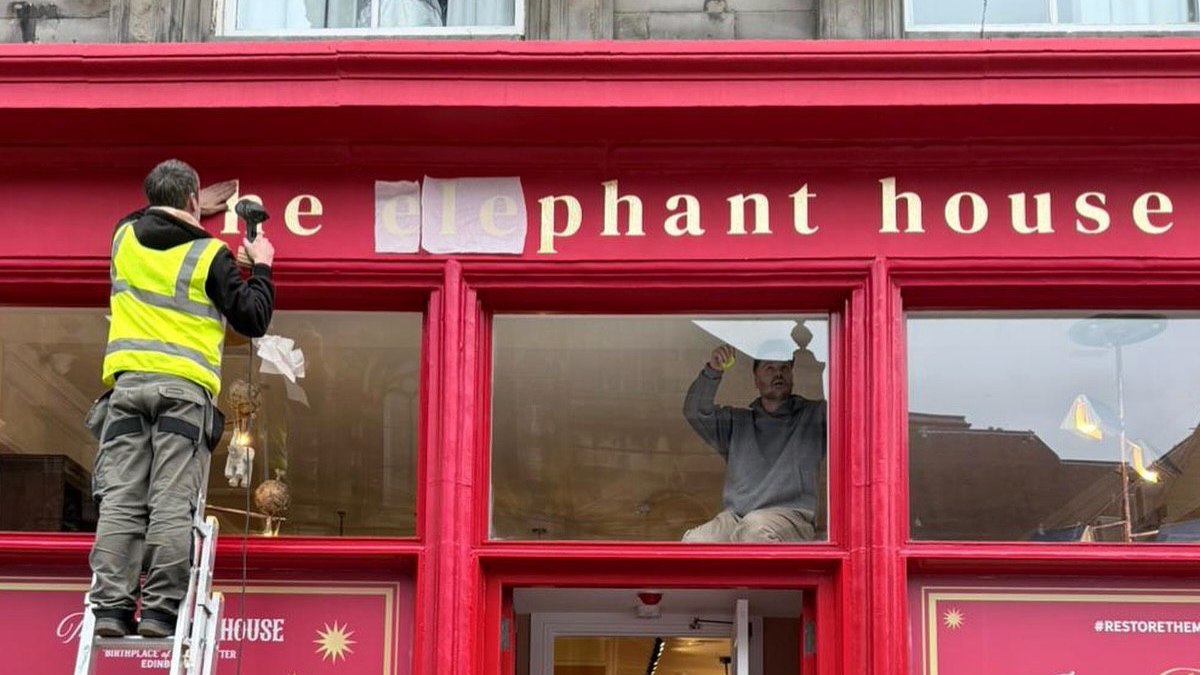
The café The Elephant House in Edinburgh, known as one of the places where J.K. Rowling worked on early parts of the Harry Potter series, has reopened its doors after being closed for more than 1587 days following a major fire on George IV Bridge in August 2021. The announcement of the reopening was posted on the establishment's Instagram page.
What happened
According to the BBC, the fire seriously damaged part of the building: some property owners later declared bankruptcy, which delayed the reconstruction. The cost of the restoration work was estimated at about £500,000. New owners signed a 20-year lease with café owner David Taylor, giving the business a long-term outlook.
"After 1587 days we are finally ready to open our doors again on George IV Bridge"
— The Elephant House (Instagram page)
Why it matters
At its core, this is a story about the restoration of a cultural space. For book fans, The Elephant House is more than a café: it preserves part of the history of the creation of a global phenomenon. A damaged but saved antique wooden table has become a symbol of continuity; a portrait of Rowling now hangs in the room alongside portraits of other Edinburgh writers — Ian Rankin, Alexander McCall Smith and Irvine Welsh — underscoring the city's role as a literary stage.
"People have been asking to come in as well, it's just constant, it's a mecca for Harry Potter fans. It's tragic to realise we were closed for four and a half years... it felt like an emotional rollercoaster"
— David Taylor, owner of The Elephant House
What next
The reopening highlights several practical points: first, restoration takes time and capital; second, long-term lease agreements encourage investment in restoration; third, cultural venues restore a city's tourist appeal. For a broad audience, it is also a reminder of how quickly or slowly infrastructure can be rebuilt after destruction.
For Ukraine this story resonates as an example: when there is the will of owners, community support and long-term commitments, cultural spaces are restored and return a city's identity. It is important now that such declarations of intent and investment turn into real contracts and resources.
Sources: The Elephant House (Instagram), BBC.



