Third strike in a year: Omega warehouse in Chaiky caught fire across 10,000 square meters
On the night of May 24, a Russian attack destroyed the Kyiv distribution center "FIM" — a key logistics hub of the Omega company. This is already the third strike against the infrastructure of one of Ukraine's largest auto parts distributors over the past year.

By Tetiana Suchkova-Ladik
May 25, 2026 · 2 min read
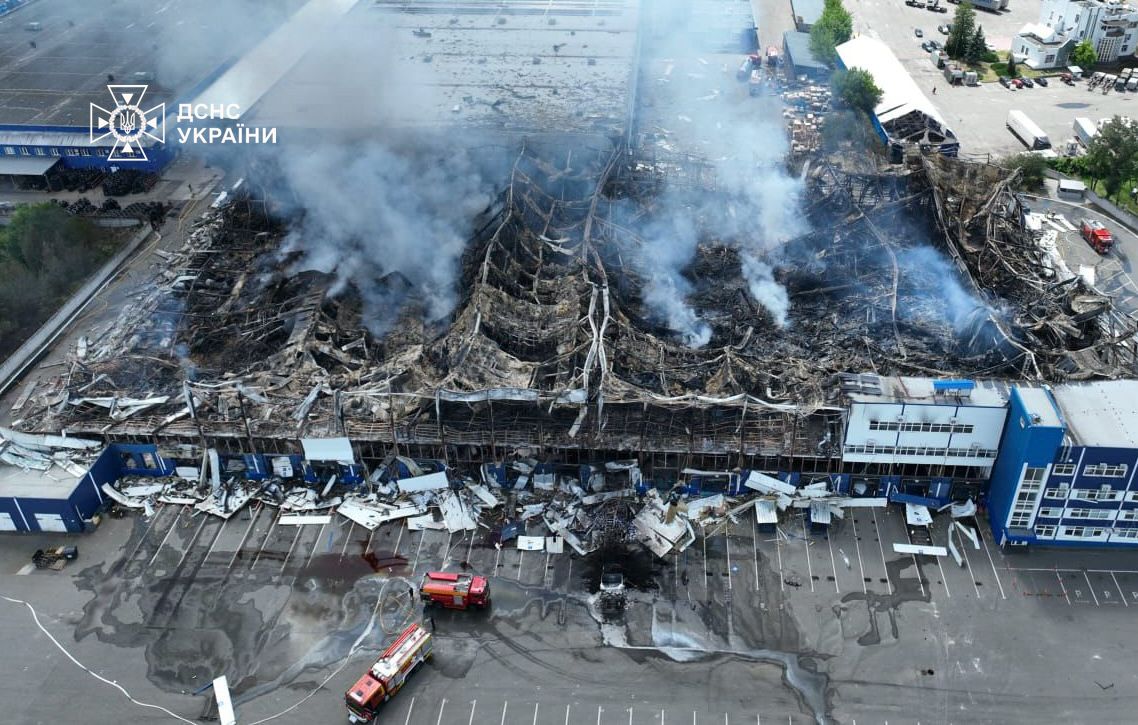
On the night of May 24, fire engulfed the FIM Service warehouse complex in the village of Chaiky in the Sviatoshyn district of Kyiv Region. The fire area reached 10,000 square meters — more than a third of the facility's total area of 27,240 sq. m. According to DSNS data, due to the extreme complexity of the fire, firefighting robots and rescue aviation were deployed — two helicopters.
The key tenant of the complex is "Omega" — one of the largest wholesale distributors of auto parts in Ukraine with its headquarters in Kharkiv Region. This is where the FIM Kyiv distribution center is located on Arthur Yarosh Street, which supplies central regions of the country.
"As a result of an attack by the aggressor country, the Kyiv distribution center was damaged. Currently, cleanup and situation assessment are underway."
— Statement by Omega company on the official website after the attack
Third Strike — Not a Coincidence
According to data contained in the material, this is already the third targeted hit on Omega's logistics infrastructure in the past year. The company has an extensive network: two main distribution centers — in Kyiv and Lviv — plus regional warehouses in Dnipro, Zhytomyr, Uzhhorod and other cities. The serial destruction of key facilities of a single distributor indicates either deliberate targeting of civilian logistics or that the facilities were identified through open sources — warehouse addresses are publicly available on the company's website.
Broader context of the May 24 attack: according to the Kyiv Regional Military Administration, two men were killed — in Bucha and Obukiv districts, nine were injured, including an infant. DSNS rescuers worked at 25 locations in Kyiv Region. ISW analysts link the scale of the attack to the Kremlin's attempt to "erase the humiliation associated with the Victory Parade" — a display of force after Ukraine failed to strike Moscow on May 9.
What This Means for Civilian Supply
Auto parts are not a strategic commodity in the classical sense, but in wartime conditions they are critical for maintaining the mobility of both civilian and municipal vehicles. Omega declares a "same-day delivery" model with delivery across the country. Three consecutive strikes on facilities of a single operator is no longer collateral damage, but systemic pressure on the supply chain.
- Area of affected section: 10,000 sq. m out of 27,240 sq. m of the complex's total area
- DSNS forces involved: firefighting robots + 2 aviation helicopters
- Casualties in the region that night: 2 killed, 9 wounded
- Number of strikes on Omega in a year: three confirmed hits on logistics facilities
If Omega fails to restore the Kyiv distribution center and simultaneously receives a strike on the Lviv center — the only remaining hub in the west — the question of how a major distributor maintains operational resilience without geographic redundancy will become more than rhetorical.



