Pipeline Built During Iran-Iraq War Now Saves Aramco From Iran-American Tensions
While the Strait of Hormuz is effectively closed and the world has lost nearly a billion barrels of oil, Saudi Aramco has pumped a record 7 million barrels per day through alternative routes — and earned $33.6 billion in quarterly revenue.

By Tetiana Suchkova-Ladik
May 11, 2026 · 2 min read
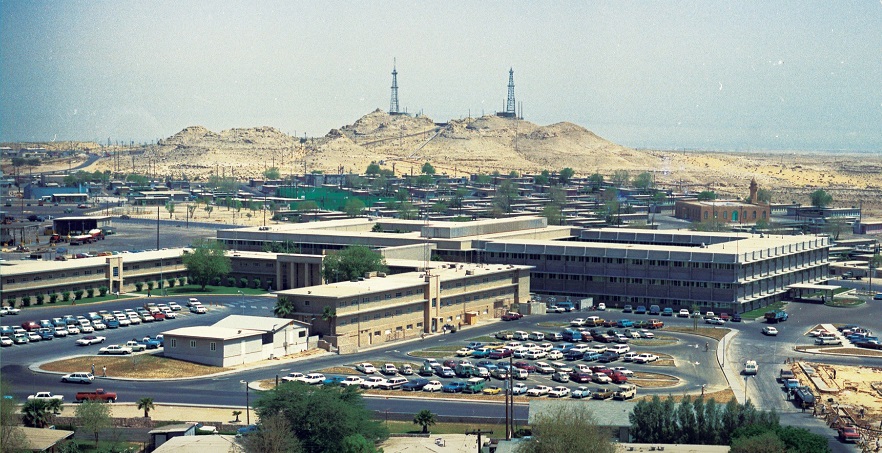
When in March 2026 the United States and Israel struck Iran, and Tehran blocked the Strait of Hormuz, through which 20 million barrels of oil pass daily — a quarter of all global maritime trade — Saudi Aramco found itself in an unusual position: the only major exporter with a ready-made backup route.
A Pipeline from a Past War
The East-West Pipeline (Petroline), stretching 1,200 km, was built precisely for this scenario — during the tanker war in the Strait of Hormuz in the 1980s. In 2026, its capacity was expanded to 7 million barrels per day after converting parallel gas condensate pipelines to crude oil. On March 11, the system was brought to full capacity — two weeks after hostilities began.
The result proved twofold. After conversion, the volume of oil passing through the Bab el-Mandeb Strait increased by 21% compared to February, and all of this flow goes to Asia. But at the same time, an Iranian drone strike on a pumping station in April reduced the pipeline's capacity by 700,000 barrels per day.
Figures That Defy Ordinary Market Logic
Aramco's adjusted net profit for the first quarter of 2026 was $33.6 billion — 26% higher than a year ago and 34% higher than the fourth quarter of 2025, when the company recorded its lowest profit since COVID-19.
This is the largest quarterly jump in net profit in Aramco's history — after 11 consecutive quarters of annual decline.
"The pipeline has proven to be a critical artery of supply — helping mitigate the impact of global energy shock and providing relief for customers affected by shipping restrictions in the Strait of Hormuz."
— Saudi Aramco CEO Amin Nasser, May 2026
The Rest of the Region in a Different Reality
Aramco is an exception, not the rule. Flows through the Strait of Hormuz fell from approximately 20 million barrels per day to just over 2 million barrels per day in March. Even accounting for alternative routes, due to storage capacity limits and constrained bypass pipeline capacity, Persian Gulf countries reduced aggregate production by more than 14 million barrels per day.
Iran also attacked the energy infrastructure of its neighbors — Saudi Arabia, the UAE, Kuwait, and Iraq — with missiles and drones. The port of Fujairah — the endpoint of the Emirati pipeline — was hit by drone strikes, disrupting oil export operations.
Brent traded on Sunday at $103.91 per barrel — below the peak above $119 during active hostilities, but significantly higher than the $70 recorded in late February before the war began.
What Comes Next
According to the IEA's assessment, the restoration of flows through the Strait of Hormuz remains the single most important variable for reducing pressure on energy supply, prices, and the global economy.
If a ceasefire opens the strait and Brent returns to $70–75, will Aramco be able to retain investors through dividends — or will the quarterly record prove to be a one-time anomaly of wartime market conditions?



