Turkey on the Ruins of Hormuz: A $24 Billion Corridor or a Geopolitical Gamble?
While only 6 vessels per day pass through the Strait of Hormuz instead of 130, Ankara is pushing forward with two land routes — one through unstable Iraq, another across the Caspian. The money is there, the routes are there. But is there time?

By Tetiana Suchkova-Ladik
April 18, 2026 · 3 min read
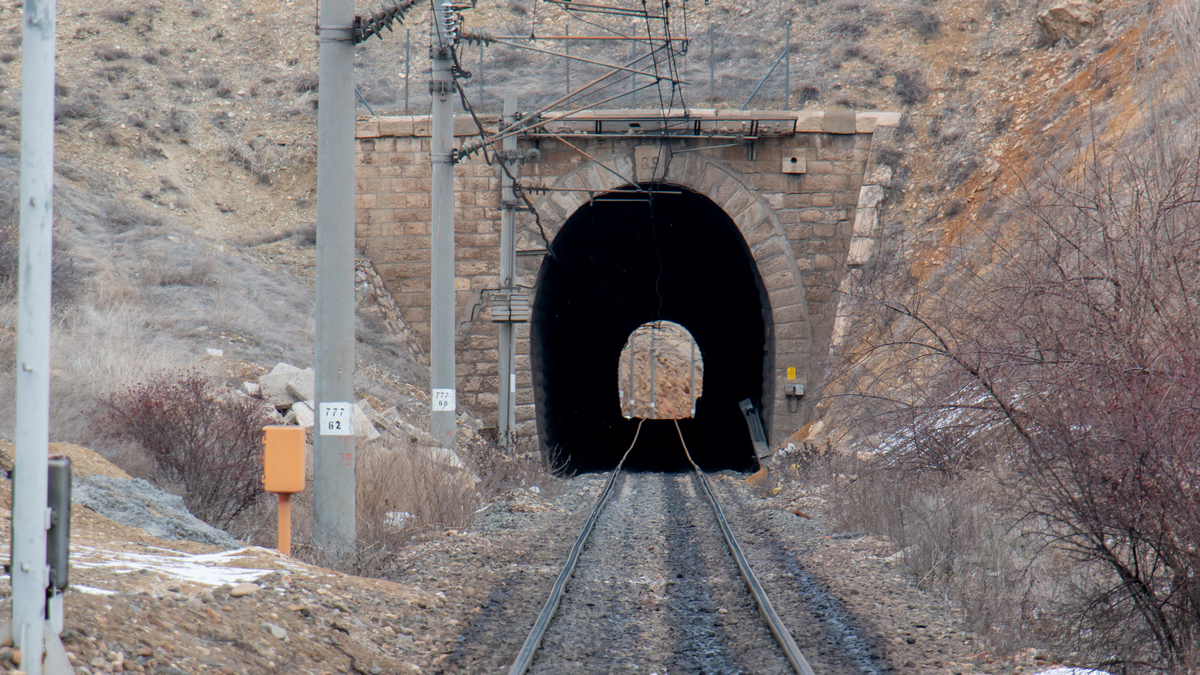
Approximately 130 vessels used to pass through the Strait of Hormuz daily. In March 2026 — only six. The Iranian side has not officially announced the strait as closed, but has introduced strict controls: some vessels are allowed through, others only under certain conditions, and still others are not allowed to pass at all. According to the IEA, approximately 20 million barrels of oil pass through the strait daily — a quarter of all global maritime oil trade.
For Turkey, this is not a crisis — it is a window of opportunity. Ankara has long been building its position as a transit hub between Asia and Europe, and is now promoting two projects simultaneously as alternatives to blocked sea routes.
Two routes — different levels of readiness
The first is the "Development Road": railway and highway from the Grand Faw port in Basra through Iraq to the Turkish border and further to Europe. The project is valued at $23.9 billion and could generate economic benefits of around $50 billion, as well as over 60,000 jobs. Turkish Minister of Transport Abdulkadir Uraloglu stated that the financial model has been agreed upon by four countries — Turkey, Iraq, Qatar, and the UAE.
But there is a catch. Although the project cost was announced as $17 billion, actual expenses, according to the Wilson Center's estimates, will exceed $24 billion — just the railway section between Gaziantep and Ovalçeyi could cost up to $5 billion. The route passes through unstable regions of Iraq, where security risks remain significant.
At the same time, some infrastructure is already operational. In July 2025, the International Road Transport Union (IRU) activated a new land route from Turkey to Kuwait through northern Iraq — three Turkish trucks completed the journey in four days instead of 45 days by sea.
The second project is the Middle Corridor (Trans-Caspian International Transport Route): a route from China and Central Asia through Kazakhstan, the Caspian Sea, Azerbaijan, Georgia, and Turkey to Europe. In 2022, cargo volume on the Middle Corridor doubled to 1.5 million tons, while the Northern route through Russia lost 34% of its volume. However, among obstacles are limited port and railway capacity, and the absence of a unified tariff structure.
What this means in numbers for people
UNCTAD records a direct link between the strait crisis and shelf prices. The energy shock is the main channel through which the conflict affects trade: fuel prices rose sharply after the escalation and remain elevated, increasing the cost of production and transportation of goods throughout the supply chain. According to forecasts, global merchandise trade growth will slow from approximately 4.7% in 2025 to 1.5–2.5% in 2026.
Alternative pipeline capacity bypassing Hormuz through Saudi Arabia and the UAE is limited to 3.5–5.5 million barrels per day — several times less than what previously passed through the strait daily.
"Today we are not simply launching a transit system. We are marking a new chapter in Iraq on the path to prosperity, connectivity, and global relevance"
— IRU General Director de Pretto, following the first test run from Poland to the UAE through Turkey and Iraq (12 days versus 21 by sea)
Where the real problem lies
Turkey is playing the role of an indispensable hub convincingly — but so far mostly on paper and in negotiating memorandums. The Asian Development Bank in its analysis warns: demand from EU market agents for transcontinental rail freight remains weak, and the economic justification for the China–Europe route is limited. That is, the Hormuz crisis is driving supply, but whether there is sustained demand for new corridors after the crisis ends is an open question.
Additionally, the route through Iraq requires regional stabilization, which is lacking. Memorandums have been signed — but the mechanism for guaranteeing cargo security through unstable provinces has not yet been agreed upon by any of the four project partners.
If restrictions in the Strait of Hormuz extend to the end of 2026, pressure to finance the "Development Road" will increase sharply — and then it will become clear whether the $24 billion is actually secured, or if it is merely an agreed-upon figure in a memorandum.



