Turkish Onur Won All Four Lots of Lviv Tender Worth €13.9 Million — Company Has Previously Built Tram Tracks and Dnieper Bridges Here
Lviv Road Authority announced a tender through the TED e-procurement platform for repair of 6.3 km of trolleybus lines and reconstruction of contact networks. No company broke Onur's monopoly — the Turkish contractor won all four lots.

By Tetiana Suchkova-Ladik
April 17, 2026 · 3 min read
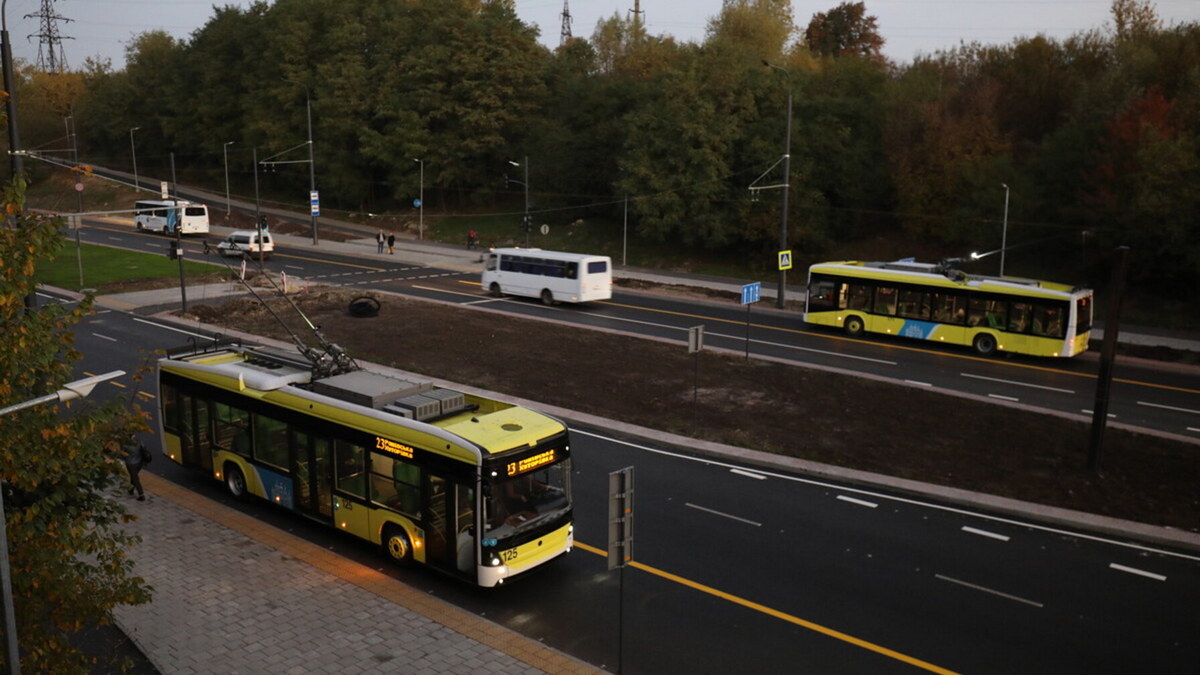
Communal enterprise "Lvivavtodor" has signed a contract with Turkish Onur Taahhüt Taşımacılık İnşaat Ticaret ve Sanayi for the repair and modernization of the city's trolleybus infrastructure. The total value is 13.9 million euros. The tender was published on the EU public procurement platform Tenders Electronic Daily (TED) — a database of EU government purchases that is also used for internationally financed projects in Ukraine.
What exactly will be repaired
The project covers three trolleybus lines with a total length of 6.3 km: on Stryiska, Troleybusnaya, and Zelena streets. A separate lot was allocated for the reconstruction of the 600V power line — that is, the contact network itself, not just the roadbed under the rails. The tender was initially divided into four lots to attract different contractors. One company took all four.
For passengers, the scale is specific: Lviv trolleybuses make approximately 900,000 trips per month — 10.7% of all city transport. According to Wikipedia, citing statistics from "Lviv Electrotrans" for January 2024, this amounts to approximately 10-11 million trips annually. Routes No. 22, No. 23, No. 25, and No. 31, which pass through Stryiska and Zelena streets, are among the most heavily loaded in the system.
Who is Onur — and why not for the first time in Lviv
Onur Group was founded in Turkey in 1981 and operates in 13 countries. The company appeared in Ukraine in 2004 under the name Onur Construction International — initially as a contractor for the reconstruction of the M05 highway (Kyiv-Odesa), then M06 (Kyiv-Chop). In Lviv, Onur has been working since 2014: they started road repairs and tramway construction. Today, the company is among the top three road contractors in Ukraine.
"In 2024, a photograph of the construction of the Irpin Bridge by Onur Group Ukraine became one of the winners of the international ENR Year in Construction Photo Contest"
Wikipedia / ENR 2024
In December 2024, President Zelenskyy awarded Emre Karaamoğlu, CEO of Onur Group in Ukraine, the Order of Merit III degree. The Zaporizhzhia bridge across the Dnipro is another unfinished pre-war project of the company in Ukraine.
Money: where from and what's the logic
The source of funding is not directly specified in the TED announcement. However, the very fact of publication on TED is standard practice for projects financed by the EBRD or other international donors. For comparison: in 2025, the EBRD allocated emergency loans to Lviv for "Lviv Electrotrans" and other municipal operators — to cover critical investment needs in the conditions of a wartime economy, according to the EBRD website. 13.9 million euros for 6.3 km of infrastructure is approximately 2.2 million euros per kilometer, which corresponds to the range of similar projects in Central Europe, taking into account contact network reconstruction.
Economist Oleksandra Betliy from the Institute for Economic Research previously noted in a comment for the "Sviy Dim" project: renovation should be done "better than it was — but with clear priorities for which facilities need immediate attention." Lviv's trolleybus network, where the average age of the contact network exceeds 30 years, meets this criterion.
Risks of a single-lot award
The scheme of "one winner — four lots" does not formally violate international procurement rules: a participant can bid for all lots at once if conditions allow it. But it removes competitive pressure on price and timelines. If Onur delays or technical problems arise on one lot — the client is left without an alternative contractor for the rest.
- Experience in Lviv — a plus: the company has known the local specifics since 2014
- Monopoly on all lots — a risk: there is no backup contractor
- Source of funding — not publicly verified: TED exists, but credit details are absent
- Performance timelines — not disclosed in available documents
If "Lvivavtodor" publishes the contract terms with timelines and penalties for breach — then it will be possible to assess whether this deal is a standard of quality procurement or simply the cheapest offer from a familiar contractor.



