Temporary Structure Becomes "Real Estate" — Court Returns 0.2 Hectares of Murometс Nature Reserve Island
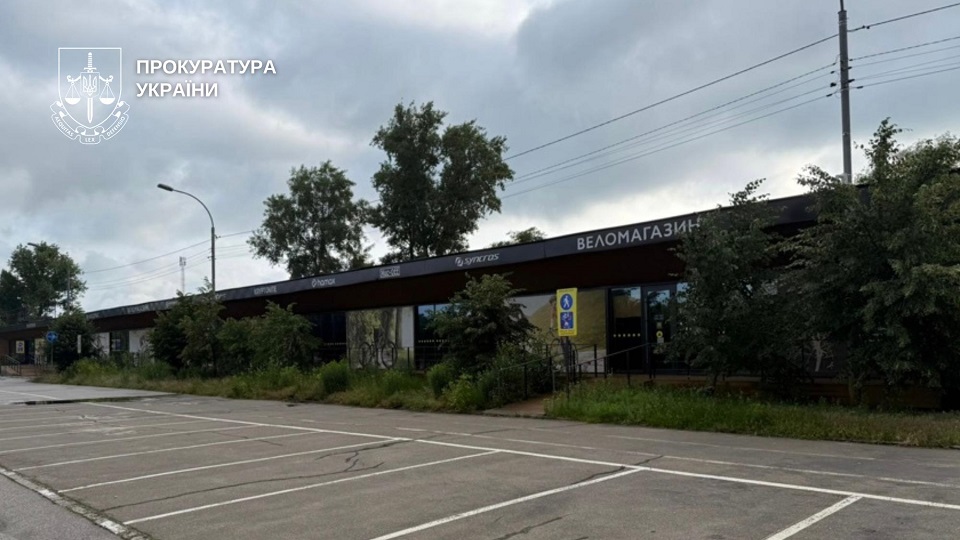
Bicycle shop VeloHub Muromets, covering 905 square meters, stands on land that cannot be built on or sold under the law. The court ordered its demolition — but according to a scheme that has been used on other plots in Kyiv.

By Tetiana Suchkova-Ladik
May 25, 2026 · 2 min read
How a Temporary Structure Became "Property"
The Commercial Court of Kyiv satisfied a claim filed by the Desnianskyi District Prosecutor's Office and ordered a company to demolish the VeloHub Muromets building and return a 0.2-hectare plot of land to the territorial community of the capital. The plot must be brought into proper condition — the non-residential building covering 905.7 square meters and all other structures must be dismantled.
However, the issue extends beyond the shop itself. According to the prosecutor's office, as established during criminal proceedings, the building is a temporary structure — and therefore, under the law, cannot be registered as real property. Despite this, ownership of the building was initially registered to a natural person based on forged documents, and then transferred to the charter capital of a private company. As reported by Glavkom citing the Kyiv City Prosecutor's Office press service, these facts were established during the pre-trial investigation of this criminal proceeding.
"This building is a temporary structure, so under the law it could not have been registered as real property"
Kyiv City Prosecutor's Office
Land That Cannot Be Occupied
The plot on which VeloHub Muromets stands belongs to the category of lands of the nature reserve and water fund, as well as a protected landscape zone. Its intended purpose is "for the operation and maintenance of hydraulic structures, other water management facilities and channels." In other words, commercial development here is prohibited regardless of what documents support it.
This is neither the first nor an isolated case on the island. The Desnianskyi Prosecutor's Office is concurrently conducting another case against LLC "SOK Rapid," which has been leasing 4.56 hectares in the Chortoryi tract (Muromets Island) since 2005 ostensibly for a sports and wellness complex, but has never built it (case No. 910/14122/24). The very scheme — "temporary structure → forged documents → real property → company charter capital" — also appears in a more high-profile Kyiv context: in 2025, the National Anti-Corruption Bureau publicly documented an analogous mechanism within "Clean City" operation, where ownership rights were registered even for buildings that did not physically exist.
What's Next
- The court decision orders the company to demolish the building and dismantle all structures at its own expense.
- Criminal proceedings regarding forged documents continue — suspicions have not yet been publicly announced.
- Muromets Island remains a zone of active legal disputes: apart from the VeloHub case, the prosecutor's office is suing for the return of at least another 4.56 hectares.
If the appeal upholds the decision — and the criminal proceeding stalls at the "under investigation" stage, as has happened with other cases on the island — then the demolition will remain mere paperwork.



