Workshop for carmakers being built in Brovary — localization to rise to 75%
Budshliakhmash has begun construction of a 3,000 sq. m production site for frames in Brovary; the launch is expected in mid-2026. The company plans to raise the share of Ukrainian components to 75% and develop an industrial park with about $40 million in investment.

By Oleg Bazylewicz
December 2, 2025 · 2 min read
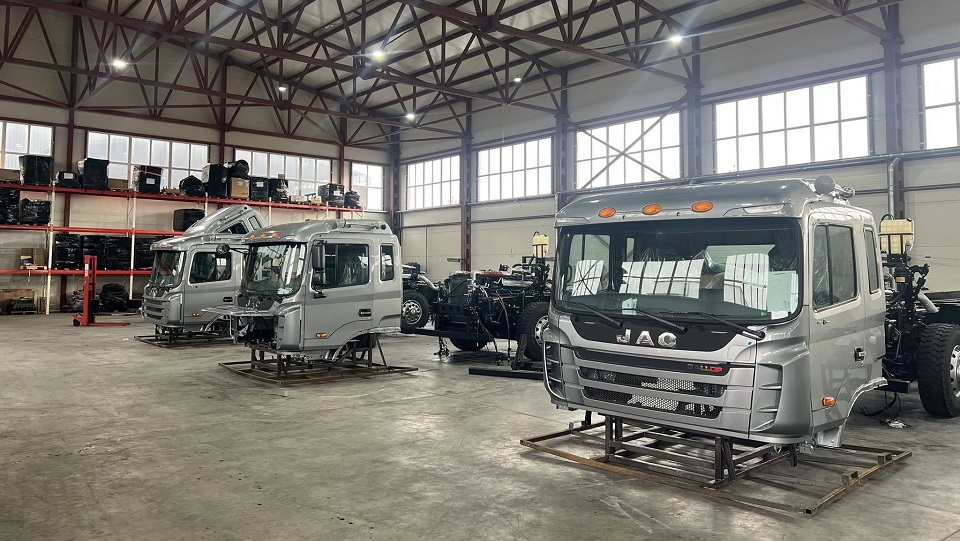
New production in Brovary
The enterprise Budshlyakhmash has begun construction of a production site of 3,000 sq. m for the manufacture of vehicle frames. The start of work was reported by Member of Parliament Dmytro Kysylevskyi.
Equipment commissioning at the site in the city of Brovary, Kyiv region, is planned for mid-2026.
The production of frames is expected to raise the share of domestic components in the company's equipment to 75%.
Current capacities and technologies
Currently Budshlyakhmash produces various special-purpose vehicles: dump trucks, garbage trucks, truck cranes, sand spreaders and watering machines, tow trucks and other models. In 2025 production volumes reach about 70 units per month.
The average level of product localization today is about 40–60%.
This was achieved thanks to licensed SKD assembly on Daewoo and JAC chassis with the right to apply its own VIN; the agreements also provide for the possibility to replace imported components with Ukrainian parts.
After launching the frame shop, the company intends to establish production of wheel axles and abandon imported tires, fuel tanks and plastic parts, ordering them from domestic suppliers.
Recently the enterprise joined a state program that compensates 15% of the cost of Ukrainian equipment.
Industrial park and investments
In spring 2026 Budshlyakhmash plans to develop a new site on the outskirts of Brovary to create an industrial park with a machine-building cluster.
A plot of 11 ha has been allocated for the project, on which about 40,000 sq. m of industrial premises will be built. The total volume of investments in the park's development is estimated at approximately USD 40 million.
- Localization in public procurement means the minimum share of Ukrainian components in the cost of goods purchased with budget funds; it allows products to be sold through Prozorro.
- In 2025 the minimum share of Ukrainian components for public procurement is 25%; in 2026 the threshold was raised to 30%, and thereafter the requirement will increase by 5% each year up to 40%.
- In October 2025 the Cabinet of Ministers tightened the requirements for confirming localization to participate in public procurement.



